
Decoding CE Ratings: The Ultimate Guide to Motorcycle Gear Safety Standards
 Jake Miller
9 min read
Jake Miller
9 min read
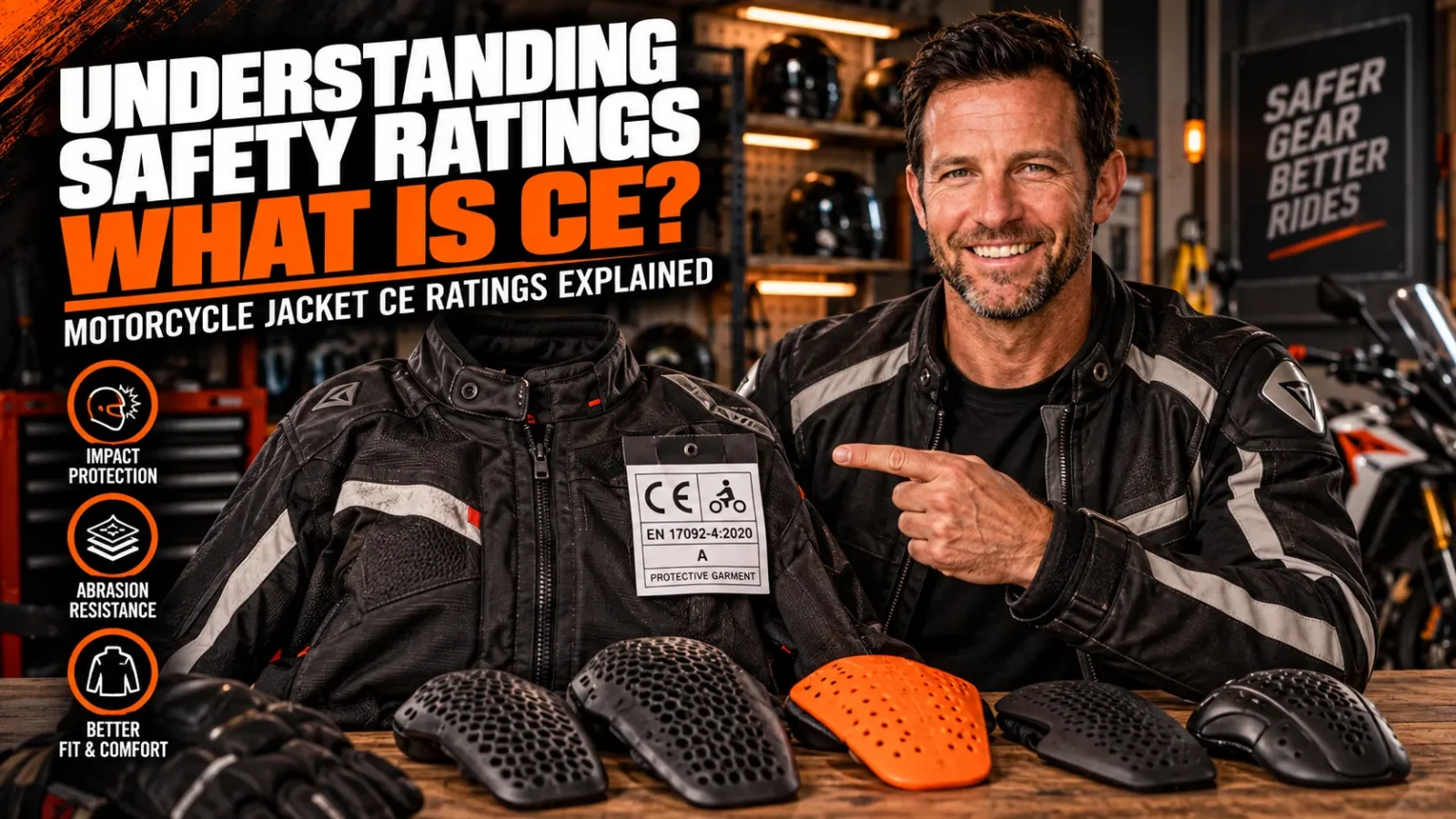
If you’ve ever shopped for a new riding jacket, you’ve probably noticed a small tag or label tucked inside the lining that reads “CE” followed by a number or letter combination. Maybe you glanced at it, shrugged, and moved on to checking the price tag instead.
But that little label is arguably one of the most important pieces of information on the entire garment. Understanding it could genuinely be the difference between walking away from a crash and suffering a serious injury.
In this comprehensive guide, we’re breaking down exactly what CE ratings mean, why they exist, and how you can use this knowledge to make smarter, safer purchasing decisions.
If you’re just starting your gear journey, we highly recommend pairing this article with our Ultimate Guide to Motorcycle Jackets for a complete picture of what to look for before you buy.
What Does “CE” Actually Stand For?
CE stands for Conformité Européenne, which is French for “European Conformity.” It’s a certification mark that indicates a product has been assessed and meets health, safety, and environmental protection standards set by the European Union.
While it originated in Europe, CE certification has become the global gold standard for protective motorcycle gear, recognized and respected by riders and manufacturers worldwide, regardless of where they actually ride.
When you see a CE mark on a motorcycle jacket, pants, gloves, or boots, it means that item has undergone rigorous laboratory testing to verify it can actually protect your body in the event of a crash.
This isn’t a marketing gimmick or a self-awarded badge — it’s an independent, standardized certification process that gear must pass before manufacturers can legally claim the label.
Why Should Riders Care About CE Ratings?
Here’s the blunt truth: not all motorcycle jackets are created equal. Two jackets can look nearly identical, share the same price point, and even come from well-known brands, yet offer wildly different levels of actual protection.
A jacket without CE-rated armor might have padding that looks tough but crumples or shifts on impact, leaving you exposed to road rash, fractures, or worse.
CE ratings remove the guesswork. They give you an objective, third-party-verified benchmark so you’re not relying purely on marketing copy or how “armored” a jacket feels when you squeeze the shoulder pad in the store.
For a deeper dive into how these ratings apply specifically to jackets, check out our dedicated post on motorcycle jacket safety ratings explained.
The Different Levels of CE Certification for Motorcycle Gear
CE certification for motorcycle apparel is governed under European regulation EN 17092 for garments and EN 1621 for armor (like back protectors, shoulder pads, and elbow guards). Understanding these classifications will help you decode exactly what you’re buying.
Garment Classifications (EN 17092)
Motorcycle clothing is generally classified into these categories, ranked from highest to lowest protection level:
- AAA: The highest level of protection, typically found in gear designed for high-speed riding, track days, and serious touring. These garments offer maximum abrasion resistance and impact protection.
- AA: A strong middle-ground rating suitable for most street riders. It balances solid protection with comfort and flexibility.
- A: The minimum level of certified protection, often found in lightweight urban jackets or warm-weather mesh gear. It still meets safety standards but with reduced abrasion resistance compared to AA or AAA.
- B: Garments that meet abrasion resistance standards but lack impact protection (no armor pockets or inserts).
- C: Garments that include armor but haven’t been tested for abrasion resistance — usually base layers or thermal liners meant to be worn under a shell jacket.
Armor Classifications (EN 1621)
Beyond the garment itself, the armor inserted into jackets, pants, and vests receives its own separate rating:
- Level 1 (EN 1621-1): Basic impact protection for elbows, shoulders, hips, and knees. It reduces impact force but isn’t quite as robust as Level 2.
- Level 2 (EN 1621-1): Superior impact absorption, transmitting significantly less force to your body during a crash. This is generally the recommended standard for serious riders.
- Back Protectors (EN 1621-2): Rated Level 1 or Level 2 specifically for spinal protection, an area where extra caution is always worthwhile.
Pro tip: Always check both the garment rating and the armor rating separately. A jacket could carry an AA garment classification but only include Level 1 armor — or worse, no CE-rated armor at all, just foam padding. For the full technical breakdown, our article on CE Rating Explained goes even further into the testing methodology.
How CE Gear Is Actually Tested
It’s worth understanding what happens behind the scenes before that CE label ever gets stitched into a jacket. Independent testing laboratories subject materials and finished garments to a battery of physical tests, including:
Abrasion Resistance Testing
Fabric samples are strapped to a spinning drum and dragged against sandpaper-like material at speeds simulating a real-world slide down asphalt. Testers measure exactly how many seconds it takes before the material burns through — the longer it lasts, the higher the rating.
Impact Absorption Testing
Armor inserts are struck with a precise, calibrated force (usually dropped from a fixed height with a specific weight) while sensors measure how much force transfers through to a simulated body part underneath. Lower transmitted force equals better protection.
Burst and Tear Strength
Seams and materials are pulled and stretched to failure to ensure they won’t rip apart under the stress of a crash or a sudden fall.
Ergonomics and Fit Testing
Finally, testers evaluate whether the armor stays correctly positioned during movement. Armor that shifts out of place during a ride is nearly useless in a crash, which is why proper fit matters just as much as the certification itself.
This is why we always recommend reading our motorcycle jacket fitting guide before finalizing any gear purchase — even the best-rated armor won’t help if it’s not sitting where it should.
CE Ratings Across Different Materials
One common question riders ask is whether leather or textile jackets perform better under CE testing. The honest answer? It depends on construction quality more than material alone.
Premium leather typically offers excellent natural abrasion resistance, while high-denier textiles (like 600D or 1000D Cordura) can achieve comparable AA or even AAA ratings when engineered well.
If you’re torn between the two, our comparison guide on Leather vs. Textile Jackets: Which is Right for You? walks through the pros, cons, and safety considerations of each material in far more detail.
Don’t Forget Maintenance
Keep in mind that a CE rating reflects how a garment performs when it’s new and properly maintained. Leather that’s cracked, dried out, or improperly cared for can lose some of its protective integrity over time.
Our guide on how to clean a leather jacket can help you preserve both the look and the protective performance of your gear for years to come. Similarly, if you’ve just purchased a stiff new leather jacket, learning how to break in a new leather motorcycle jacket properly ensures the armor settles correctly without damaging the material.
Common Myths About CE Ratings
Myth #1: “If It Has Armor, It’s CE-Rated”
Not necessarily. Plenty of budget jackets include foam padding that looks like armor but hasn’t been through any certified testing whatsoever. Always look for the actual CE tag with the classification level printed on it.
Myth #2: “Higher Price Always Means Higher CE Rating”
While there’s often a correlation, it’s not a guarantee. Some genuinely excellent, affordably priced options exist if you know what to look for. Check out our roundup of the Best Motorcycle Jackets Under $500 to see solid CE-certified options that won’t break the bank.
Myth #3: “CE Ratings Only Matter for Track Riders”
This is perhaps the most dangerous myth of all. The majority of motorcycle accidents happen on everyday streets, not race tracks. Whether you’re commuting, cruising, or just starting out, CE-rated protection matters. New riders especially should prioritize this — our list of the Best Motorcycle Jackets for Beginners factors safety ratings heavily into every recommendation.
Choosing the Right CE-Rated Gear for Your Riding Style
The “best” CE rating for you depends heavily on how, where, and how often you ride. A weekend cruiser rider in mild climates has different needs than a daily commuter or a long-distance tourer battling changing weather conditions.
Our detailed resource on How to Choose the Right Motorcycle Jacket for Your Riding Style can help you match your specific needs — whether that’s a mesh jacket for scorching summer rides, a fully armored touring jacket, or something in between — with appropriate CE protection levels.
It’s also worth remembering that style shouldn’t come at the expense of safety. Riders looking for fashion-forward options, like faux leather biker jackets for women or a head-turning red leather motorcycle jacket, should still confirm proper CE armor is included before purchasing — looking sharp and staying protected are not mutually exclusive.
Final Thoughts
Understanding CE ratings transforms you from a casual gear shopper into an informed rider who knows exactly what protection you’re paying for.
It’s a small label with an enormous impact on your safety every time you throw a leg over your bike. Next time you’re browsing jackets, pants, or gloves, take those extra thirty seconds to check the tag — your future self will thank you.
FAQs
Is CE-rated gear required by law?
In the European Union, CE certification is legally mandated for protective motorcycle clothing sold as safety gear. In the United States and many other countries, it’s not legally required, but it remains the most trusted independent safety benchmark available, and most reputable brands voluntarily seek certification.
What’s the difference between CE Level 1 and Level 2 armor?
Level 2 armor transmits significantly less force to your body during an impact compared to Level 1, making it the superior choice for maximum protection. However, Level 2 armor is sometimes bulkier, so riders often balance protection with comfort based on their riding style.
Can a jacket be CE-rated without armor inserts?
Yes. A jacket can earn a CE garment classification (like AA or A) based purely on fabric abrasion resistance and seam strength, even without armor. However, for full protection, it’s best to choose a jacket that includes CE-rated armor at the shoulders, elbows, and ideally the back.
Does a higher CE rating mean the jacket will be less comfortable?
Not necessarily. While higher-rated gear historically traded comfort for protection, modern materials and design innovations have closed that gap considerably. Many AAA-rated jackets now include excellent ventilation, flexibility, and breathability alongside top-tier protection.

Related Articles

8 Best Motorcycle Jacket Materials (And the Real Jackets That Use Them Best)
I break down the best motorcycle riding materials for jackets—leather, textile, mesh, and laminate—with real jacket picks I've tested for…
Jake Miller
11 min read

9 Best Paints for Nylon Motorcycle Riding Jackets That Actually Hold Up on the Road
I tested 9 paints for nylon motorcycle jackets so you don't have to guess. Here's what actually sticks, flexes, and…
Jake Miller
12 min read

9 Best Female Motorcycle Jackets That Actually Fit Right in 2026
I've tested dozens of women's motorcycle jackets over the years. Here are my 9 favorites for fit, protection, and style—from…
Jake Miller
11 min read