
When to Replace Your Jacket: 9 Warning Signs Your Riding Gear Has Failed You
 Jake Miller
9 min read
Jake Miller
9 min read
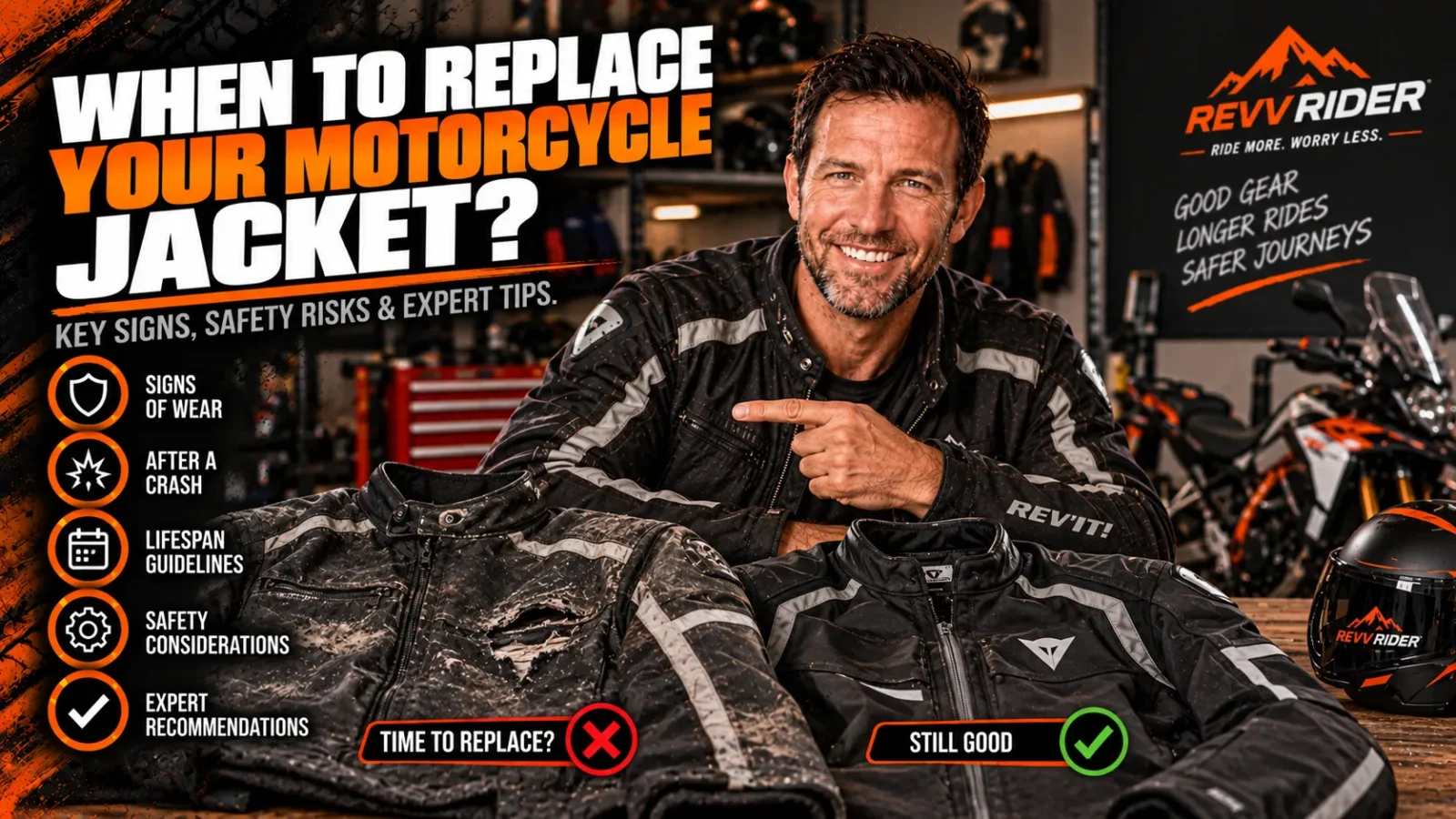
Your motorcycle jacket is more than just a style statement—it’s the single layer of protection standing between your skin and the pavement in a crash. But like every piece of protective equipment, it doesn’t last forever.
Riders often hang onto a beloved jacket far too long simply because it “still looks fine,” not realizing that the protective qualities have quietly degraded underneath.
If you’re building your gear knowledge from scratch, our Ultimate Guide to Motorcycle Jackets is a great place to start before diving into the specifics of when it’s time to say goodbye to your current gear.
In this article, we’ll break down exactly when to replace your jacket, the warning signs you should never ignore, and how to make sure your next purchase lasts as long as possible.
Why Jacket Longevity Actually Matters
Unlike a t-shirt or hoodie, a motorcycle jacket is a piece of safety equipment. The abrasion-resistant outer shell, the impact-absorbing armor, and the reinforced stitching are all engineered to work together during a slide or impact.
Once any of these components degrade, the entire system can fail—even if the jacket looks perfectly wearable from across the garage.
Manufacturers design jackets with specific materials and safety ratings in mind. If you’re unfamiliar with what those ratings actually mean, check out our breakdown of motorcycle jacket safety ratings explained and our deeper dive into Understanding Safety Ratings: What is “CE”.
Understanding these ratings will help you appreciate just how much engineering goes into a “good” jacket—and how much is lost when that jacket starts to break down.
9 Clear Signs It’s Time to Replace Your Jacket
1. Visible Wear on the Outer Shell
Take a close look at your jacket’s high-contact zones: shoulders, elbows, and back. If you notice thinning fabric, fraying threads, or a leather surface that’s become paper-thin and glossy from years of wind exposure, that’s a major red flag. Abrasion resistance is the entire point of the outer shell, and once it thins out, your slide-time protection drops dramatically.
2. Cracking, Flaking, or Dry Leather
Leather jackets are famous for lasting decades when properly cared for, but neglect speeds up their decline. If your leather is cracking, flaking, or feels stiff and brittle rather than supple, it has lost the natural oils that keep the hide flexible and strong.
Before assuming it’s beyond saving, try a deep conditioning treatment—our guide on How to Clean a Leather Jacket walks through the exact steps. If conditioning doesn’t restore flexibility, the leather’s structural integrity may be compromised for good.
3. Armor That’s Cracked, Compressed, or Missing
CE-rated armor in the shoulders, elbows, and back is designed to absorb a single major impact effectively. Repeated impacts, extreme heat exposure, or even just age can cause foam or hard-shell armor to compress, crack, or lose its shape.
If you’ve ever been in a crash, the armor should be inspected—and likely replaced—regardless of how the rest of the jacket looks. For a refresher on what these protective inserts are actually rated for, revisit our CE Rating Explained article.
4. Seams Are Fraying or Separating
Stitching holds your jacket together during a crash far more than most riders realize. Double and triple stitching along stress points is intentional engineering, not decoration.
If you spot loose threads, gaps, or seams that have started to separate—especially near the shoulders, cuffs, or back panel—the jacket’s structural integrity is compromised, even if the fabric around it looks fine.
5. Zippers and Closures No Longer Function Properly
A jacket that won’t zip fully, or whose closures no longer cinch tight, can’t do its job in a crash. Loose-fitting gear shifts and rides up during a slide, exposing skin that should have been covered. If the zipper pulls are broken or the storm flap won’t snap shut, it’s a sign of a jacket on its last legs.
6. It No Longer Fits the Way It Should
Bodies change over time, and so does the fit of your gear. A jacket that’s too loose will flap at speed and shift armor out of position; one that’s too tight restricts movement and can prevent proper closure.
If your current jacket no longer fits snugly in the right places, it may be time for a resized replacement rather than a repair.
Our motorcycle jacket fitting guide is an excellent resource for getting this right the second time around, and if you’re on the larger or taller side, our guides for best motorcycle jacket for big guys and best motorcycle jacket for tall riders can help narrow the search.
7. Waterproofing and Weatherproofing Have Failed
If rain now soaks through a jacket that used to keep you dry, the waterproof membrane or DWR (durable water repellent) coating has broken down.
While this isn’t always a safety issue, it’s a comfort and functionality issue that often signals the jacket’s overall lifespan is winding down.
If you’re in the market for something more weather-resistant, take a look at our picks for the best waterproof jacket for motorcycle riders or best motorcycle jackets for all weather.
8. Persistent Odor That Won’t Go Away
A lingering musty smell—even after cleaning—can indicate that moisture has broken down internal linings, foam padding, or adhesive layers. This is especially common in older textile jackets that have absorbed years of sweat and rain without proper drying between rides.
9. It’s Survived a Significant Crash
This is the most important rule of all: any jacket involved in a moderate-to-severe crash should be replaced, no exceptions.
Armor absorbs impact by deforming, abrasion-resistant fabric wears through by design, and stitching can silently weaken under stress you can’t see. A jacket that “looks okay” after a crash may have already used up its one shot at protecting you.
Leather vs. Textile: Do They Wear Out Differently?
The material of your jacket plays a big role in how it ages and what warning signs to watch for. Leather tends to degrade through drying, cracking, and thinning, while textile jackets are more prone to seam failure, membrane breakdown, and armor compression.
If you’re deciding what to buy next and want to understand these differences in depth, our comparison on Leather vs. Textile Jackets: Which is Right for You? breaks it all down.
Mesh and Perforated Jackets Have Their Own Timeline
Mesh and perforated jackets, popular for hot climates, tend to show wear faster around the perforation points and stitching due to constant airflow and stretching.
If you ride somewhere hot year-round, our guides to the best motorcycle jacket for 100 degrees and best perforated jacket for motorcycle riding can help you find a durable replacement suited to the climate.
How Often Should You Actually Inspect Your Jacket?
Most riding gear experts recommend a full inspection at least twice a year—once before riding season ramps up, and once at the end. If you ride year-round or log serious mileage, a quarterly check is even better. During each inspection:
- Check all seams and stitching under good lighting
- Flex the armor to check for cracks or compression
- Test all zippers, snaps, and Velcro closures
- Inspect the outer shell for thinning or abrasion
- Try the jacket on to confirm the fit is still correct
Extending the Life of a New Jacket
Once you’ve replaced your worn-out gear, a little maintenance goes a long way. Leather jackets benefit enormously from proper break-in and conditioning—our guide on How to Break In a New Leather Motorcycle Jacket is worth bookmarking.
Regular cleaning, proper storage away from direct sunlight, and prompt drying after wet rides will all significantly extend your jacket’s usable life.
Choosing a Replacement That Fits Your Riding Style
When it’s finally time to retire your old jacket, don’t just buy the same thing again out of habit. Riding styles, climates, and priorities change.
Whether you’re commuting on a naked bike, touring cross-country, or riding a cafe racer, there’s a jacket built specifically for that use case. Our guide on How to Choose the Right Motorcycle Jacket for Your Riding Style is the perfect next step.
Budget-conscious riders should also check out our roundup of the Best Motorcycle Jackets Under $500, and if you’re new to riding altogether, our Best Motorcycle Jackets for Beginners guide simplifies the decision considerably.
Riders in specific regions may also want climate-specific picks, like the best motorcycle jacket for texas, the best motorcycle jacket for california, or the best jackets for seattle motorcycle riding through frequent rain.
Final Thoughts
Knowing when to replace your jacket isn’t about being paranoid—it’s about respecting the role your gear plays every single time you swing a leg over your bike.
Small signs like fraying seams, cracked armor, or a musty smell are your jacket quietly telling you it’s done its job and needs to retire. Trust those signals, inspect your gear regularly, and don’t wait for a crash to reveal a weakness that was there all along.
FAQs
How long does a motorcycle jacket typically last?
With regular use and proper maintenance, a quality motorcycle jacket generally lasts 5 to 10 years. Leather jackets can last even longer if conditioned regularly, while heavily used textile jackets may need replacing sooner due to membrane and seam wear.
Should I replace my jacket after a minor low-speed fall?
It depends on the severity. A minor tip-over with no abrasion or impact may not require replacement, but you should still inspect the armor, seams, and outer shell closely for hidden damage before trusting it again on the road.
Can I just replace the armor instead of the whole jacket?
In many jackets, yes—CE-rated armor inserts are often removable and can be swapped out for fresh ones. However, if the outer shell, seams, or lining are also worn, replacing just the armor won’t fully restore the jacket’s protective capability.
Does a jacket need to be replaced if it just doesn’t fit anymore?
Yes. A jacket that’s too tight or too loose can’t position armor correctly or stay secure during a slide, which compromises its protective function even if the materials themselves are still in good condition.

Related Articles

8 Best Motorcycle Jacket Materials (And the Real Jackets That Use Them Best)
I break down the best motorcycle riding materials for jackets—leather, textile, mesh, and laminate—with real jacket picks I've tested for…
Jake Miller
11 min read

9 Best Paints for Nylon Motorcycle Riding Jackets That Actually Hold Up on the Road
I tested 9 paints for nylon motorcycle jackets so you don't have to guess. Here's what actually sticks, flexes, and…
Jake Miller
12 min read

9 Best Female Motorcycle Jackets That Actually Fit Right in 2026
I've tested dozens of women's motorcycle jackets over the years. Here are my 9 favorites for fit, protection, and style—from…
Jake Miller
11 min read