
8 Best Glues for Motorcycle Hand Grips (Ranked by a Rider Who’s Regripped Way Too Many Bikes)
 Jake Miller
11 min read
Jake Miller
11 min read
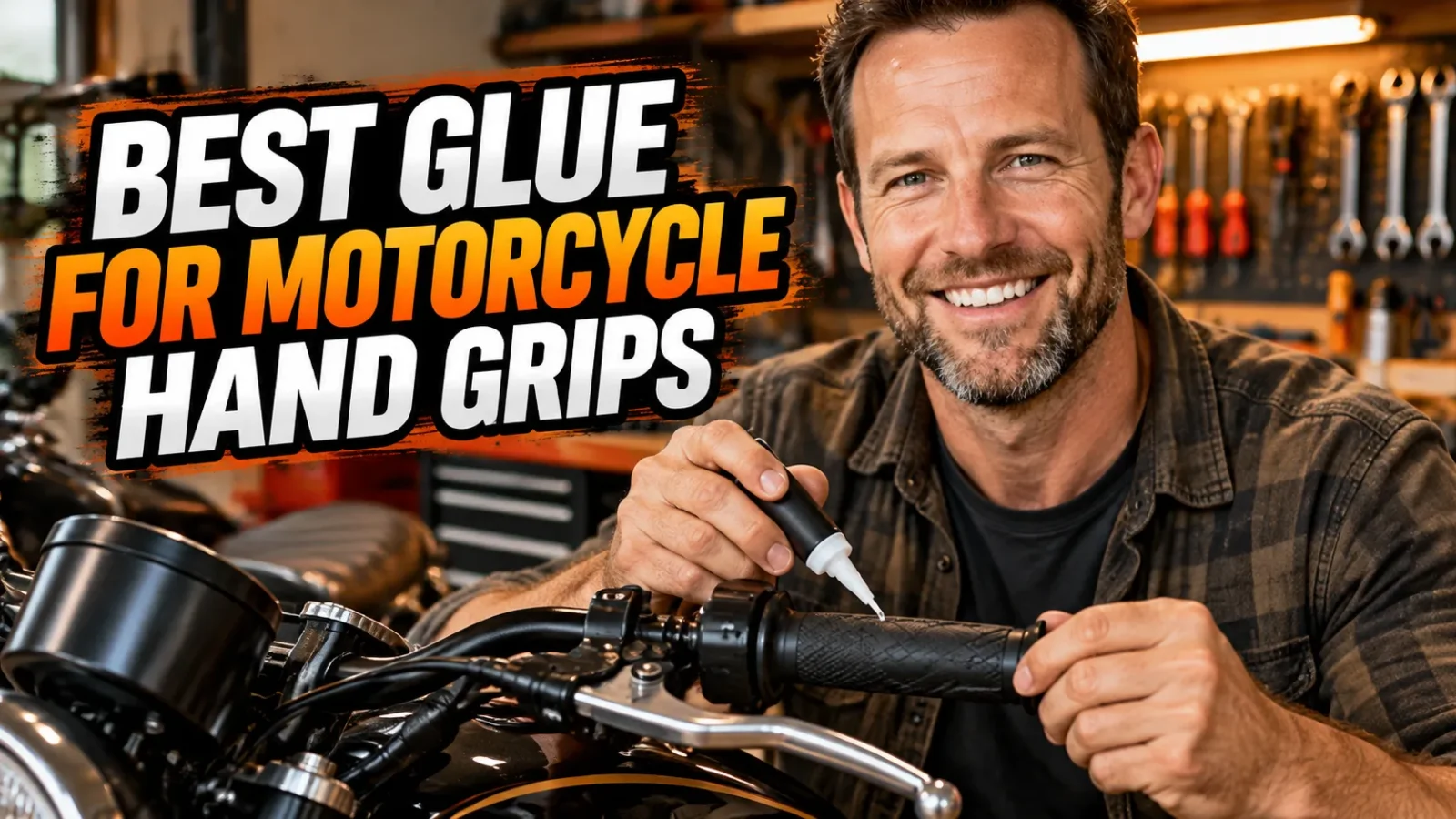
I have a confession: I have regripped more bikes than I have actually washed. Dirt bikes, cruisers, a ratty old dual sport that lived outside for a decade. And in all that time, I have learned that the glue matters more than the grips. A beautiful set of pillow-top grips on a bar with the wrong adhesive will twist in your hand on the first hard rain or the first hot afternoon in traffic.
There is nothing sketchier than feeling your right grip rotate while you are holding a steady throttle at 70 mph. I have been there, and I never want to go back. So I started treating grip installation like a real job instead of a five-minute afterthought, and I tested my way through basically every adhesive that riders recommend online.
Below are the eight glues I actually trust on my own handlebars. Some are purpose-built grip cements, some are industrial cyanoacrylates, and one is an old-school contact adhesive that smells like a body shop. If you are also chasing overall comfort, it is worth pairing good grips with a proper perch, which is why I always point riders to the Best Motorcycle Seat guide once the bars are sorted.
- My overall pick is Loctite 380 Black Max — a rubber-toughened, black cyanoacrylate that stays slightly flexible instead of curing brittle.
- For a purpose-built product, Renthal Grip Glue is cheap, fast, and made specifically for rubber grips on alloy bars.
- Heated grips and dual sports do better with a flexible adhesive like E6000, not a rigid super glue.
- Always clean the bar with brake cleaner and let the glue cure a full 24 hours before riding.
- Glue plus safety wire is the combo that never fails, especially off-road.
1. Loctite 380 Black Max — My Overall Pick
If I could only keep one tube in my toolbox, this is it. Loctite 380 Black Max is a rubber-toughened cyanoacrylate, which is a fancy way of saying it is super glue that learned how to bend instead of snap.
Standard super glue cures hard and glassy. Under vibration it micro-cracks and lets go. Black Max keeps a little flexibility in the bond line, so it soaks up the buzz from a thumper single or a big V-twin without failing. It is also genuinely black, which hides the mess along the edge of the grip.
Fixture time is roughly 30 to 60 seconds, so you get one shot at positioning. Full cure is about 24 hours. It handles heat well enough for any handlebar I have ever used, and it sticks to aluminum, steel, plastic throttle tubes, and rubber without a primer.
A 20-gram bottle runs about $18 to $30 depending on where you buy it. That sounds steep until you realize one bottle does four or five grip changes. My only gripe is that it sets fast, so I always dry-fit the grip first and mark the inboard edge with tape.
2. Renthal Grip Glue — Best Purpose-Built Option
Sometimes you want the product that was designed for exactly the job you are doing, and that is Renthal Grip Glue. Renthal makes grips, bars, and sprockets, and this is the adhesive they sell alongside them.
It is a cyanoacrylate-based grip cement in a small squeeze tube, and it is specifically formulated to bond rubber grips to aluminum and alloy handlebars. In my experience it cures quickly, spreads thin, and does not leave the grip feeling like it is sitting on a layer of jelly.
The best part is the price. A tube is usually under $12, which makes it an easy add-on when you order grips. The tradeoff is that it is a small amount of product, so if you are doing several bikes in one weekend you will burn through it.
I still safety wire anything I glue with Renthal, especially on dirt bikes. Renthal’s own instructions recommend it, and honestly the glue and wire combination is what makes a grip install feel factory-permanent.
3. Bob Smith Industries IC-2000 — Best for Race Bikes and Hard Use
Bob Smith Industries IC-2000 is technically a hobby adhesive, but the moto world stole it years ago because it is outstanding. It is a black, rubber-toughened CA with high impact and shear strength, and it is designed to fill small gaps rather than run everywhere.
That gap-filling property is why I love it on worn bars or slightly oversized throttle tubes. It grabs in about 20 to 30 seconds and cures to a tough, slightly rubbery solid that resists heat better than plain super glue.
I have used IC-2000 on race bikes that get pressure-washed, baked in the sun, and ridden in the rain, and the grips never budged. A 1-ounce bottle is around $10 to $15, and BSI sells it with fine applicator tips that make precise placement easy.
It is also my go-to for gluing grip ends back down when a grip starts peeling at the flange. A tiny bead, a clamp, and an hour later you are done.
4. Loctite 401 Prism — Best for Tricky Metal and Plastic Surfaces
Loctite 401 Prism is the “surface insensitive” instant adhesive in Loctite’s industrial line, and it is a fantastic problem solver. It bonds metal, rubber, and most plastics fast, even on slightly dirty or acidic surfaces where other CAs struggle.
I reach for 401 when I am dealing with a plastic throttle tube that resists everything else, or an anodized bar that seems to shed adhesive. It wicks into tight joints beautifully, which means you can slide the grip on and let capillary action pull the glue into the gap.
Fixture time is quick, usually under 30 seconds on metal, and full strength comes within 24 hours. A 20-gram bottle is roughly $12 to $20.
The catch is that 401 is thin, so it drips. If you are working over a painted tank or a nice set of controls, tape off the area first. Loctite’s 454 gel is the non-drip cousin if you want the same chemistry in a thicker formula.
5. 3M Super Weatherstrip and Gasket Adhesive 08011 — Best Old-School Permanent Bond
Every old mechanic I know calls this stuff “gorilla snot,” and every old mechanic also uses it on grips. 3M Super Weatherstrip and Gasket Adhesive 08011 in black is a nitrile rubber contact adhesive that was designed for weatherstripping and gaskets, but it grips handlebar rubber like nothing else.
This is the option I recommend for touring bikes and cruisers where the grips stay on for years. I have used it on a friend’s Harley touring bike and those grips have not moved in three seasons of highway miles, rain, and heat soak. If that is your kind of riding, pair it with a proper long-haul perch, and my notes on the best motorcycle seat for harley touring cover what actually holds up over distance.
Application is different from CA glue. You coat both surfaces, let it flash off for a few minutes, then push the grip on. It is stringy, smelly, and slow, and it needs a full 24 to 48 hours to cure.
But the bond is nearly permanent, and it handles heat far better than most super glues. A 5-ounce tube costs about $10 to $18 and will last you years. Just wear gloves and work outside.
6. E6000 — Best Flexible Adhesive for Heated Grips and Dual Sports
E6000 is a craft adhesive that happens to be brilliant for motorcycle grips, especially heated ones. Heated grips expand and contract as they warm up, and a rigid adhesive will eventually crack under that cycling. E6000 stays rubbery and moves with the grip.
I first tried it on my dual sport after a rigid CA glue failed twice in one summer. The E6000 install held for two full seasons of dusty trails, creek crossings, and temperature swings. It is rated to handle heat well beyond anything a grip heater throws at it, and it stays flexible down to serious cold.
The downside is cure time. E6000 needs 24 to 72 hours to fully set, so this is a “start it Friday, ride it Sunday” job. It is also thick and stringy, so keep a rag and some acetone nearby. A 3.7-ounce tube is about $6 to $10.
If you ride a KLX250 or a similar lightweight dual sport, this is the pairing I would use. While you are dialing in the cockpit, my writeup on the best motorcycle seats for kawasaki klx250 covers the next comfort upgrade once your hands are sorted.
7. Starbond EM-150 — Best Value Black Cyanoacrylate
Starbond EM-150 is a black, medium-viscosity, rubber-toughened CA that delivers most of the Black Max performance for noticeably less money. A 2-ounce bottle with spare applicator tips usually runs $15 to $22, and that is a lot of glue.
The medium viscosity is the sweet spot here. It does not run like water, so it stays where you put it on a vertical bar, but it still flows enough to spread evenly when you twist the grip on. It is also black, so any squeeze-out along the grip edge disappears.
I have used EM-150 on both dirt bike bars and street bike bars and never had a grip spin. It bonds rubber, aluminum, steel, and most plastics, and it cures fast enough that you need to be ready to commit.
Starbond also sells a range of viscosities, and honestly the medium is the one you want for grips. Thin formulas wick too aggressively and can run into your switch housings.
8. Gorilla Super Glue Gel — Best Budget Pick You Can Buy Today
Sometimes you need glue right now, and the hardware store only has one thing. That is when Gorilla Super Glue Gel earns its spot. It is a gel CA with rubber particles mixed in for impact resistance, and it is available at basically every Home Depot, Walmart, and auto parts counter in the country.
The gel formula is the reason I like it for grips. It does not drip, so you can lay a bead inside the grip and slide it on without glue running down your fork tubes. It sets in around 30 seconds and cures tough rather than brittle.
A 15- to 20-gram bottle is $5 to $9, which makes it the cheapest decent option on this list. It is not quite as heat resistant or as flexible as Black Max, so I would not use it on a hot-running touring bike in Arizona.
But for a quick fix on a commuter, a pit bike, or a buddy’s bike in a garage at midnight, it works. And speaking of comfort, grips are only half the equation. If you are short and reaching for the bars, start with the Best Motorcycle Seat for Short Riders. If you are long-legged and cramped, the Best Motorcycle Seat for Tall Riders is the better starting point. Sportster owners should also look at the Best Seat for Harley Sportster before blaming their wrists.
How I Prep Bars and Grips Before Any Glue Touches Them
Here is the part most riders skip, and it is the reason their grips fail even with great adhesive. Prep work matters more than the brand on the tube.
Step 1: Strip the Bar Completely
Remove the old grip by cutting it off with a utility knife. Do not twist and pull, because you will leave chunks of old rubber behind. Then scrape any leftover adhesive with a plastic scraper and wipe the bar down with brake cleaner or isopropyl alcohol.
Step 2: Scuff Glossy Bars
If your bar is polished aluminum or chrome, hit it lightly with 220-grit sandpaper. You are not trying to remove material, just give the adhesive something to bite. Wipe the dust off afterward with alcohol.
Step 3: Dry Fit and Mark
Slide the grip on dry and mark where the inboard edge should sit with a strip of masking tape. With fast-curing CA glue you have seconds to get this right, so knowing your target is huge.
Step 4: Glue, Twist, and Wait
Run a bead of adhesive around the inside of the grip and a thin ring on the bar, then push and twist the grip into place. Hold it for a full minute. Then walk away for 24 hours. I know it is tempting to ride immediately. Do not.
When You Do Not Need Glue At All
Before you buy anything, check whether your bike can run lock-on grips. ODI Lock-On and Renthal Lock-On systems clamp directly to the bar with a collar, which means zero adhesive, zero cure time, and no safety wire needed.
They cost more than a tube of glue, and they only fit certain bar diameters, but they are the cleanest solution in the sport. I have run ODI lock-ons on two bikes and I have never once thought about grip slip again.
For everyone else, my honest advice is simple. Buy a bottle of Loctite 380 Black Max or Renthal Grip Glue, clean your bars properly, and safety wire the ends. That combination has never let me down, and it will not let you down either.
Frequently Asked Questions
What is the best glue for motorcycle hand grips?
For most riders, a rubber toughened cyanoacrylate like Loctite 380 Black Max is the best all around choice. It bonds rubber to aluminum and plastic, stays slightly flexible, and shrugs off heat and vibration.
Can I use regular super glue on my grips?
You can, and it will usually hold for a while, but standard cyanoacrylates cure brittle and crack under vibration. A rubber toughened formula like Bob Smith IC-2000 or Gorilla Super Glue Gel lasts dramatically longer.
How long should I wait before riding after gluing my grips?
Give a cyanoacrylate at least 24 hours, and a contact adhesive like 3M Super Weatherstrip Adhesive a full 24 to 48 hours. Riding too early is the number one reason fresh grips spin or peel loose.
Do I still need safety wire if I glue my grips?
On dirt bikes and any bike that sees rain or heavy vibration, yes. Glue stops the grip from twisting on the bar, and safety wire stops the ends from peeling up. Together they are basically permanent.

Related Articles

Rusty Bolt Rescue: How I Remove Rust from Motorcycle Bolts Without Snapping Them
Rusty motorcycle bolts? Here's how I remove rust from motorcycle bolts safely, from penetrating oil soaks to vinegar baths, plus…
Jake Miller
11 min read

How to Properly Tie Down a Motorcycle: A Rider’s Field Guide to Straps, Anchors, and Zero Regrets
Learn how to properly tie down a motorcycle from a rider who has done it hundreds of times. Straps, anchor…
Jake Miller
10 min read

Basic Motorcycle Maintenance: My Honest Daily, Weekly, and Monthly Routine
I've spent years wrenching in my own garage. Here's my honest, no-nonsense guide to basic motorcycle maintenance, from daily checks…
Jake Miller
8 min read