
Best Motorcycle Seat for Kawasaki KLX250: Making a Lightweight Dual-Sport Comfortable
 Jake Miller
13 min read
Jake Miller
13 min read
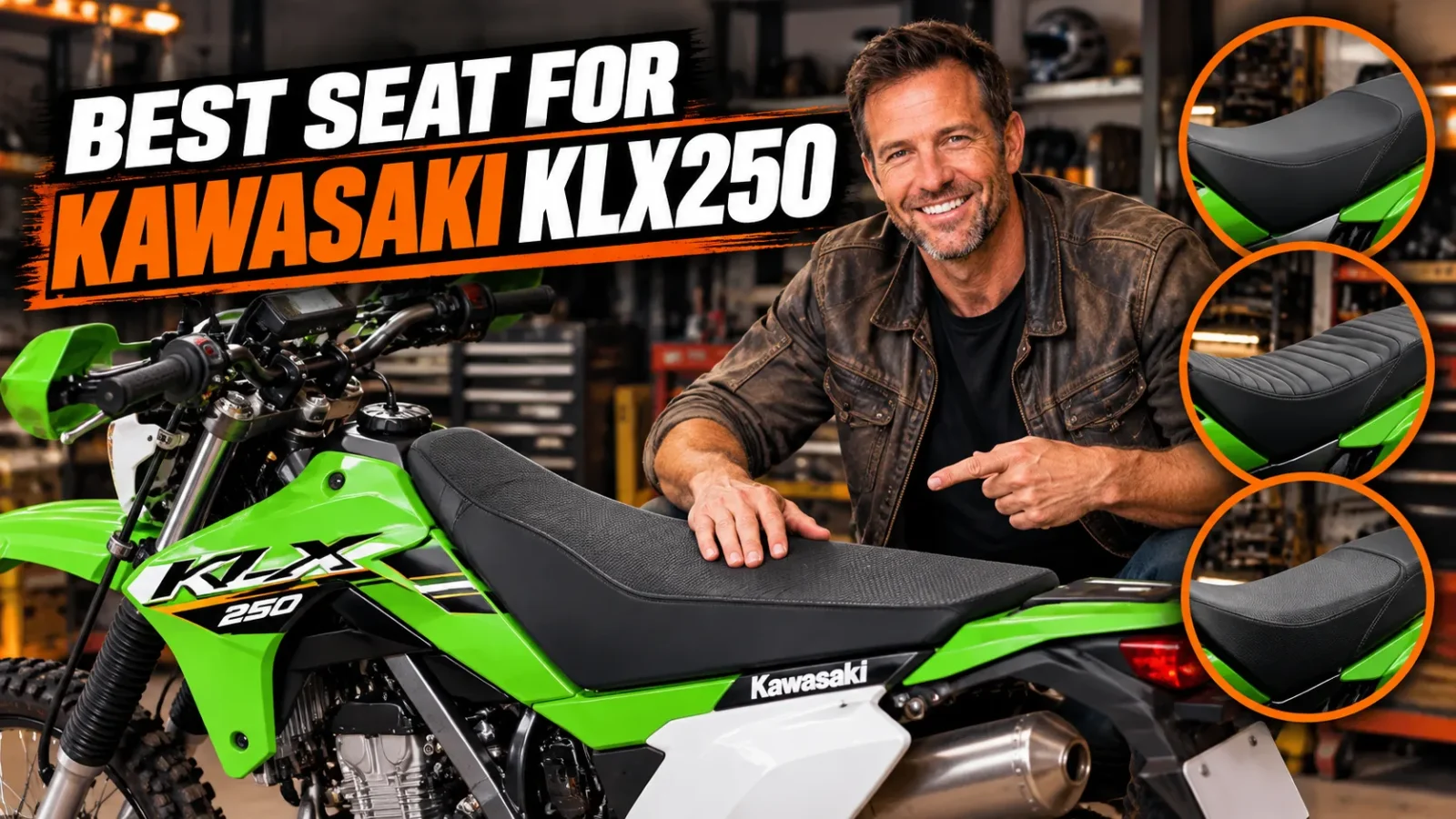
The KLX250 is a brilliant light dual-sport that’s happier on a trail than on a two-hour road slog, largely because of the seat. Here’s how to fix that without ruining its off-road ability.
This post is part of my seat series. For the fundamentals first (foam, pan, cover and fit), read my complete guide to the best motorcycle seat, then come back for KLX250-specific advice.
- The KLX250 has a tall, firm, narrow stock seat built for off-road control, which is why many riders find it tiring on pavement over longer distances.
- For a dual-sport, you want comfort without losing the ability to slide forward and back and stand up. Don’t pick a seat that’s too wide or too grippy.
- Shorter riders may want a lower seat or reshaped foam. Taller riders may want extra height or more room. Check how any change affects ground reach and handling.
- Common options include a gel or sheepskin cushion, reworked foam or a replacement seat from a dual-sport specialist. See my full seat guide for what to look for.
- Confirm fitment for your exact year. The KLX250 has had different versions, and not every seat fits every one.
- Names dual-sport riders often research include Seat Concepts and Guts Racing. Check current availability and reviews.
[IMAGE PLACEHOLDER 1: Featured image] Alt text: Lightweight dual-sport motorcycle on a gravel forest trail AI image prompt: Photorealistic image of a lightweight green dual-sport motorcycle on a gravel forest trail, rider standing on the pegs in off-road gear, dust and sunlight through trees, no visible brand logos or badges, no readable license plate, 16:9.
Why the KLX250 Seat Divides Opinion
I’ve heard riders describe the KLX250 in two completely different ways. Some call it the perfect all-rounder: light, simple, capable on trails and legal for the street. Others call it a bike that’s brilliant for an hour and miserable for three.
The difference is often the seat.
A dual-sport’s seat has to do a job that’s a bit contradictory. For off-road riding, you want a narrow, firm seat that lets you move freely, grip the bike with your knees, and stand and sit without catching. For road riding, you want a wider, cushioned seat that spreads weight over hours.
Stock dual-sport seats are generally built more for the first job. That’s why many KLX250 riders reach for upgrades.
I haven’t tested every KLX250 seat or modification, and different model years vary, so I’ll focus on how to think about the problem rather than hand you a ranked list.
Understanding the KLX250’s Seat
Details vary by year, so check your own bike. In general:
- Tall seat height. The KLX250 is a tall dual-sport. Seat height is often around the mid-30s of inches, but check your model’s spec. That’s great for ground clearance and a bit daunting for shorter riders.
- Firm foam. Firm foam helps control off-road and can feel hard after a long road ride.
- Narrow profile. A narrow seat helps you move around but spreads weight over less area.
- Grippy cover. Many dual-sport seats use textured covers that prevent sliding. That’s helpful off-road and can be rough on pants over long rides.
None of this is a flaw. It’s a design for a purpose. The trick is adjusting it for how you actually ride.
Start With How You Ride
Before changing anything, ask yourself honestly how you use the bike.
Mostly Trails
If you spend most of your time off-road, keep the seat narrow and firm. A comfort mod that makes you wider or sticky will hurt your control. Small changes to foam or a thin cushion for transit sections may be enough.
Mixed Road and Trail
This is where most KLX250 riders sit. You want a compromise: a bit more cushioning, but still able to move around. A reshaped seat or a thin cushion can help.
Mostly Road and Commuting
If most of your miles are on pavement, comfort matters more than off-road control. A wider, more cushioned seat makes sense, and you can consider options that suit the road.
Adventure Touring
If you’re loading the bike with luggage and covering long distances, think seriously about a touring-style seat and luggage planning. My guide to touring luggage is a good companion.
Height: Lower, Taller or Leave It Alone?
If You’re a Shorter Rider
A tall dual-sport can be intimidating. A lower seat, reshaped foam or a narrower front can help your feet reach the ground. My guide to the best motorcycle seat for short riders explains why width matters as much as height.
Be careful about lowering the suspension. It changes ground clearance and handling, which matters on a bike you plan to ride off-road. Use parts made for your model, and get help from a qualified mechanic.
If You’re a Taller Rider
You might want a taller seat or extra foam to open up your knee angle on the pegs. My tall rider seat guide covers how seat height and position affect your triangle.
If the Height Is Fine
Leave it. Focus on foam and shape.
[IMAGE PLACEHOLDER 2: Dual-sport seat profile] Alt text: Side profile of a tall dual-sport motorcycle seat showing foam depth and narrow front AI image prompt: Clean technical side-profile illustration of a dual-sport motorcycle seat on a white background, showing a narrow front, flat top, textured cover and foam cross-section with labeled height and width, muted colors, no brand logos, 3:2.
Your Options, From Cheapest to Most Involved
1. A Thin Cushion or Sheepskin
A cheap way to add comfort on road sections. Choose something thin and well secured, because a thick or slippery cushion hurts control off-road. See my seat cushion guide for how each type behaves.
Pros: inexpensive, removable. Cons: can slide, adds height and may get in the way when standing.
2. Adjusting Your Riding Position
Sometimes the seat isn’t the real problem. Check bar position, lever angles and footpeg position. A small change can shift weight off a tender spot.
3. Reworking the Foam
If the foam is worn or too hard, replacing or reshaping it can transform comfort. Many dual-sport riders do this themselves. My DIY seat rebuild guide walks through foam choices, adhesives and covers.
Pros: tailored to you, relatively low cost. Cons: takes time and skill, and it’s easy to overdo.
4. A Replacement Seat
Several makers build comfort and performance seats for dual-sports. Seat Concepts and Guts Racing are names riders often research, but availability varies by model and year, so check each maker’s current catalogue. Don’t assume a seat made for one version of the bike fits another.
Pros: professionally designed, often with better foam and cover options. Cons: cost, fitment checks and the need to test.
5. A Custom Seat
If you have unusual proportions or very specific needs, a custom seat builder can shape a seat around you. It’s the most expensive option and not usually necessary.
What to Look For in a KLX250 Seat
Here’s the checklist I’d use.
- Fitment. Confirm your exact year and version. Don’t guess.
- Foam density and depth. Dense, supportive foam that doesn’t bottom out. Soft foam flattens quickly and isn’t good for control.
- Shape. Narrow enough at the front to move around, with enough width at the back to spread weight.
- Cover. Durable, water-resistant and grippy enough, but not so sticky it chafes over long rides. See my cover materials guide.
- Height. Suited to your ground reach and knee angle.
- Weight. A lightweight seat helps the bike’s handling, especially off-road.
- Return policy. Fit is personal, and an easy return reduces risk.
Off-Road Considerations
If you ride trails, a comfort seat shouldn’t hold you back. A few things to keep in mind.
- Don’t make it too wide. A wide seat catches your knees and makes it harder to move.
- Beware of slippery covers. You need grip when you stand and sit.
- Check the rear. A seat that’s too tall or rounded at the back can make it harder to shift your weight.
- Think about mud and water. The cover and foam need to handle it. A seat that soaks up water gets heavy and uncomfortable.
- Consider how it flexes. In a drop or a tip-over, a seat takes impact. Durable covers and bases help.
On-Road Considerations
If you’re using the KLX250 on the street, a few other things matter.
- Vibration. A single-cylinder engine can buzz, and a good seat and cushion can help.
- Wind and posture. An upright position puts weight on the seat. A good shape matters.
- Gear. A good adventure jacket, dual-sport helmet and boots make long days easier.
- Breaks. Regular stops help every rider on every bike.
Reworking the Foam on a KLX250: What I’d Think About
Because so many dual-sport riders end up reshaping their stock foam, it’s worth a closer look at how I’d approach it. I’m not going to walk through a full rebuild here, since my DIY seat rebuild guide covers the tools and materials, but these are the dual-sport-specific points.
Don’t Make It Too Soft
This is the number one mistake. A plush foam feels wonderful in the garage and then compresses to nothing on the first rough trail. You end up sitting on the pan, which is both uncomfortable and unsafe, since your bottom is bouncing against hard plastic over bumps.
Add Depth Where You Sit, Not Everywhere
You can build up a bit of extra foam in the area where your sit bones land and keep the front narrow so you can still move. The front of a dual-sport seat is where you grip with your knees and slide forward when you’re attacking a corner or standing up. Keep that section slim.
Think About Slope
Many dual-sport seats are flat or slightly sloped. If the seat slopes forward too much, you slide into the tank on every downhill. If it slopes backward, you end up sitting too far back. A flat, slightly raised rear section helps keep you in position without limiting your movement.
Mind the Edges
Sharp seat edges rub the inside of your thighs on long days. Rounding the edges slightly makes a big difference to comfort, particularly when you’re in riding trousers that don’t have much padding.
Protect the Foam
Dual-sport foam gets wet, muddy and sometimes torn. A good cover and a water-resistant foam base help. If the cover tears, repair it quickly. A soaked foam block becomes heavy, smells bad and breaks down. My seat cover materials guide explains which covers cope best with dirt and moisture.
Test in Stages
Don’t do everything at once. Add or shape a little, ride, then adjust. You can always take more foam away, but adding it back is harder.
Planning a Longer Trip on a KLX250
Plenty of riders use a lightweight dual-sport for multi-day trips, and the seat plays a large role in whether those trips are fun. If you’re planning something bigger, here are a few thoughts.
- Plan your stops. A light bike with a firm seat benefits from regular breaks. Standing on the pegs when it’s safe and stretching at stops helps.
- Pack sensibly. Heavy luggage changes how you sit and where your weight goes. My touring luggage guide covers how to carry gear without upsetting the bike.
- Dress for the weather. Wet, cold or hot conditions make seat discomfort worse. A good jacket makes a real difference.
- Check the bike before you go. A seat that’s loose or damaged is a problem on a long ride. Run through my T-CLOCS pre-ride inspection guide before you leave.
- Carry a simple fix kit. Duct tape and a small repair kit can save a cover that’s torn on a trail.
Seat Care for a Bike That Gets Dirty
A dual-sport seat has a tough life: mud, rain, sun and the occasional drop.
- Wash it with mild soap and water. My guide on how to wash your motorcycle covers the basics.
- Check for cuts. A small tear lets water into the foam, which then gets heavy and rots. Repair covers quickly.
- Protect and waterproof. See my seat care guide.
- Dry it after wet rides. Let it dry before storing.
Common Mistakes KLX250 Riders Make
- Going too soft. Soft foam flattens and hurts off-road control.
- Going too wide. A wide seat can catch your knees and limit movement.
- Ignoring fitment. The KLX250 has had different versions, so check yours.
- Lowering without thinking. Changes to the suspension affect clearance and handling.
- Forgetting care. A torn cover and wet foam ruin a seat quickly.
- Expecting one seat to be perfect. A dual-sport is a compromise, and your seat should match how you ride.
A Buyer’s Checklist
- I know my exact year and version.
- I’ve decided how much of my riding is road versus trail.
- I know whether I need lower, taller or the same height.
- I’ve tried a thin cushion or position changes.
- I’ve considered reworking the foam myself.
- I’ve checked fitment and reviews from similar riders.
- I’ve checked the return policy.
- I know how I’ll care for the seat.
Methodology: How I Approached This Guide
- I focused on principles that fit the KLX250’s role as a lightweight dual-sport, because exact fitment varies by year.
- I haven’t tested every seat for every version of the bike, and I haven’t tried to rank brands.
- I’ve avoided pricing, because it changes.
- My advice comes from my own riding, from conversations with dual-sport riders and from patterns people commonly report.
If you’ve found a seat that works well on your KLX250, I’d love to hear your year, riding style and what you changed.
Frequently Asked Questions
What is the best seat for a Kawasaki KLX250?
There isn’t one best seat. It depends on how you ride, your height and your year. Look for dense foam, a shape that lets you move around and a cover that handles dirt and water.
Is the KLX250 seat comfortable for long rides?
Many riders find the stock seat firm and narrow, which can tire you on long road rides. A thin cushion, reworked foam or a replacement seat can help.
Can I lower the KLX250 seat?
Yes, by reshaping the foam or using a lower replacement seat. Lowering the suspension is a bigger step that affects ground clearance and handling, so be careful.
Will a comfort seat hurt off-road ability?
It can if it’s too wide, too soft or too slippery. Choose a design that keeps you able to move and stand.
Are gel pads good for dual-sports?
A thin, secure gel pad can help on road sections. Thick or slippery pads can hurt control off-road.
Can I rebuild my KLX250 seat myself?
Many riders do. See my DIY seat rebuild guide for materials and methods.
Will any KLX250 seat fit my bike?
Not necessarily. Different years and versions can have different seat mounts, so confirm fitment before buying.
What is the best seat for adventure riding in general?
The principles are similar across dual-sports: dense foam, a shape that allows movement and a durable, water-resistant cover. See my main seat guide.
Final Thoughts
The KLX250 is a fun, capable bike, and the right seat helps you enjoy more of what it can do. Be honest about how you ride, check fitment, keep it narrow enough to move, and try cheaper fixes first.
A seat that suits both road and trail makes a good bike a great one.
Keep Reading in the Seat Series

Related Articles
Best Motorcycle Seats for Tailbone and Back Pain Relief: What Helps and What Doesn’t
Riding hurts? Here's what I look for in a motorcycle seat for tailbone pain, a bad back and pressure problems,…
Jake Miller
13 min read
Best Motorcycle Seat for Tall Riders: Room to Stretch, Support That Lasts
Tall, big or riding two-up? Here's how I choose a motorcycle seat with enough reach, support and room, from seat…
Jake Miller
13 min read
Best Motorcycle Seat for Short Riders: How I Get Both Feet Down Without Giving Up Comfort
Short rider and tired of tiptoeing at red lights? Here's how I choose a lower, narrower motorcycle seat, including solo…
Jake Miller
17 min read