
8 Best Motorcycle Hand Grips for Cruising: Comfort Picks I’d Actually Buy
 Jake Miller
10 min read
Jake Miller
10 min read
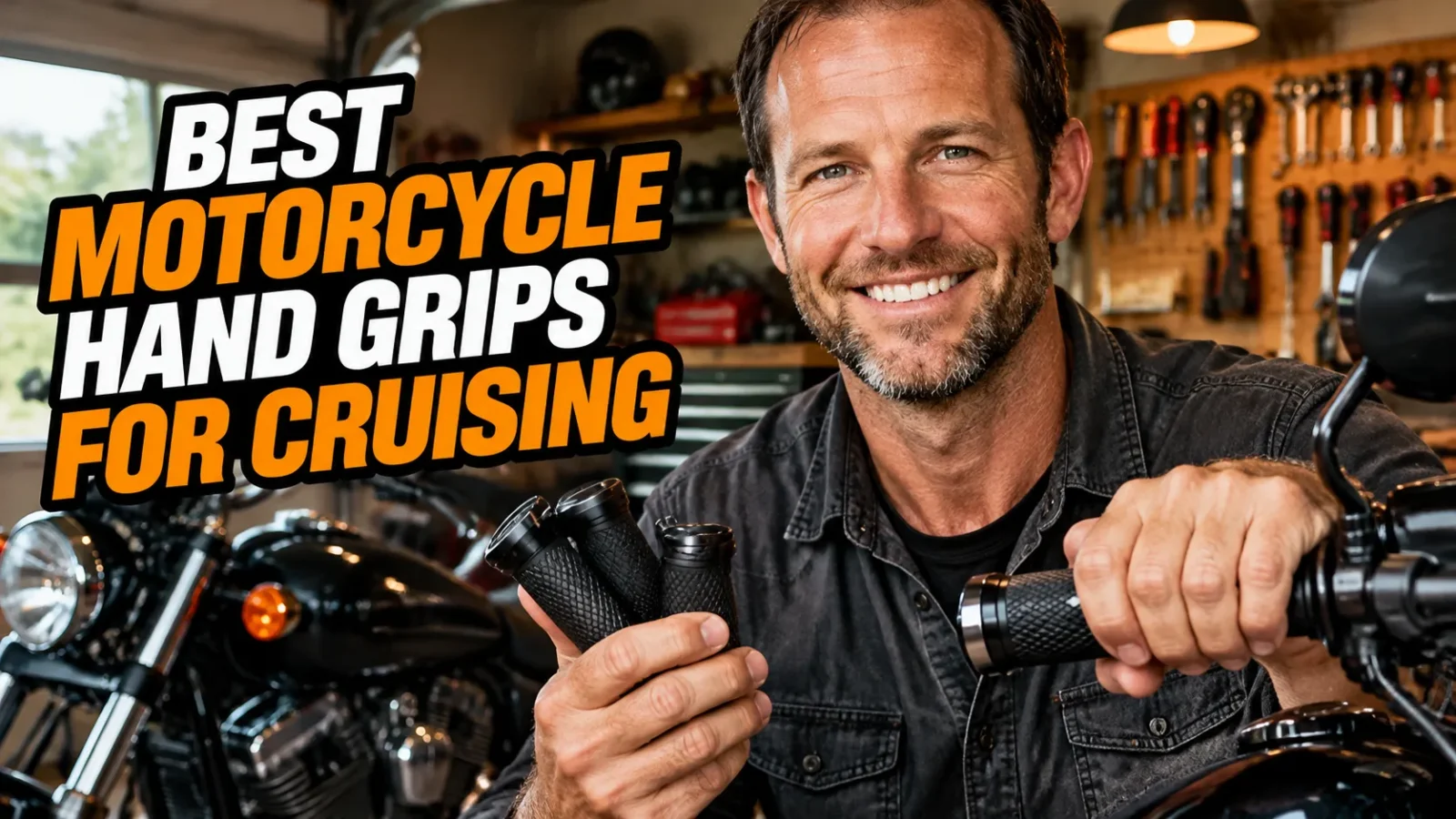
I’ve logged well over 60,000 miles on cruisers, and I can tell you the single cheapest fix for numb, tingling hands isn’t a new bike or a new set of bars. It’s the grips. I spent years riding with stock rubber sleeves that felt fine for the first hour and miserable by hour four, until a buddy handed me a set of ISO-Grips on a 900-mile weekend and changed how I think about cockpit comfort.
Since then I’ve bought, borrowed, and worn out a ridiculous number of grips on Harleys, metric cruisers, and baggers. This list is the result: the eight sets I’d genuinely spend my own money on again.
One thing before we dive in: grips are only one-third of the comfort equation. Before you spend a dime on rubber and billet, sort out what you’re sitting on. My guide to the Best Motorcycle Seat covers the other half of the puzzle, and honestly, it matters more than anything you bolt to your handlebars.
- My overall pick is the Kuryakyn ISO-Grips with Throttle Boss — the palm rest is a genuine game changer on the highway.
- Avon Air Cushion grips win for pure vibration damping on long tours.
- Check bar diameter (1″ vs 7/8″) and throttle type (cable vs electronic) before ordering anything.
- On a tight budget, Grip Puppies foam covers cost about $20 and add real cushion.
What I Actually Look For in a Cruising Grip
I’m not chasing lap times. On a cruiser, I care about three things: diameter, vibration isolation, and how the grip feels after two hours with my hand locked in one position.
Stock grips are usually too thin. A fatter grip spreads contact pressure across your whole palm instead of concentrating it on one hot spot, and that alone kills most of the tingling I used to get. Rubber compound matters too — soft EPDM or TPV soaks up the high-frequency buzz that comes through a V-twin at 70 mph.
Finally, I want a grip that stays grippy when it’s wet. Chrome billet looks fantastic in a parking lot and terrifying in a downpour if there’s no rubber where your hand actually sits.
1. Kuryakyn ISO-Grips with Throttle Boss — Best Overall
If I could only recommend one set, this is it. The ISO-Grips use ribbed EPDM rubber bonded over an aluminum core, and the ribs flex independently as you squeeze, which is where the “ISO” name comes from. It sounds like marketing until you ride a tank of fuel with them.
Why the Throttle Boss Matters
The Throttle Boss is a palm heel rest that extends off the throttle side. You can relax your fingers and hold the throttle open with the heel of your hand, which is the closest thing to cruise control you’ll get without electronics. On a 500-mile day, that’s worth the price of admission on its own.
Kuryakyn sells them in chrome and gloss black, with separate fitments for 1-inch bars and for both cable and electronic throttle bikes. Expect to pay somewhere in the $80 to $110 range. Mine have been on and off three bikes now and the rubber has never cracked.
2. Avon Grips Air Cushion — Best for Vibration
Avon Grips (the grip company, not the tire folks) builds the Air Cushion line specifically to kill vibration. The rubber has tiny air pockets molded through it, and it deadens buzz noticeably better than anything else I’ve tried.
I ran a set on a 103 cubic inch bagger that used to make my right hand go numb around the 90-minute mark. With the Air Cushions, I could ride a full tank without shaking out my fingers. Avon also makes a Memory Foam line that’s even softer, but I found it a little vague when I wanted precise throttle input in traffic.
They’re made in the USA, fit 1-inch bars, and run roughly $75 to $100. If your hands tingle more than they ache, start here.
3. Harley-Davidson Dominion Collection Hand Grips — Best OEM Upgrade
For anyone on a Harley who wants a factory-backed part and dealer installation, the Dominion Collection grips are the easy button. They’re black anodized aluminum with rubber inserts, and they match the Dominion footpegs, shifter pegs, and highway pegs perfectly.
They look far more expensive than they are. Fit and finish is genuinely OEM-grade, and the rubber inserts give you a real grip surface instead of polished metal. Figure $140 to $160 depending on the dealer and whether you catch a sale.
They come in versions for cable throttle and electronic throttle, so if you’re on a newer Milwaukee-Eight bike with ride-by-wire, make sure you order the right one. I’ve seen guys order the wrong SKU and end up with a grip that won’t accept the throttle-by-wire housing.
4. Arlen Ness Fusion Grips — Best Custom Look
Arlen Ness has been making billet cruiser parts since before I could ride, and the Fusion grips are a solid example of why. They’re CNC-machined aluminum with a rubber sleeve, available in contrast-cut and black finishes that make a stock handlebar look intentional.
What I like is that Ness didn’t sacrifice function for style. The rubber section is wide enough that my palm never touches bare metal, and the machined ridges give your fingers something to hook onto. They fit 1-inch bars and run about $100 to $140.
If you’re building a bike where every part needs to match, the Fusion grips pair well with Ness’s Beveled and SpeedLiner lines.
5. Performance Machine Contour Grips — Best Premium Billet
Performance Machine is the premium end of this list, and the Contour grips are what I’d put on a show-quality bagger that still gets ridden hard. They’re machined from billet aluminum with a rubber overlay, finished in PM’s Contrast Cut or Black Ops, and they feel substantial in a way cheaper grips don’t.
The catch is price. Expect $160 to $220 depending on finish and fitment. That’s a lot for grips, and I’ll be honest: they don’t isolate vibration as well as the Avon Air Cushions or the ISO-Grips.
What you’re paying for is machining quality, durability, and looks. The rubber compound doesn’t harden or glaze over like cheaper grips, and mine still look new after two seasons. If you want the best-looking grip on the block, this is it.
6. Roland Sands Design Traktion Grips — Best for Aggressive Riding
RSD’s Traktion grips are the ones I reach for when I’m riding a cruiser the way it probably shouldn’t be ridden. The rubber compound is noticeably tackier than most cruiser grips, and the diamond-pattern texture gives you real feedback through the bars.
They use a rubber sleeve with billet aluminum end caps, so you get the custom look without giving up grip surface. In the rain they’re the best of the bunch — I’ve never once felt my hand slip on them.
Price sits around $95 to $120, and RSD offers both 1-inch and 7/8-inch fitments, which makes them one of the few premium options for metric cruisers. The tradeoff is that the firmer compound transmits a bit more vibration than a soft EPDM grip.
7. Biltwell Kung Fu Grips — Best Budget Pick
Biltwell’s Kung Fu grips are a cult classic for a reason. They’re injection-molded TPV rubber with a deep, blocky pattern, and they cost somewhere between $20 and $30. That’s it. No billet, no branding hype, just a well-shaped grip.
I keep a set in my garage at all times. They’re the grips I put on any bike I’m flipping, and they’re the grips I recommend to anyone who just wants their hands to stop hurting without spending real money. They come in 7/8-inch and 1-inch versions, so they fit everything from a Sportster to an old metric cruiser.
The tradeoff is vibration damping — TPV is firmer than the soft rubber on the Avon or Kuryakyn grips, and there’s no palm rest. But for the money, nothing else comes close.
8. Grip Puppies — Cheapest Comfort Upgrade
Grip Puppies aren’t a replacement grip at all. They’re closed-cell foam sleeves that slip over your existing grips, adding roughly a quarter inch of diameter and a layer of cushioning. They cost about $20 a pair and install in two minutes with soapy water.
I used them for a full season on a bike where I wasn’t ready to commit to aftermarket grips. They killed most of my hand fatigue and made the stock grips feel almost aftermarket. If you’re not sure whether a fatter grip suits your hands, this is the cheapest possible experiment.
The downsides: they wear out faster than rubber, they get slick when soaked, and they look exactly like what they are. But as a $20 test before a $150 purchase, they’re hard to argue with.
Fitment Check Before You Buy
This is where most people go wrong, so let me save you a return shipping label.
Bar Diameter
Most cruisers and nearly every Harley run 1-inch handlebars. Many metric cruisers and dual-sports use 7/8-inch bars. If you order the wrong size, the grip will either slide on with a comical wobble or refuse to go on at all.
Cable vs Electronic Throttle
Older bikes use a dual-cable throttle, and the throttle-side grip has a specific recess for the cable housing. Newer bikes with ride-by-wire need a grip designed for the electronic throttle tube. Brands like Kuryakyn, Avon, and Harley-Davidson all sell both versions, and they are not interchangeable.
Grip Length and Bar End Weights
Stock grip length varies, and if your bike has bar end weights or hand guards, measure before ordering. A grip that’s a half inch too long will rub your controls or leave a gap at the bar end.
Don’t Forget the Rest of Your Contact Points
Grips fix your hands. Your seat fixes everything else, and after enough miles you’ll realize the two problems are connected — sore hands make you grip tighter, and a sore backside makes you shift your weight onto the bars.
If you’re shorter than average, a lower seat can transform your reach to the bars, so it’s worth reading up on the Best Motorcycle Seat for Short Riders. Taller riders have the opposite problem and usually need more legroom and a higher, flatter perch — the Best Motorcycle Seat for Tall Riders covers that side of things.
Baggers are their own category. If you’re logging serious highway miles, the best motorcycle seat for harley touring is the upgrade I’d make before I touched the handlebars. And Sportster owners, don’t sleep on this — the right Best Seat for Harley Sportster does more for a long day than any grip ever will.
Even dual-sport riders deal with the same issue on long pavement stretches, which is why I point KLX owners toward the best motorcycle seats for kawasaki klx250 when they ask me about highway comfort.
My Final Take
If you want the short version: buy the Kuryakyn ISO-Grips with Throttle Boss and be done with it. The palm rest genuinely changes how a long day in the saddle feels, and the rubber compound holds up for years.
If vibration is your specific enemy, go Avon Air Cushion. If you want looks above all, Performance Machine Contour. And if you just want to test the whole fatter-grip theory for the price of lunch, grab a set of Grip Puppies and see what your hands have been missing.
Whichever way you go, spend an hour adjusting your lever angles and bar position afterward. The best grip in the world still feels wrong if your wrists are bent at a weird angle — and that adjustment is free.
Frequently Asked Questions
What are the best motorcycle hand grips for cruising?
For me it comes down to two: Kuryakyn ISO-Grips with the Throttle Boss for all around comfort, and Avon Air Cushion grips if vibration is your main enemy. Both are built for 1 inch cruiser bars.
Do thicker grips really help on long rides?
Yes. A larger diameter spreads pressure across more of your palm instead of digging into one spot, which reduces cramping and numbness on long highway days. Foam covers like Grip Puppies are the cheapest way to test this.
Will aftermarket grips fit my bike?
Check two things first: bar diameter (1 inch on most cruisers and Harleys, 7/8 inch on many metrics) and throttle type (dual cable or electronic). Almost every brand sells separate SKUs for each.
Are Grip Puppies worth buying?
At roughly $20 a pair, absolutely. They slip over your existing grips, add cushion and diameter, and they are the least expensive way to find out whether a fatter grip suits your hands before you spend $150 on billet.

Related Articles

Rusty Bolt Rescue: How I Remove Rust from Motorcycle Bolts Without Snapping Them
Rusty motorcycle bolts? Here's how I remove rust from motorcycle bolts safely, from penetrating oil soaks to vinegar baths, plus…
Jake Miller
11 min read

How to Properly Tie Down a Motorcycle: A Rider’s Field Guide to Straps, Anchors, and Zero Regrets
Learn how to properly tie down a motorcycle from a rider who has done it hundreds of times. Straps, anchor…
Jake Miller
10 min read

Basic Motorcycle Maintenance: My Honest Daily, Weekly, and Monthly Routine
I've spent years wrenching in my own garage. Here's my honest, no-nonsense guide to basic motorcycle maintenance, from daily checks…
Jake Miller
8 min read