
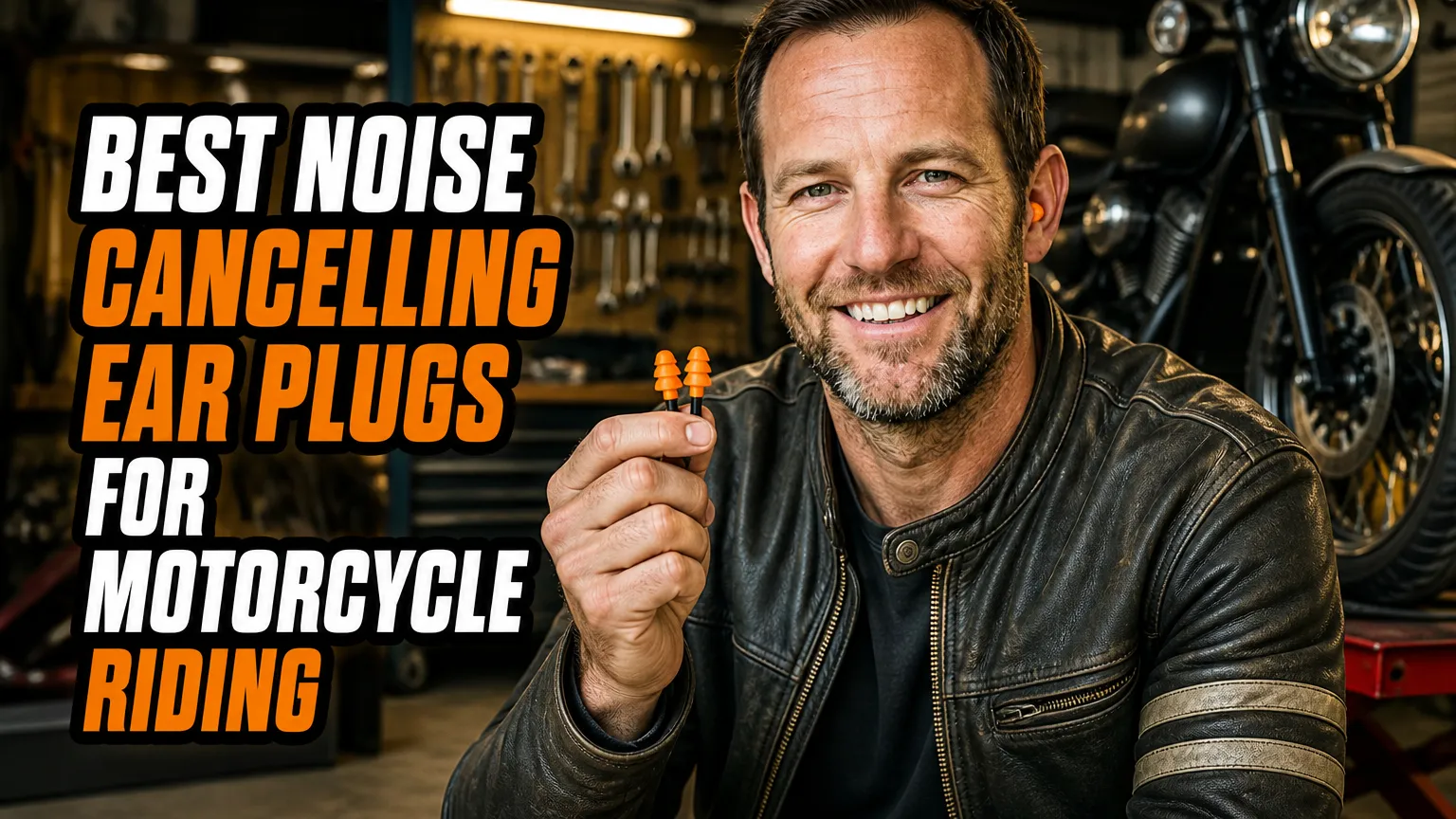
Wind noise is one of the biggest sources of fatigue on a motorcycle ride, and it can put my hearing at risk even when the engine itself doesn’t seem especially loud. I look for earplugs that fit comfortably under a helmet, reduce the steady roar, and still let me stay aware of my surroundings.
Despite the familiar search for the best noise cancelling ear plugs for motorcycle riding, the products I recommend here work through passive noise reduction, not electronic noise cancellation. I compare their published ratings, fit, and practical features, but I always treat a good seal as essential: a highly rated plug that keeps working loose is no use to me.
- I’d start with Alpine MotoSafe Race or Tour for riding-focused filtered earplugs.
- EarPeace Moto offers interchangeable filters, while Loop Experience 2 is a reusable option with a discreet fit.
- Custom-moldable Decibullz and soft Mack’s foam plugs suit riders who prioritize a secure fit or stronger noise reduction.
- I compare the actual rating, comfort under my helmet, and fit rather than chasing the highest number alone.
How I choose earplugs for a motorcycle ride
I want to lower the constant wind roar without assuming that earplugs will make me immune to every sound. Earplugs reduce noise; they don’t silence the road or replace alert riding. I still depend on mirrors, observation, and sensible speed to stay aware of surrounding traffic.
When I compare products, I pay attention to the maker’s stated SNR or NRR. Those are different rating systems, so I don’t compare the numbers as if they were measured on exactly the same scale. Fit matters just as much: if my helmet shifts a plug or it leaks around the ear canal, the advertised reduction won’t reflect what I experience.
I also think about the rest of my setup. A well-fitting helmet, riding layers, and other protective choices all contribute to a more comfortable ride, so I often review the best clothes for motorcycle riding alongside hearing protection. For a broader safety checklist, I also consider the best gear for motorcycle safety top protective clothing and accessories.
1. Alpine MotoSafe Race — My pick for louder, faster rides
When I want a reusable plug designed specifically for motorcycling, Alpine MotoSafe Race is near the top of my list. It uses Alpine’s soft, reusable AlpineThermoShape material and a filter intended to reduce wind and traffic noise while leaving some sound and communication audible. Alpine lists an SNR of 20 dB for the Race version.
I like that it comes with a small storage case and is made to sit comfortably under a helmet. Alpine MotoSafe Race typically costs around $20 to $30, although prices and package contents can vary by retailer. I’d consider it for highway riding or a noisy helmet, but I would still check that it fits my ears properly before relying on it for a long trip.
What I’d keep in mind
The Race filter is designed for more noise reduction than Alpine’s Tour option, but no filter can compensate for a poor seal. I’d insert both plugs as directed and put my helmet on carefully to make sure the helmet padding hasn’t nudged either one out of place.
2. Alpine MotoSafe Tour — My choice for everyday riding
Alpine MotoSafe Tour uses the same general riding-focused approach as the Race model, with a softer filter intended for touring, commuting, and lower-noise situations. Alpine lists an SNR of 17 dB for MotoSafe Tour. I like having that lower-attenuation option when I want less wind roar but don’t need the stronger reduction associated with the Race filter.
These reusable plugs are made from AlpineThermoShape material and are sold with a storage case. I usually see them in the roughly $20 to $30 range. For riders who want both filter strengths, Alpine also sells MotoSafe Pro kits that include Tour and Race options; I’d check the exact retailer listing to confirm what’s in the box.
My main reason to choose MotoSafe Tour is its combination of a motorcycle-oriented filter and a modest attenuation rating. It won’t be the right fit for every ear, so I’d focus on comfort during a test fit rather than assuming the shape will suit me just because it works for another rider.
3. EarPeace Moto — My pick for interchangeable filters
EarPeace Moto is a reusable silicone earplug set with interchangeable acoustic filters. The manufacturer offers filters with different stated reduction levels, giving me a way to choose a lower or higher setting based on my ride and comfort needs. I appreciate that the package is built around having options rather than forcing me to use a single filter level everywhere.
EarPeace Moto usually sells for around $25 to $35, with a compact carry case. The three-flange silicone plugs are designed to sit inside the ear, which can work well under a helmet if their size and shape suit my ears. I’d read the current product information carefully, since the filter options and their published specifications are the most useful details to compare before buying.
Why I’d consider it
Interchangeable filters make EarPeace Moto a flexible choice for riders who use their plugs in different settings. My practical test is still simple: I need to be able to insert them consistently, get a secure seal, and wear them without painful pressure after a few minutes with my helmet on.
4. Loop Experience 2 — My choice for a reusable, low-profile design
Loop Experience 2 is not marketed exclusively as a motorcycle earplug, but its reusable design and published SNR of 17 dB make it an option I’d consider for a quieter ride. It uses a small ring-shaped body with soft silicone tips, and the set includes multiple tip sizes so I can try to find a snug fit.
Prices are generally around $30 to $40, depending on the model and retailer. Loop Experience 2 is designed to reduce sound while keeping it more natural than a simple solid blocker, but I wouldn’t assume that a general-purpose filtered earplug performs exactly like a motorcycle-specific one at highway speeds. My helmet fit and the seal in my own ears would decide whether it worked for me.
I’d also check which version I’m buying: Loop’s product range changes, and features or included accessories can differ across models. If I add an optional accessory, I’d confirm its intended use and attenuation information rather than guessing how much extra protection it provides.
5. Eargasm High Fidelity Earplugs — My pick for a discreet filtered plug
Eargasm High Fidelity Earplugs use reusable silicone tips and acoustic filters in a compact design. The manufacturer lists an NRR of 16 dB, and the package has included two sizes of plug bodies to help accommodate different ears. I find that kind of sizing choice important because a comfortable seal is more useful than a small, uncomfortable plug I’m tempted to remove.
These earplugs commonly cost around $35 to $45. Eargasm positions them as filtered earplugs that lower volume while retaining sound detail, which may appeal to riders who dislike the muffled sensation of foam. I’d still remember that a filter can’t guarantee that I’ll hear every sound clearly in all traffic or helmet conditions.
Before riding with them, I’d try both supplied sizes, follow the insertion instructions, and wear my helmet for a few minutes. If the plugs create pressure or work loose, I’d choose another option rather than making myself tolerate a poor fit.
6. SureFire EP4 Sonic Defenders Plus — My pick for a flanged reusable plug
SureFire EP4 Sonic Defenders Plus are reusable silicone earplugs with a triple-flange design and a removable filter cap. SureFire lists an NRR of 24 dB with the filter caps in place; the product’s open-filter configuration is intended to let more sound through. I’d pay attention to those instructions, since changing the configuration changes how the plugs are intended to work.
The EP4 typically costs around $15 to $25 and comes in more than one size. Its flexible stems are designed to help secure the plugs, but I’d make sure they don’t press uncomfortably against my ears beneath the helmet padding. I’d also check the product sizing guide, since a flanged plug that is too large can become irritating on a long ride.
For me, the appeal is its adjustable design and relatively accessible price. It isn’t a dedicated motorcycle filter set, so I’d compare its fit and sound reduction with riding-specific models before choosing it for regular highway use.
7. Decibullz Custom Molded Earplugs — My pick for a personalized fit
Decibullz Custom Molded Earplugs are made to be heat-molded to the shape of my ears at home, following the manufacturer’s instructions. The company lists an NRR of 31 dB for its custom-molded earplugs. That rating makes this a higher-attenuation option than many filtered riding plugs, so I’d think carefully about whether the fit and level of sound reduction match how and where I ride.
The basic custom-molded set often costs around $25 to $35, while versions with extra accessories or different designs can cost more. I like the idea of shaping a plug to my ear, especially if standard silicone tips don’t stay put. I would take time with the molding process and check that both sides feel comfortable before putting on my helmet.
What I’d consider before choosing
Decibullz are not the same as a filtered earplug intended to preserve a more open listening experience. I’d avoid choosing them just because the NRR number is higher; I’d consider the riding environment, fit, and whether their level of attenuation suits me. If I have questions about hearing protection or a hearing condition, I’d ask a qualified hearing professional.
8. Mack’s Ultra Soft Foam Earplugs — My budget pick for disposable protection
Mack’s Ultra Soft Foam Earplugs are a familiar disposable option with a published NRR of 33 dB. Their soft foam is designed to expand in the ear canal when inserted correctly. I’d roll each plug as directed, insert it properly, and give it time to expand before putting my helmet on.
A multi-pair pack often costs around $5 to $15, making Mack’s one of the least expensive choices here. I like that they’re easy to find and convenient to replace, but foam plugs don’t have interchangeable acoustic filters and may reduce more sound than I want. Their real-world protection depends on correct insertion, so I wouldn’t rely on the printed rating as a guarantee of what I personally receive.
I’d use each pair according to its instructions, keep the plugs clean, and replace them when they’re dirty, damaged, or no longer expand and seal well. If I prefer reusable plugs or find foam uncomfortable, I’d move to one of the silicone or custom-fit options above.
My quick fit and riding checklist
I put earplugs in before I put on my helmet, then check that they remain seated once the helmet is on. If the helmet pushes on them, they hurt, or they start to slip, I adjust the fit or try a different model. I never force a plug deep into my ear canal or ignore pain.
I also avoid treating any single rating as a complete measure of safety. SNR and NRR are useful product specifications, but they come from different standards and don’t account for every rider’s fit, helmet, or conditions. When I’m uncertain about what level of protection I need, I consult a hearing professional rather than guessing.
Finally, I pair earplugs with a helmet and riding kit that suit the weather and my route. If I’m preparing for changing seasons, I also look at the best motorcycle clothing for beginners, the best winter face mask for motorcycle riding, and the best gear for riding motorcycle in cold weather stay warm and protected.
Which pair would I choose?
For a riding-specific reusable plug, I’d start by comparing Alpine MotoSafe Race and MotoSafe Tour, choosing between their stated attenuation levels based on my needs and fit. I’d look at EarPeace Moto if interchangeable filters matter most, and at Loop Experience 2 or Eargasm High Fidelity if I want another reusable filtered design to try.
If my priority is a custom shape, I’d consider Decibullz; for inexpensive disposable foam, I’d consider Mack’s Ultra Soft. There isn’t one perfect pair for every rider. I choose the earplugs I can insert correctly, wear comfortably under my helmet, and use consistently on every ride.
Frequently Asked Questions
Are motorcycle earplugs safe to wear while riding?
Yes, when I choose properly fitting earplugs that reduce harmful wind noise without preventing me from hearing important traffic sounds. I still ride attentively and follow local laws.
What noise reduction rating should I look for?
I compare the product’s published SNR or NRR and prioritize a comfortable, consistent seal. These ratings use different test standards, so I do not treat their numbers as directly interchangeable.
Can I wear foam earplugs under a motorcycle helmet?
Yes. I roll and insert foam plugs according to their instructions, then check that the helmet does not push them out or cause pressure. I use disposable plugs only as directed.
Do motorcycle earplugs block all wind noise?
No. Earplugs reduce noise rather than eliminate it. I also check my helmet fit and windscreen setup, and I replace plugs that are dirty, damaged, or no longer seal well.

Related Articles

5 Motorcycle Wrist Braces and Guards I’d Choose for Confident Riding
Compare five wrist braces and guards I’d consider for street and dirt riding, with fit, support, glove compatibility, and buying…
 Jake Miller
11 min read
Jake Miller
11 min read

7 Under Armour Base Layers I’d Choose for Comfortable Motorcycle Rides
Discover seven Under Armour base layers for hot and cold rides, plus my fit tips and safety advice for wearing…
Jake Miller
10 min read

8 Best Motorcycle Base Layers for Staying Warm on Cold Rides
Compare eight rider-ready thermal base layers, from merino to synthetic options, with fit, warmth, layering advice, and picks for cold-weather…
Jake Miller
11 min read