
8 Best Boots for Motorcycle Safety Instructors Who Stand, Walk, and Ride All Day
 Jake Miller
9 min read
Jake Miller
9 min read
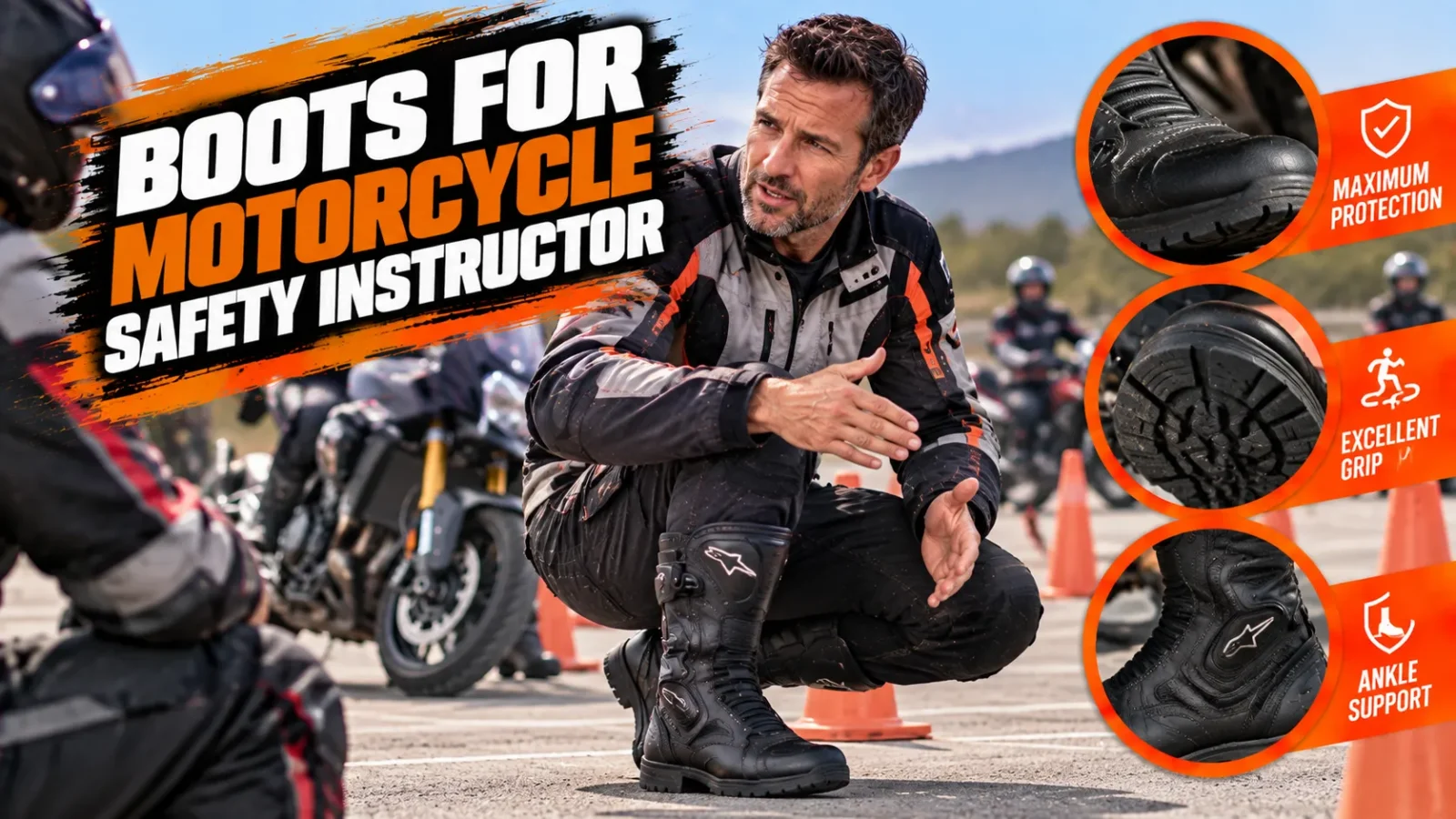
After teaching motorcycle safety courses for years, I can tell you the single most underrated piece of gear isn’t the helmet or the jacket—it’s the boots. Instructors don’t just ride; we stand on asphalt for eight hours, walk backwards demonstrating clutch control, and jump on and off a dozen different bikes a day.
That’s a completely different demand than what most riders need. I’ve burned through boots that were fantastic for a Sunday canyon ride but fell apart after three weeks of range duty. So I put together this list based on what’s actually survived my own instructing career and what I’ve watched fellow instructors swear by.
If you want the broader context on boot categories and CE ratings before diving in, I’d also point you to our Ultimate Guide to Motorcycle Boots, which covers the fundamentals this list builds on.
- My top overall pick is the TCX Baja Mid Gore-Tex for its all-day comfort and real armor.
- Low-profile boots like the Alpinestars Corozal Adventure Drystar walk better than sport boots.
- Duty-style boots such as the Bates GX-8 Gore-Tex Side-Zip are built for standing on pavement for hours.
- Budget instructors should look at the Forma Adventure Low Dry or TCX Airtech 3 WP.
- Whatever you pick, prioritize walkability and CE-rated ankle protection over race-boot styling.
1. TCX Baja Mid Gore-Tex — Best Overall for All-Day Comfort
This is the boot I recommend most often to new instructors, and it’s the one I personally wore through two full seasons of teaching. The TCX Baja Mid Gore-Tex sits at that sweet spot between adventure boot and hiking boot, which is exactly the profile you want when you’re on your feet all day.
It has a Gore-Tex waterproof lining, a reinforced toe box, and a malleolus (ankle bone) protection system that actually holds up to hundreds of mounts and dismounts. At around $220-$250, it’s not cheap, but I’ve gotten well over a year of daily use out of mine.
Why It Works for Teaching
The sole is genuinely designed for walking, not just shifting. I can walk backwards across gravel while spotting a student without feeling like I’m going to roll an ankle, which is more than I can say for stiffer sport boots I’ve tried.
2. Alpinestars Corozal Adventure Drystar — Best Low-Profile Walkable Boot
If you want something that looks less “motocross” and more like a rugged hiking boot, the Alpinestars Corozal Adventure Drystar is my pick. It’s a low-cut adventure boot with a Drystar waterproof membrane and a microfiber/textile upper that breathes far better than full-height alternatives.
Priced around $180-$200, it includes ankle protection and a shift pad, but it’s noticeably lighter than taller adventure boots. That matters when you’re logging 15,000+ steps in a parking lot range every week.
I switched to these for hot summer courses specifically because my feet stopped sweating through my socks by lunch. If you’re new to boot shopping in general, our Best Motorcycle Boots for Beginners guide is a good companion read before committing to a pricier instructor-specific pair.
3. Bates GX-8 Gore-Tex Side-Zip — Best Duty-Style Boot for Motor Officers and Instructors
A lot of motor officers who transition into instructing already own a pair of these, and for good reason. The Bates GX-8 Gore-Tex Side-Zip was built for law enforcement motorcycle duty, which means it’s engineered specifically for standing, walking, and directing traffic for entire shifts.
It features a full-grain leather upper, a Gore-Tex liner, and a slip-resistant outsole rated for wet pavement. At roughly $200-$230, it’s priced similarly to premium adventure boots but leans much more toward a “duty boot” fit and polish.
A Note on Fit
These run a touch narrower than TCX or Sidi models in my experience, so I’d size up half if you have wider feet. The side zip also makes them faster to get on and off between back-to-back classes, which I genuinely appreciate on long teaching days.
4. Sidi Adventure 2 Gore-Tex — Best Adventure Touring Boot for Standing All Day
The Sidi Adventure 2 Gore-Tex has been a staple in the adventure riding world for years, and it translates surprisingly well to instructing. Sidi’s build quality is legendary—replaceable parts, a supportive shank, and a Gore-Tex lining that’s kept my feet dry through drizzly morning sessions more than once.
At around $400-$450, it’s the priciest boot on this list, but the comfort-to-durability ratio justifies it if you’re teaching year-round. The sole has excellent grip on both wet asphalt and gravel ranges.
If adventure-style boots interest you beyond instructing, I’d also check our dedicated Best Motorcycle Boots for Adventure Riding roundup, since a lot of that criteria overlaps with what makes a great instructor boot.
5. REV’IT! Pioneer OutDry — Best Casual, Short Boot for Range Days
Not every instructor wants a tall boot, especially in summer heat. The REV’IT! Pioneer OutDry is a shorter, more casual-looking boot that still packs ankle protection and an OutDry waterproof membrane underneath a suede and textile upper.
It costs around $180-$200 and looks more like a rugged chukka boot than riding gear, which some instructors prefer for the “approachable” look when working with nervous first-time students. Don’t let the casual styling fool you—it still meets protective requirements for shifter wear and impact zones.
I keep a pair of these specifically for classroom-heavy days when I’m not spending as much time actually on the bike but still want something presentable and protective for the parking lot demos.
6. Forma Adventure Low Dry — Best Budget Pick
New instructors don’t always want to drop $300+ on boots right away, and I get that. The Forma Adventure Low Dry comes in around $130-$150 and still delivers a waterproof membrane, ankle protection, and a genuinely comfortable walking sole.
It’s not going to last as long as the Sidi or TCX options on this list—I’d estimate a solid season of heavy use before the sole starts showing wear—but for the price, it’s a smart way to test whether instructing is a long-term gig before investing more.
I recommend this one a lot to instructors-in-training who are still figuring out what are the best boots for motorcycle riding for their specific teaching style before committing to premium gear.
7. Dainese Nighthawk D1 Gore-Tex — Best Premium Touring Boot
The Dainese Nighthawk D1 Gore-Tex is my “treat yourself” recommendation. It’s a touring boot through and through, with a full-grain leather upper, Gore-Tex waterproofing, and an EVA insole that feels noticeably plusher than anything else on this list.
At around $300-$330, it’s an investment, but the walking comfort is genuinely a step above typical riding boots. I wore a pair through a multi-day instructor certification course that involved way more standing than riding, and my feet thanked me by day three.
Where It Falls Short
It’s slightly less rugged than the Sidi or Bates options if you’re teaching on gravel lots regularly. I’d reserve this one for instructors working primarily on paved ranges.
8. TCX Airtech 3 WP — Best Value All-Rounder
Rounding out my list is the TCX Airtech 3 WP, which sits right in the middle price-wise at around $170-$190 while punching above its weight in protection and comfort. It has a waterproof membrane, a shift pad, and a sole that’s genuinely comfortable for walking, not just an afterthought bolted onto a race boot design.
I’ve recommended this to at least a dozen fellow instructors over the years, and the feedback is consistently positive. It doesn’t excel in any single category the way the Sidi or Dainese boots do, but it’s reliably good across the board.
For instructors on a moderate budget who still want CE-rated protection and won’t be replacing boots every six months, this is where I’d point you.
How I Actually Chose These Boots
I didn’t pick these based on spec sheets alone. Every boot on this list has either been on my own feet during a full teaching day, or recommended repeatedly by instructor colleagues I trust.
The criteria I weighted most heavily were walking comfort, waterproofing, ankle protection, and how the sole held up to repeated mounting and dismounting on pavement. Style mattered less than durability here—these boots need to survive a schedule that’s much harder on footwear than typical weekend riding.
Maintenance Matters More Than You Think
Because instructor boots take such a beating, keeping them clean and conditioned genuinely extends their life. I follow the routine outlined in our how to clean motorcycle boots guide after every few weeks of heavy use, and it’s noticeably slowed the wear on my leather boots especially.
Final Thoughts From the Range
If I had to pick just one boot from this entire list to recommend to a brand-new instructor, it’d still be the TCX Baja Mid Gore-Tex. It hits the best balance of protection, walkability, and price for the specific demands of teaching.
That said, your feet, your climate, and your range surface all matter. Someone teaching in a hot, dry climate on pavement might prefer the lighter Alpinestars Corozal Adventure Drystar, while someone coming from a law enforcement motor background might feel most at home in the Bates GX-8.
Whatever you choose, don’t treat this decision as an afterthought. I learned the hard way that the wrong boots don’t just hurt your feet—they can genuinely affect how well you’re able to demonstrate proper riding technique to your students by the end of a long day.
Frequently Asked Questions
What makes a boot good specifically for motorcycle safety instructors?
Instructor boots need to balance CE-rated protection for riding demos with genuine all-day walking comfort, since instructors spend hours standing on asphalt or gravel ranges, not just seated on a bike.
Are adventure boots better than sport boots for teaching MSF courses?
In my experience, yes. Adventure and touring boots like the Sidi Adventure 2 Gore-Tex or TCX Baja Mid flex more naturally for walking and have grippier soles than stiff race-replica sport boots.
How often should I replace my instructor boots?
I replace mine every 12-18 months given the daily wear, but check our guide on how to clean motorcycle boots to extend their life significantly.
Can I just wear regular work boots to teach a riding course?
You could, but they lack motorcycle-specific armor and shifter protection. Our breakdown of motorcycle boots vs work boots explains exactly why the difference matters.

Related Articles

9 Best Cowboy Boots for Motorcycle Riding You Can Actually Ride and Walk In
I break down the 9 best cowboy boots for motorcycle riding, covering heel height, shifter wear, ankle support, and comfort…
Jake Miller
11 min read

9 Best Motorcycle Boots for Hiking That Actually Work Off the Bike
I tested and researched the top hybrid motorcycle boots for hiking. Here are 9 real picks that protect on the…
Jake Miller
11 min read

9 Best Non-Motorcycle Boots for Cruisers That Still Ride Right
Not into moto-specific boots? I break down 9 real, non-motorcycle boots that hold up on cruisers—tough leather, good grip, and…
Jake Miller
13 min read