
9 Best Hiking Boots for Motorcycle Riding That Actually Protect Your Feet
 Jake Miller
11 min read
Jake Miller
11 min read
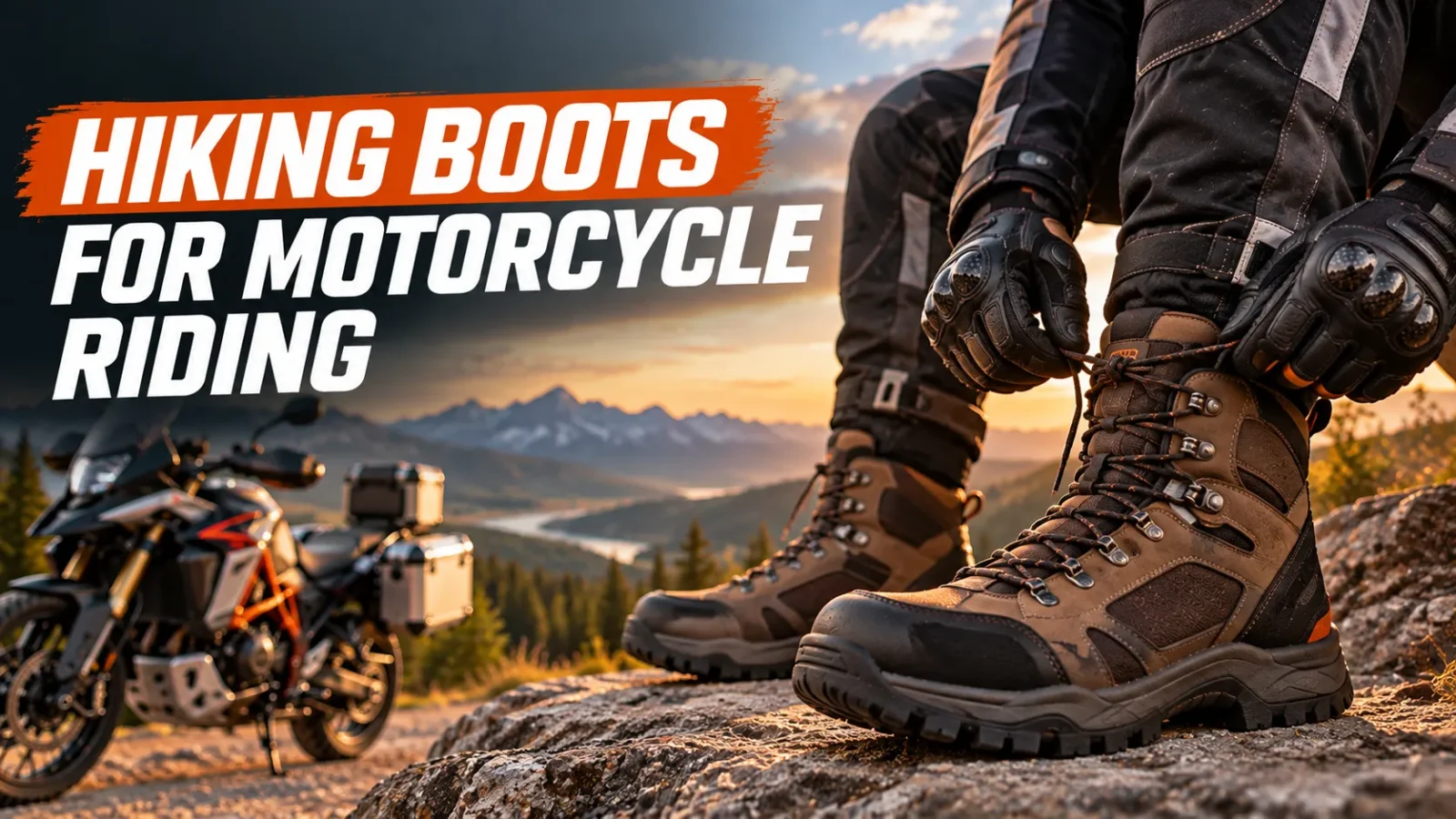
I get this question a lot from riders who commute, camp, or hike on the same weekend they ride: can my hiking boots double as motorcycle boots? Honestly, sometimes yes. I’ve put a bunch of trail-ready boots through gear shifts, quick stops, and long highway stints to find out which ones actually hold up.
This isn’t a “wear whatever you have in your closet” list. I picked hiking boots that genuinely have the bones for riding: stiff soles, real ankle support, and uppers that won’t shred if you tip over in a parking lot.
If you want the full breakdown of what dedicated footwear should offer, my Ultimate Guide to Motorcycle Boots is a great companion read alongside this one.
- My top all-around pick is the Salomon Quest 4 GTX for its ankle support and shifter-friendly sole.
- For serious abrasion resistance, the Danner Mountain 600 and Lowa Renegade GTX Mid punch above their hiking-boot weight class.
- Hiking boots are a solid backup for short rides, but I’d still recommend dedicated gear for daily commuting or high-speed riding.
- Look for a stiff shank, non-slip oil-resistant outsole, and at least mid-ankle height before you swap in any hiking boot for riding.
1. Salomon Quest 4 GTX — Best Overall Hiking Boot for Riding
The Salomon Quest 4 GTX is my go-to recommendation when someone asks for one boot that works on the trail and on the bike. It’s got a supportive ankle cuff, a Gore-Tex membrane for wet rides, and a Contragrip outsole that grips foot pegs and pavement equally well.
At around $220, it’s not cheap for a hiking boot, but the build quality justifies it. The chassis includes a dual-density EVA midsole that keeps your foot stable when you’re leaning into a shifter all day.
I’ve worn mine on 200-mile days and multi-day hikes in the same week. The ankle support genuinely helps when you’re paddling a heavy bike backward in a parking lot.
2. Danner Mountain 600 — Best Leather Build for Abrasion Resistance
The Danner Mountain 600 uses full-grain leather uppers that feel closer to a proper motorcycle boot than most hiking silhouettes. That leather panel gives it a real edge if you ever go down at low speed.
It runs about $200-$230 depending on the colorway, and it comes with a Vibram outsole that’s rated for both traction and abrasion. The 6-inch height covers the ankle bone completely, which is exactly what I want between me and the exhaust pipe.
My only gripe is break-in time. Leather needs a few weeks of wear before it stops feeling stiff on the shifter side.
Why the leather matters
Synthetic hiking boots are lighter, but they melt or tear faster against hot metal and pavement. Leather ages into a tougher, more protective shell the more you wear it.
3. Lowa Renegade GTX Mid — Best for All-Day Comfort
The Lowa Renegade GTX Mid is one of the most comfortable boots I’ve strapped on, period. It uses a nubuck leather upper with a Gore-Tex liner, and the PU midsole absorbs vibration better than most hiking boots I’ve tested.
Priced around $220, it’s a premium option, but the fit is excellent right out of the box. There’s minimal break-in required, which matters if you’re switching between riding boots and hiking boots frequently.
I found the sole stiff enough to keep good shifter feel without feeling like I was standing on a plank. That balance is rare in a hiking boot.
4. Merrell Moab 3 Mid Waterproof — Best Budget Pick
If you want something functional without spending $200, the Merrell Moab 3 Mid Waterproof is my budget recommendation. It typically runs $130-$150 and still offers a mid-height cuff with real ankle coverage.
The Vibram TC5+ outsole handles wet pavement and dirt equally well, and the M Select DRY waterproofing keeps your feet dry on damp morning rides. It’s not going to survive a slide the way leather does, but for casual, low-speed riding it’s a reasonable value pick.
I’d treat this one as a starter option while you save up for something in the leather category above.
5. Keen Targhee III Mid — Best Wide-Fit Option
The Keen Targhee III Mid has a roomier toe box than most boots on this list, which I appreciate on long rides when my feet swell a bit. It costs around $170 and uses a waterproof, breathable membrane with a leather-and-mesh upper.
The torsion stability plate in the midsole gives it a surprisingly rigid platform for shifting. It’s also one of the few boots here I’d genuinely recommend for wide or high-volume feet.
If regular hiking boots pinch your toes after an hour on the bike, this is worth trying.
6. Vasque Breeze LT GTX — Best Lightweight Option
The Vasque Breeze LT GTX is built for fast hiking, and that lightness translates nicely to shorter rides where you don’t want a brick on your foot. At roughly $190, it’s a lighter, more athletic alternative to the leather-heavy boots above.
It uses a Gore-Tex lining and a Vibram Contact outsole, so grip and waterproofing are still solid. The tradeoff is less abrasion resistance than the Danner or Lowa options, so I’d keep this one for commuting rather than long touring days.
It’s a great pick if you’re also using the same boot for weekend trail runs and want minimal bulk.
7. Oboz Bridger Mid B-Dry — Best Insole Support
The Oboz Bridger Mid B-Dry stands out for its proprietary O Fit Insole, which gives noticeably better arch support than most hiking boots in its $160-$180 price range. If you deal with foot fatigue on long rides, this detail matters more than you’d think.
The nubuck leather and mesh upper is paired with a B-Dry waterproof membrane and a Sawtooth outsole for grip. It’s not the toughest boot here, but the comfort-to-support ratio is excellent.
I found it especially good for riders who also do a lot of standing around at gas stops, campsites, or trailheads.
8. La Sportiva Nucleo High II GTX — Best for Technical Feel
The La Sportiva Nucleo High II GTX brings mountaineering-boot DNA to this list, with a stiffer platform and a more aggressive Vibram Nucleo outsole. It’s priced around $200 and feels more “technical” underfoot than the Salomon or Merrell options.
That stiffness is actually a plus for shifting precision, though it takes a short adjustment period if you’re used to softer hiking boots. The high ankle collar also offers noticeably more lateral support.
I’d put this on the shortlist if you ride and hike in rockier, more technical terrain regularly and want one boot that handles both without compromise.
9. Timberland White Ledge Mid — Best Classic Leather Look
The Timberland White Ledge Mid is the most affordable full-leather option on this list, usually priced under $100. It won’t match the technical performance of the Lowa or Danner boots, but the leather upper still offers better abrasion resistance than most synthetic hiking boots.
The rubber lug outsole grips foot pegs reasonably well, and the padded collar gives decent ankle coverage for the price. I recommend this one mainly for casual, short-distance riders who want a hiking boot that looks less “trail” and more “everyday boot.”
It’s not my pick for serious mileage, but it’s a fine entry point if budget is tight.
Why I still recommend dedicated motorcycle boots for daily riding
Here’s the honest truth: even the best hiking boot is a compromise. Hiking boots are engineered for walking mechanics, not braking, shifting, and crash protection. If riding is your primary activity, I’d steer you toward my full roundup of best motorcycle riding boots instead.
Dedicated boots add things hiking boots simply don’t have: reinforced heel cups, replaceable shift pads, and impact-rated ankle armor. That gear exists because ankles are one of the most commonly injured areas in motorcycle accidents.
That said, hiking boots earn their spot for specific situations. Short commutes, casual cruiser rides, or trips where you’re hopping off the bike to hike make a rugged hiking boot a genuinely practical choice.
When hiking boots make sense on a bike
I reach for hiking boots when I know I’ll be walking more than riding that day. Think dual-purpose trips: ride to a trailhead, park the bike, hike for hours, then ride home.
They’re also handy for short errands where changing into full riding boots feels like overkill. Just keep speeds and distances modest.
When you should upgrade to real riding boots
If you’re commuting daily, touring, or riding aggressively, invest in purpose-built boots. Riders doing gravel or trail riding on adventure bikes especially should check out my Best Motorcycle Boots for Adventure Riding guide, since ADV boots are built to handle both pavement and dirt without the compromises hiking boots make.
What to look for in a hiking boot you’ll also ride in
Not every hiking boot is created equal when it comes to riding safety. I judge every pair against the same short checklist before I’ll recommend it.
Ankle coverage and support
Mid or high-cut boots that fully cover the ankle bone are non-negotiable in my book. Low-cut trail shoes leave that joint completely exposed, which is a bad trade for a few extra grams of weight.
Sole stiffness and shifter feel
A too-flexible sole makes it hard to find the shift lever by feel. I look for boots with a shank or stability plate that keeps the platform rigid without turning the boot into a ski boot.
Outsole grip and heat resistance
Vibram and Contragrip soles tend to perform best on wet pegs and pavement. Avoid anything with a soft, foam-heavy outsole that could deform near hot exhaust components.
Materials and abrasion resistance
Full-grain leather beats mesh and synthetic panels every time for slide resistance. If you’re commuting daily, prioritize leather uppers even if they add a bit of break-in time and cost.
A note for riders who prefer other boot styles
Hiking boots aren’t the only crossover option worth considering. Some riders prefer the tactical look and durability of combat-style boots, and if that’s more your style, my guide to the best combat boots for motorcycle riding covers some excellent alternatives.
Women riders often deal with fit issues in unisex hiking boot lasts, so it’s worth checking gender-specific sizing before buying. I’ve rounded up dedicated options in my best motorcycle riding boots for women article if hiking boots aren’t cutting it for fit.
And if you want maximum toe protection without going full motorcycle-specific, steel-toe work boots are another crossover worth a look in my best work boots for motorcycle riding comparison.
My final take
If I had to pick just one from this whole list, I’d grab the Salomon Quest 4 GTX. It strikes the best balance of ankle support, weather protection, and shifter-friendly stiffness for riders who split time between trails and throttle.
For riders wanting more abrasion resistance, the Danner Mountain 600 and Lowa Renegade GTX Mid are worth the extra cost. Just remember: hiking boots are a smart secondary option, not a full substitute for gear designed specifically for the saddle.
Frequently Asked Questions
Are hiking boots actually safe for motorcycle riding?
Decent hiking boots with a stiff sole, ankle coverage, and a low heel-to-toe drop can offer reasonable protection for short commutes and casual rides, but they lack the reinforced ankle cups, shift pads, and abrasion-resistant panels found in dedicated motorcycle riding boots. I treat them as a solid backup option, not a full replacement.
What should I look for in a hiking boot for motorcycle riding?
Focus on ankle height, a non-slip and oil-resistant outsole, a stiff shank for shifter control, and abrasion-resistant leather or synthetic uppers. Waterproofing like Gore-Tex is a nice bonus for all-weather commuting.
Can I wear hiking boots for adventure or dual-sport riding?
For light gravel roads and short off-road stints, yes, but I’d still point serious ADV riders toward my Best Motorcycle Boots for Adventure Riding guide for anything technical or high-speed.
Are hiking boots better than work boots for riding a motorcycle?
It depends on your priorities. Hiking boots tend to be lighter and more comfortable for walking, while options in my best work boots for motorcycle riding roundup often have tougher soles and steel toes. Choose based on whether you need all-day comfort or heavy-duty protection.

Related Articles

9 Best Cowboy Boots for Motorcycle Riding You Can Actually Ride and Walk In
I break down the 9 best cowboy boots for motorcycle riding, covering heel height, shifter wear, ankle support, and comfort…
Jake Miller
11 min read

9 Best Motorcycle Boots for Hiking That Actually Work Off the Bike
I tested and researched the top hybrid motorcycle boots for hiking. Here are 9 real picks that protect on the…
Jake Miller
11 min read

9 Best Non-Motorcycle Boots for Cruisers That Still Ride Right
Not into moto-specific boots? I break down 9 real, non-motorcycle boots that hold up on cruisers—tough leather, good grip, and…
Jake Miller
13 min read