
8 Best Motorcycle Boots for Diabetics: Comfortable, Roomy, and Protective Picks
 Jake Miller
11 min read
Jake Miller
11 min read
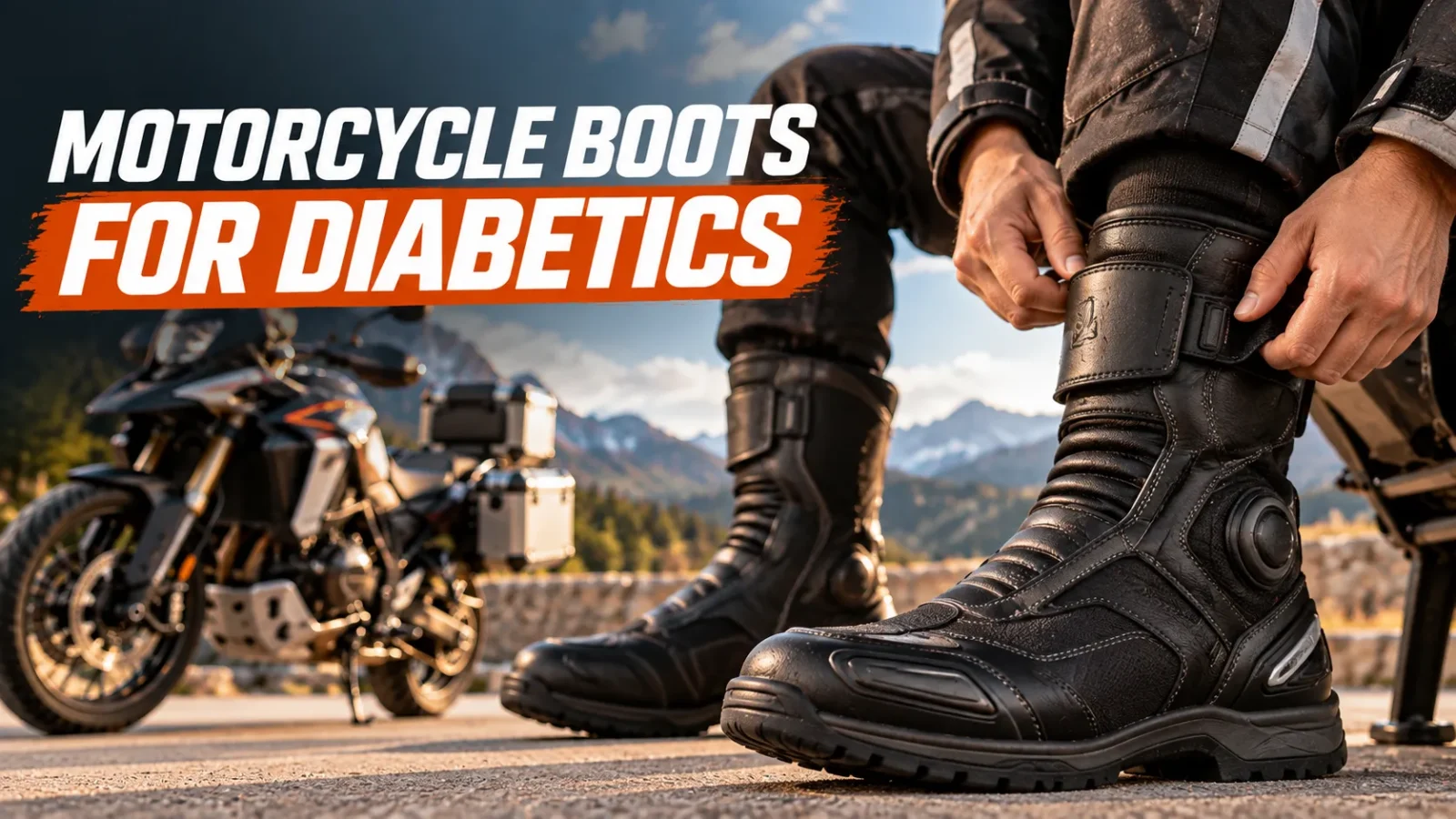
I’ve been riding for over a decade, and I was diagnosed with type 2 diabetes about six years ago. That diagnosis changed how I shop for gear, especially boots. A boot that feels “fine” for an hour on the showroom floor can turn into a real problem three hours into a ride if your feet swell or your circulation isn’t great.
So I started testing boots differently. I stopped caring only about looks and started paying attention to toe box room, closure systems, breathability, and how easy a boot is to get on and off without wrestling my feet into submission.
This list is the result of that ongoing experiment, and it pairs well with my Ultimate Guide to Motorcycle Boots if you want the full rundown on boot anatomy before you buy.
- Diabetic riders should prioritize roomy toe boxes and adjustable closures over snug, “sporty” fits.
- My top overall picks are the Alpinestars SMX-6 V2 and Sidi Adventure 2 Gore-Tex for their micro-adjustable straps and generous internal volume.
- Boots with hook-and-loop or buckle closures beat tight zippers for reducing pressure points on sensitive feet.
- Breathable liners like Gore-Tex help prevent the moisture buildup that can lead to fungal infections, a real concern for diabetics.
- Always check your feet after every ride, no matter how comfortable the boot felt at the store.
1. Alpinestars SMX-6 V2 — Best Adjustable Fit for Swelling-Prone Feet
The Alpinestars SMX-6 V2 is technically a sport riding boot, but I include it here because of one specific feature: its micro-adjustable calf and instep straps. I can loosen or tighten this boot in small increments depending on how my feet feel that day.
That matters a lot when you deal with diabetic edema. Some mornings my feet are a little puffier than others, and having a boot that adjusts rather than locking me into one fixed volume has been a genuine relief.
Why It Works for Diabetic Riders
The internal ankle brace system protects without digging into my shin, and the microfiber/textile upper flexes instead of creating hard pressure lines. It retails around $220-$250, which is reasonable for the level of protection you get, including a reinforced toe slider and heel cup.
I also appreciate that the SMX-6 V2 doesn’t feel like a race boot when you’re just cruising. It’s stiff enough to protect but not so rigid that it cuts off circulation around the ankle, which I’ve experienced with some cheaper sport boots.
2. Sidi Adventure 2 Gore-Tex — Best Adventure Boot with Roomy Toe Box
If you ride adventure or dual-sport, the Sidi Adventure 2 Gore-Tex is one I keep coming back to. Sidi has always run their boots a touch roomier in the forefoot compared to Alpinestars or Dainese, and for my feet that’s been a blessing.
This boot uses a four-buckle closure system with a rear entry zipper, so getting in and out doesn’t require yanking on a tight ankle. The Gore-Tex lining keeps moisture out while still letting my feet breathe, which matters a lot when you’re prone to slow-healing skin issues.
Comfort Meets Protection
Priced around $400-$450, it’s not cheap, but you’re getting a replaceable sole, shin plate, and ankle protection alongside genuine room to move your toes. I’ve worn these on 300-mile adventure days without a single hot spot.
If adventure riding is your main focus, it’s worth comparing this against other options in my Best Motorcycle Boots for Adventure Riding guide, since fit preferences vary a lot rider to rider.
3. TCX X-Blend WP — Best Easy On/Off Touring Boot
The TCX X-Blend WP is a touring boot built around a hook-and-loop closure instead of a traditional zipper or lace system. That single design choice makes a huge difference for anyone with limited flexibility or reduced sensation in their feet.
I can put these on and take them off in seconds, no crouching, no fighting with a stuck zipper pull. The waterproof membrane keeps my feet dry, and the fit runs true with a bit of extra depth in the toe box compared to sportier boots.
Real-World Comfort
At around $150-$180, this is one of the more affordable options on this list. The sole is oil and slip resistant, and the ankle protection is soft-sided rather than a hard shell, which means fewer pressure points against sensitive skin.
I recommend these often to riders who are newer to the diabetic-and-riding balancing act. If you’re also new to riding in general, my Best Motorcycle Boots for Beginners roundup covers similarly forgiving, easy-to-wear designs.
4. Alpinestars Web Gore-Tex — Best All-Day Touring Comfort
The Alpinestars Web Gore-Tex boot was designed for long-distance touring, and it shows. It’s got a lace-up front combined with a side zip, so you get a fully customizable fit rather than being locked into a single width.
I’ve done 500-mile days in these without needing to stop and adjust my socks or loosen anything. The internal Gore-Tex membrane manages moisture well, which has helped me avoid the damp-feet issue that can lead to skin breakdown over long rides.
Standout Features
Priced around $230-$260, the Web Gore-Tex includes a reinforced heel and toe, a lightly padded collar, and a relatively soft leather upper that molds to your foot shape over time rather than staying rigid. That break-in flexibility matters when your foot volume shifts throughout the day.
It’s also one of the more versatile boots here since it doesn’t scream “sport bike” or “adventure bike” specifically. It just works across styles, similar to some of the all-rounders I mention in what are the best boots for motorcycle riding.
5. REV’IT! Sand 4 H2O — Best Breathable Adventure Boot
The REV’IT! Sand 4 H2O is built for adventure touring, and I’ve found it runs noticeably roomier through the midfoot than a lot of competitors. The waterproof membrane is paired with mesh panels that actually breathe, which helps a ton on hot days.
Moisture control isn’t just a comfort issue for diabetics, it’s a health issue. Damp feet for hours at a time increase the risk of fungal infection and skin irritation, both of which can be more serious complications when you’re diabetic.
Fit and Adjustability
This boot uses two adjustable buckles plus a hook-and-loop strap near the ankle, giving you three points of fine-tuning. At roughly $300-$330, it sits in the mid-range price bracket but delivers CE-rated ankle and shin protection.
I switch into these specifically on rides where I know I’ll be off the bike a lot, walking around at gas stations or rest stops, because the sole flexes naturally with my stride instead of feeling like a rigid shell.
6. Forma Adventure Low — Best Low-Cut Adventure Option
Not everyone wants a tall adventure boot climbing halfway up the shin, and that’s where the Forma Adventure Low comes in. It gives you a lower-profile design while keeping a genuinely wide, comfortable last.
I like this one specifically for riders who spend a lot of time off the bike during their day, running errands, working, whatever it is. The lower cut means less material pressing against your calf, which can be a relief if you deal with any lower-leg swelling.
Everyday Practicality
Around $170-$200, the Forma Adventure Low includes a reinforced toe box, ankle protection, and a single adjustable strap over a zippered closure. It doesn’t have quite the same level of coverage as a full adventure boot, but for mixed riding and walking days, that trade-off has been worth it for me.
The sole is also fairly grippy and low to the ground, which helps with stability if you have any balance concerns related to neuropathy in your feet.
7. Bates Tactical Sport Side-Zip — Best Wide-Fit Side-Zip Boot
The Bates Tactical Sport Side-Zip isn’t marketed specifically as a motorcycle boot, it’s a duty boot popular with motorcycle police units, but that’s exactly why I trust it. These officers ride all day, every day, and need boots that won’t cause problems on long shifts.
The side zip makes on/off effortless, and Bates has always run their duty line with a wider, more accommodating fit than typical work boots. That roominess translates directly into fewer pressure points for diabetic feet.
Why I Trust It
At around $130-$160, it’s one of the most affordable picks here. It’s got a slip-resistant outsole, a padded collar, and a moisture-wicking lining. It won’t offer the same crash armor as a dedicated sport boot, so I’d pair it with careful riding rather than aggressive sport riding.
If you’re curious how this compares structurally to a standard work boot, I break that down in motorcycle boots vs work boots, since the differences matter more than people assume.
8. Harley-Davidson Bateman — Best Casual Cruiser Boot with Extra Depth
For cruiser riders, the Harley-Davidson Bateman boot has become one of my go-to recommendations. It’s got a classic leather look with a side zipper and pull tab, and the internal volume is genuinely generous compared to most fashion-forward riding boots.
I appreciate that it doesn’t sacrifice comfort for style. The leather is soft enough to flex naturally, and there’s enough depth in the toe box to accommodate a slightly thicker diabetic sock if you wear one for added cushioning.
Everyday Wearability
Priced around $150-$180, the Bateman includes a padded collar, a comfortable rubber outsole, and enough ankle coverage for basic protection on shorter cruiser rides. It’s not built for high-speed sport riding, but for casual cruising and commuting, it’s held up well.
Leather boots like this one do need regular care to stay supple and comfortable, so I’d point you toward my guide on how to clean motorcycle boots if you go this route, since dry, cracked leather can create its own pressure points over time.
What I Actually Look for as a Diabetic Rider
After years of trial and error, I’ve narrowed my checklist down to a handful of non-negotiables. None of this is complicated, but it does require slowing down and actually trying boots on rather than buying based on looks alone.
Roomy Toe Box First, Everything Else Second
If my toes feel cramped in the store, I don’t buy the boot. Full stop. A tight toe box gets worse after two hours of riding, not better, and reduced sensation means I might not notice the damage until it’s already done.
Adjustable Closures Over Fixed Ones
Buckles, hook-and-loop straps, and lace systems all let me fine-tune fit day to day. A boot with a single fixed zipper and no other adjustment doesn’t give me room to react to swelling.
Breathable, Moisture-Managing Linings
Gore-Tex or similar membranes keep sweat from pooling against my skin for hours. That’s not a luxury feature for me, it’s genuinely about reducing infection risk.
Soft Structure Around Pressure Points
Hard plastic shin plates and rigid ankle cups are great for crash protection, but I look for padding underneath them so the hard parts aren’t sitting directly against skin.
My Final Thoughts
None of these eight boots are magic solutions, and I still check my feet after every single ride without exception. That habit matters more than any specific product on this list.
What I can say is that switching to boots with adjustable fits and roomier toe boxes has made a real, noticeable difference in how my feet feel after long days in the saddle. If you’re diabetic and riding, don’t just grab whatever boot looks coolest, try a few on, walk around, flex your ankles, and trust what your feet are telling you.
Frequently Asked Questions
Why do diabetics need special motorcycle boots?
Diabetic neuropathy and circulation issues mean tight boots can cause numbness, pressure sores, or slow-healing wounds. Boots with roomy toe boxes, adjustable closures, and breathable linings reduce these risks while still offering crash protection.
Are wider motorcycle boots less protective?
Not necessarily. Boots like the Alpinestars SMX-6 V2 and Sidi Adventure 2 Gore-Tex use adjustable buckles and straps so you get a roomier fit without sacrificing armor, ankle support, or abrasion resistance.
Should diabetics avoid boots with zippers?
Not entirely, but zippers that run tight against the shin or ankle can create pressure points. Boots with hook-and-loop straps or micro-adjustable buckles, like the TCX X-Blend WP, let you fine-tune the fit around swelling or sensitive areas.
How often should diabetic riders check their feet after wearing motorcycle boots?
I check my feet every single ride, no exceptions. Look for red marks, blisters, or numb spots. Catching pressure points early prevents bigger problems, especially if you have reduced sensation from neuropathy.

Related Articles

9 Best Cowboy Boots for Motorcycle Riding You Can Actually Ride and Walk In
I break down the 9 best cowboy boots for motorcycle riding, covering heel height, shifter wear, ankle support, and comfort…
Jake Miller
11 min read

9 Best Motorcycle Boots for Hiking That Actually Work Off the Bike
I tested and researched the top hybrid motorcycle boots for hiking. Here are 9 real picks that protect on the…
Jake Miller
11 min read

9 Best Non-Motorcycle Boots for Cruisers That Still Ride Right
Not into moto-specific boots? I break down 9 real, non-motorcycle boots that hold up on cruisers—tough leather, good grip, and…
Jake Miller
13 min read