
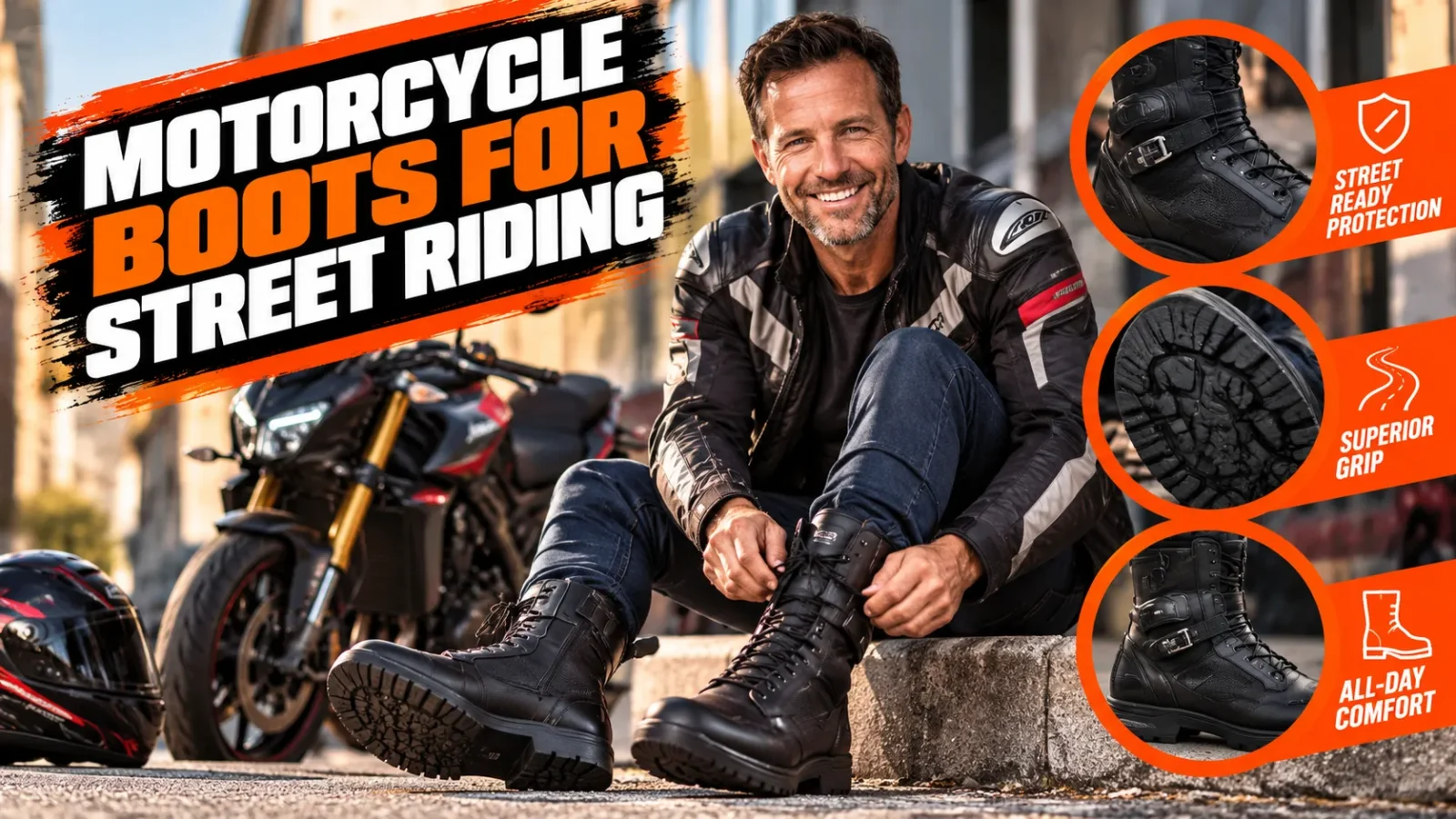
I’ve burned through more pairs of motorcycle boots than I care to admit. Some fell apart after a rainy season, others looked great but tortured my feet on longer rides. After years of commuting, canyon carving, and the occasional low-side, I’ve narrowed down the boots that actually earn a permanent spot in my gear closet.
Street riding is a different animal than track days or off-road adventures. You need boots that protect you at intersection speeds, feel comfortable walking into a coffee shop, and don’t scream “racer” when you’re just running errands. I dug through my own collection and leaned on years of testing to put together this list.
If you want the deeper background on materials, armor ratings, and fit, I’d point you toward my Ultimate Guide to Motorcycle Boots before you buy. It’ll help everything below make a lot more sense.
- My overall favorite for daily street riding is the Alpinestars SMX-6 V2, thanks to its blend of ankle protection and walkability.
- Riders who want a classic, non-racy look should check out the TCX X-Blend or REV’IT! Jefferson for casual styling that hides the armor underneath.
- Budget-conscious riders can get solid protection from the Joe Rocket Meteor FX without spending over $150.
- Waterproofing matters more than people think—the SIDI Canyon Gore-Tex and Forma Adventure Low are my picks if you commute in bad weather.
- Fit is everything: always check sizing charts and read up on what are the best boots for motorcycle riding for your specific foot shape before ordering.
1. Alpinestars SMX-6 V2 — Best Overall Street Boot
The Alpinestars SMX-6 V2 has been my go-to recommendation for years, and I still ride in mine regularly. It’s a sport-touring boot that strikes a rare balance: enough armor to survive a real get-off, but flexible enough that I forget I’m wearing armored footwear by the time I’m three blocks from home.
It uses a microfiber and synthetic leather upper with a replaceable TPU ankle brace system, plus a shift pad that’s held up remarkably well against my daily gear changes. The sole is compound rubber with good grip on wet pavement, which matters a lot when you’re stopping at a rain-slicked light.
Priced around $200, it’s not the cheapest option here, but I think it’s the best all-rounder for someone who rides every day and wants one boot to handle everything from commuting to weekend twisties. Sizing runs true, though I’d recommend trying a half-size up if you have wider feet.
Why I keep coming back to it
Honestly, it’s the ankle support. I had a low-speed tip-over a few years back and the internal ankle brace took the impact instead of my joint. That alone sold me on this boot for life.
2. TCX X-Blend — Best Casual Look for Street Riders
If you hate the “robocop” look of racing boots, the TCX X-Blend is going to be your new best friend. It’s styled like a rugged casual boot—almost like a work boot—but hides CE-certified ankle and heel protection underneath the leather.
I wore these for an entire summer of commuting and they never looked out of place walking into meetings or grabbing lunch. The full-grain leather upper is genuinely nice quality, and the anatomical construction means they don’t feel like stiff plastic shells strapped to your feet.
At around $170, they’re priced competitively for what you get. I especially appreciate that TCX included a memory foam collar, which cuts down on that annoying pressure point some boots create right where your ankle brace ends.
This is one of the boots I recommend most often to friends switching from sneakers, and it comes up a lot in my article on the best motorcycle street boots for men looking for something they can wear all day, not just on the bike.
3. REV’IT! Jefferson — Best for Everyday Versatility
The REV’IT! Jefferson is another boot that leans into the “doesn’t look like moto gear” category, and I love it for that reason. It’s got a chukka-boot silhouette with a suede and leather combination that looks legitimately good with jeans.
Underneath, you’re getting a TPU heel and ankle protector along with a reinforced shift pad. REV’IT also added a moisture-wicking lining, which I noticed made a real difference on longer rides in warmer weather—my feet weren’t swimming by the time I got home.
They run around $190, and I think that’s fair pricing considering how much use I’ve gotten out of mine. If you’re the type of rider who parks the bike and walks straight into work, this is one of the few boots I’d trust to pull double duty comfortably.
4. SIDI Canyon Gore-Tex — Best Waterproof Street Boot
Rain is the great equalizer for motorcycle gear, and the SIDI Canyon Gore-Tex is the boot I reach for when the forecast looks ugly. SIDI built this one around a genuine Gore-Tex membrane, and in my experience it’s kept my socks dry through some genuinely miserable downpours.
It’s got a full-grain leather exterior with a nylon insert, TPU ankle protection, and a rear flex zone that actually flexes—not just marketing speak. SIDI’s boots run a bit narrow in my experience, so if you have wider feet, definitely try before you buy or size up.
At roughly $280, it’s on the pricier end, but I’ve had mine for several seasons now and the stitching and waterproofing haven’t degraded at all. If you commute year-round regardless of weather, I think this is worth the investment.
5. Forma Adventure Low — Best Waterproof Budget Alternative
Not everyone wants to spend $280 on rain protection, and that’s where the Forma Adventure Low comes in. It’s technically marketed toward adventure riders, but I’ve found it works beautifully for street use too, especially if you want something a bit more rugged.
It features a waterproof and breathable membrane, a reinforced toe box, and a shifter pad that’s held up well against scuffing. The sole has excellent grip, which I appreciated during a surprise thunderstorm ride home last spring.
Priced around $150, it undercuts most Gore-Tex-branded competitors while still delivering genuinely reliable water resistance. If you’re curious how boots like this stack up for mixed-terrain riders, I cover more in my guide to the Best Motorcycle Boots for Adventure Riding.
6. Joe Rocket Meteor FX — Best Budget Pick
When I’m recommending gear to riders just starting out and watching every dollar, the Joe Rocket Meteor FX is usually the first name that comes up. It’s one of the most affordable CE-rated options I’ve tested that doesn’t feel like a compromise.
It’s got a synthetic leather construction, TPU ankle and shin protection, and a reinforced heel and toe box. It’s not going to win any style awards, but for around $120, you’re getting real armor at a price that won’t make you hesitate before buying.
I think budget shouldn’t be an excuse to skip proper boots, and this is proof you don’t need to spend $250 to get legitimate protection. It’s actually one of the models I reference often in my Best Motorcycle Boots for Beginners roundup, since new riders often need affordable gear that still checks the safety boxes.
7. Dainese Energyca D-WP — Best for Sport-Street Riders
The Dainese Energyca D-WP is what I reach for when I want something a little more performance-oriented without going full track boot. It’s got a lower-profile design compared to bulkier touring boots, but don’t let that fool you—there’s real protection packed inside.
It uses a waterproof membrane, a TPU heel counter, and an ankle protection system Dainese calls “Pro-Armor.” The sole is made from a compound designed for feel on the pegs, which I noticed immediately when shifting gears felt more precise than in bulkier boots.
At about $230, it sits in the mid-to-premium range, but I think the fit and finish justify it. This is the boot I grab for spirited weekend rides where I want something between a full racing boot and a casual commuter shoe.
8. Alpinestars Faster-3 Rideknit — Best Breathable Summer Boot
Summer riding brings its own challenges, and sweaty feet in stiff leather boots is high on my list of complaints. The Alpinestars Faster-3 Rideknit solved that problem for me with its knit textile upper that genuinely breathes.
It’s got ankle protection built into a lower-cut, sneaker-like silhouette, along with a reinforced heel and toe area. I’ve worn these on 95-degree days and my feet stayed noticeably cooler than in any leather boot I own.
Priced around $150, it’s an excellent choice if you live somewhere hot or mainly ride short urban trips. Just know it trades some of the taller ankle coverage you’d get from boots like the SMX-6 V2 for that breathability and lighter feel.
9. TCX Street Ace Air — Best Sporty Short Boot
The TCX Street Ace Air has become one of my warm-weather staples. It’s a lower-cut sport boot with a perforated microfiber upper that moves a ton of air while still incorporating a TPU ankle and heel protection system.
What I like most is the shift pad reinforcement combined with a genuinely comfortable insole—TCX clearly designed this with all-day wearability in mind, not just track use. The sole compound grips well on foot pegs, which matters more than people realize when you’re clutch-heavy in city traffic.
At around $160, it’s a smart pick if you want something between the ultra-casual Jefferson and the more armored SMX-6 V2. I’d call it the sweet spot for riders who want visible “moto boot” styling without going full race gear.
10. Falco Motorsport Ivan 2 — Best European Touring-Style Boot
The Falco Motorsport Ivan 2 doesn’t get talked about as much stateside, but I think it deserves more attention. It’s got a taller touring-boot profile with full-grain leather construction, a solid ankle brace system, and genuinely comfortable walking ergonomics for something this protective.
I appreciated the double-stitched seams and the reinforced heel cup, which held up well even after I dropped my bike at a gas station (embarrassing, but informative for testing purposes). The buckle closures are easy to adjust even with gloves on, something smaller boot brands often overlook.
Running around $210, it’s a slightly under-the-radar option compared to Alpinestars or SIDI, but I think that’s part of its appeal if you want quality gear without seeing it on every other rider at the coffee shop meetup.
How I’d Choose Between These
If I had to boil down my testing into one piece of advice, it’s this: match the boot to your actual riding pattern, not your aspirational one. A track-style boot looks cool, but if you’re commuting five days a week, you’ll resent the stiffness by day three.
For daily commuters
I’d lean toward the SMX-6 V2, TCX X-Blend, or REV’IT! Jefferson. They balance protection with the ability to walk normally once you’re off the bike.
For riders who see real rain
The SIDI Canyon Gore-Tex and Forma Adventure Low are the two I trust most. Waterproofing that actually works is worth paying for once you’ve ridden home soaked a few times.
For newer riders on a budget
The Joe Rocket Meteor FX gives you real armor without draining your gear budget, which matters when you’re also buying a jacket, gloves, and helmet all at once.
A Few Fit and Care Notes Before You Buy
No boot on this list will protect you properly if it doesn’t fit right. I always recommend trying boots on with the socks you’ll actually ride in, and walking around the store for a few minutes before deciding.
Pay attention to calf width too, especially with taller boots like the SIDI Canyon or Falco Ivan 2. A boot that’s too tight around the calf will bug you on every single ride, no matter how great the armor is.
Once you’ve got the right pair, take care of them. I’ve written a full breakdown on how to clean motorcycle boots that covers leather conditioning, sole maintenance, and how to keep waterproof membranes actually waterproof over time.
Good boots aren’t cheap, but they’re also not something I’d ever cut corners on. Your ankles and feet take the brunt of a lot of low-speed drops, and after wearing sneakers on a bike exactly once in my life, I never made that mistake again.
Frequently Asked Questions
Are motorcycle-specific boots really necessary for street riding, or will regular boots work?
Regular boots lack ankle armor, oil-resistant soles, and abrasion-resistant materials. A crash at even 20 mph can shatter an ankle in sneakers. I always recommend real motorcycle boots—check out my Ultimate Guide to Motorcycle Boots for the full breakdown.
What’s the difference between racing boots and street boots?
Racing boots are taller, stiffer, and built purely for track protection, which makes them hard to walk in. Street boots prioritize flexibility, comfort, and walkability while still packing real armor and abrasion-resistant panels.
How much should I expect to spend on a good pair of street motorcycle boots?
You can get solid protection starting around $130-$150, though premium leather boots with CE-rated armor run $250-$350. I think it’s worth stretching your budget here since boots directly protect your ankles and feet.
How often should I replace my motorcycle boots?
If they’ve taken a hard hit or slide, replace them immediately even if they look fine externally. Otherwise, inspect soles and stitching yearly, and learn how to clean motorcycle boots properly to extend their life.

Related Articles

9 Best Cowboy Boots for Motorcycle Riding You Can Actually Ride and Walk In
I break down the 9 best cowboy boots for motorcycle riding, covering heel height, shifter wear, ankle support, and comfort…
 Jake Miller
11 min read
Jake Miller
11 min read

9 Best Motorcycle Boots for Hiking That Actually Work Off the Bike
I tested and researched the top hybrid motorcycle boots for hiking. Here are 9 real picks that protect on the…
Jake Miller
11 min read

9 Best Non-Motorcycle Boots for Cruisers That Still Ride Right
Not into moto-specific boots? I break down 9 real, non-motorcycle boots that hold up on cruisers—tough leather, good grip, and…
Jake Miller
13 min read