
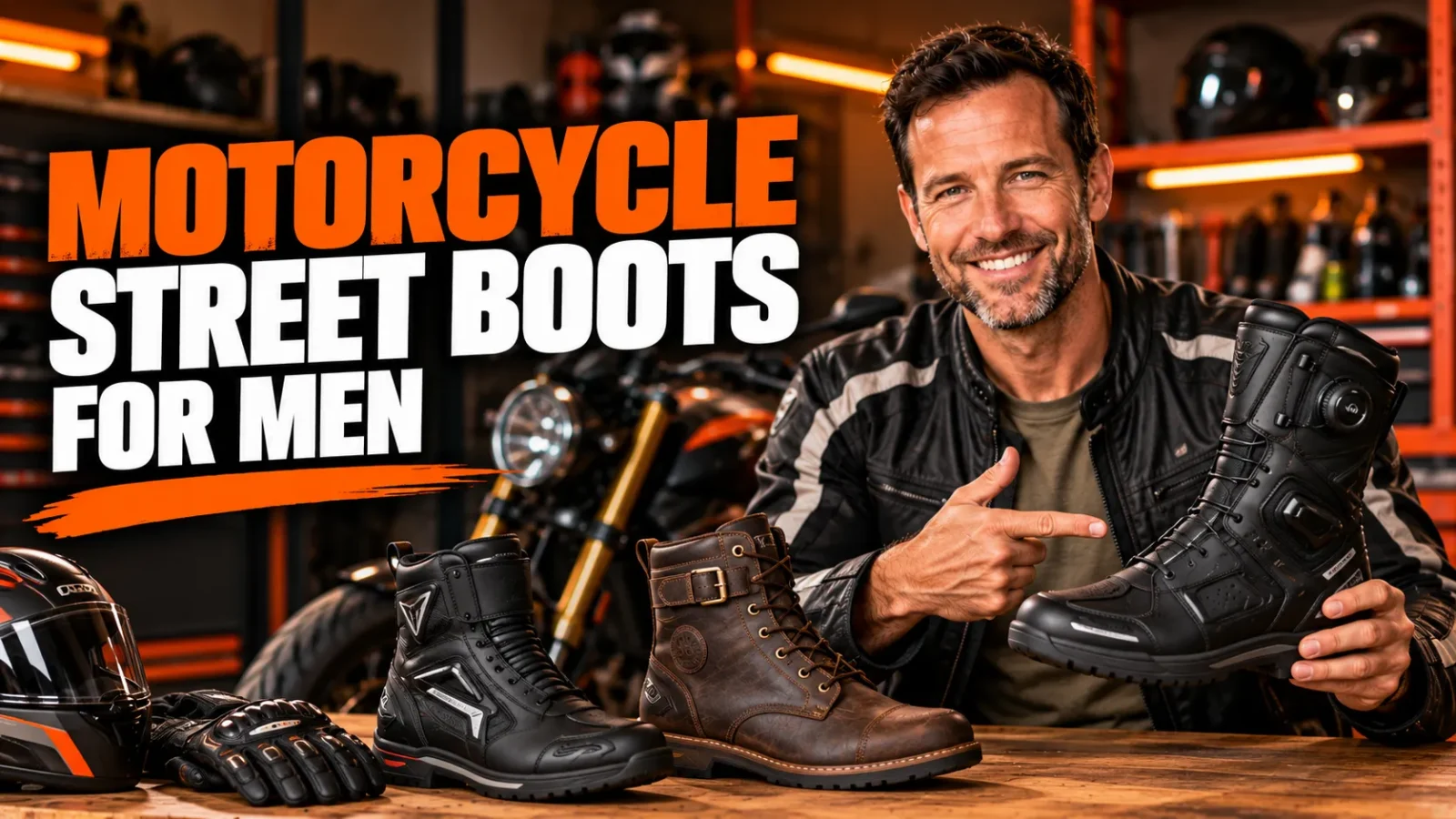
I’ve burned through more pairs of motorcycle boots than I care to admit. Some fell apart after a season, some looked great but murdered my feet on long rides, and a few became the boots I reach for every single time I swing a leg over a bike.
This list isn’t theoretical. Every boot here has either lived in my own gear closet or been ridden hard by riders I trust. If you want the deep-dive on boot construction, armor standards, and materials, I’d point you to my Ultimate Guide to Motorcycle Boots before you buy anything.
- My overall favorite street boot is the TCX Street Ace Air — great protection without feeling like a moon boot.
- Commuters who want sneaker looks should check out the Alpinestars Faster-3 Rideknit Shoes.
- If you ride in the rain a lot, the Dainese Energyca D-WP or budget-friendly TCX Fuel WP keep your feet dry.
- For a rugged, all-leather look with serious durability, the Harley-Davidson FXRG boots are hard to beat.
- Every boot on this list balances real armor and abrasion resistance with actual walkability off the bike.
1. TCX Street Ace Air — Best Overall Street Boot
I keep coming back to the TCX Street Ace Air because it nails the balance most street boots miss. It’s got a microfiber and mesh upper, so it breathes well on hot commutes, but it still packs a reinforced heel counter and ankle protection where it counts.
The shift pad is reinforced rubber, which matters more than people think when you’re constantly toeing up through gears in traffic. I’ve worn mine through entire summers without my feet cooking inside.
At around $150, it’s not the cheapest option here, but it’s the one I’d recommend first if someone asked me for a single all-purpose street boot. It walks well too, which is rare for something this protective.
Why It Works for Daily Riding
The low-profile look means it doesn’t scream “motorcycle boot” when you walk into a coffee shop. That’s a bigger deal than it sounds if you’re commuting to an office and don’t want to change shoes twice a day.
2. Alpinestars Faster-3 Rideknit Shoes — Best Riding Shoe for Short Commutes
If a full boot feels like overkill for your five-mile commute, the Alpinestars Faster-3 Rideknit is my go-to recommendation. It looks almost identical to a running shoe, but underneath that knit upper is a TPU heel cup and ankle protection borrowed from Alpinestars’ racing lineup.
I’ve worn these on quick errands and short highway stints, and they’re genuinely comfortable enough to wear all day off the bike too. That crossover versatility is the whole point.
They run about $150 and come in several colorways if you’re picky about matching your bike or jacket. Just know these are meant for shorter rides, not all-day touring — for that, I’d look at a taller boot instead.
3. REV’IT! Jefferson Boots — Best Classic Café Racer Look
The REV’IT! Jefferson is what I reach for when I want a boot that looks like it belongs with a vintage-styled bike but still has modern protection hiding inside. It’s got a full-grain leather upper, a TPU heel and ankle cup, and a low-profile sole for actual walkability.
I’ve had a pair for a couple of years now, and the leather has aged beautifully — it develops a nice patina instead of just looking beat up. That’s a good sign the leather quality is legit.
Priced around $220, it’s not cheap, but it’s built to be a boot you wear for a decade, not a season. If your bike has any retro or scrambler vibes, this boot matches the aesthetic perfectly.
Fit Notes
I’d say these run slightly narrow, so if you’ve got wider feet, consider going up half a size. REV’IT! sizing tends to run true to European standards rather than US shoe sizing.
4. Sidi Fusion Boots — Best All-Around Sport-Touring Boot
The Sidi Fusion has been a staple in Sidi’s lineup for years, and there’s a reason it hasn’t been discontinued. It’s a taller boot than most on this list, with a rear shifter, replaceable toe slider, and a shin plate that actually flexes with your leg instead of fighting it.
I like this one specifically for riders who split time between city streets and weekend canyon runs. It’s protective enough for aggressive riding but still comfortable enough to wear on a long freeway slab.
It typically retails between $200 and $230 depending on the colorway. If you’ve read my thoughts on best motorcycle boots for men before, you’ll know Sidi shows up often — their fit and durability are consistently excellent.
5. Icon 1000 El Bajo 2 — Best Casual Cruiser Boot
The Icon 1000 El Bajo 2 is the boot I recommend to cruiser and bobber riders who want something that looks like a work boot but rides like a motorcycle boot. It’s got a full-grain leather upper, a low block heel, and internal ankle armor tucked away so it doesn’t ruin the silhouette.
I’ve genuinely worn mine to run errands, grab dinner, and then ride home without ever feeling like I was wearing “motorcycle gear.” That’s the appeal — it disappears into your everyday wardrobe.
Pricing sits around $200. It’s not built for aggressive sport riding, but for laid-back street cruising, it’s one of the most comfortable options I’ve tested.
6. Dainese Energyca D-WP Shoes — Best Waterproof Street Shoe
Rain riding used to mean soggy socks until I got a pair of Dainese Energyca D-WP shoes. They use Dainese’s proprietary waterproof membrane, and I’ve genuinely tested them through downpours without a drop getting through.
Beyond the waterproofing, they’ve got a TPU ankle guard and reinforced toe and heel areas, all wrapped in a shoe that looks like something you’d wear to a casual dinner. That low-key styling is a big selling point for commuters.
Expect to pay around $200. If you’re new to riding and building your first gear kit, I’d also suggest checking my Best Motorcycle Boots for Beginners guide, since waterproofing is something a lot of new riders underestimate until they get caught in weather.
7. TCX Fuel WP — Best Budget Waterproof Boot
Not everyone wants to spend $200 on boots, and that’s fair. The TCX Fuel WP is my top budget pick because it delivers a waterproof membrane, ankle protection, and a shift pad for around $130, which is genuinely good value in this category.
I’ve recommended these to a few friends starting out on their first bikes, and none of them have complained. The break-in period is short, and the sole has decent grip on wet pavement, which matters more than people realize.
It won’t have the premium leather feel of pricier options, but for a daily beater boot that handles rain without hesitation, it punches well above its price point.
8. Harley-Davidson FXRG Waterproof Boots — Best Heavy-Duty Leather Boot
Say what you want about the brand association, but the Harley-Davidson FXRG boots are legitimately tough. They’re built from full-grain leather with a waterproof/breathable membrane, and the construction feels closer to a work boot than a typical sport-street boot.
I’ve had riders tell me these have lasted them five-plus years of daily commuting without falling apart, which says a lot about the build quality. They’re on the heavier side, so don’t expect them to feel nimble.
Pricing runs around $250, putting them at the premium end of this list. If your riding style leans toward cruisers or touring bikes rather than sportbikes, this boot’s heft actually works in your favor.
Who Should Skip This One
If you ride something sporty or do a lot of stop-and-go city riding on foot as well as on the bike, the weight of the FXRG might feel like overkill. Lighter options like the TCX Street Ace Air will serve you better there.
9. Alpinestars SMX-1 R V2 — Best Sporty Street-to-Track Crossover
The Alpinestars SMX-1 R V2 technically leans toward performance riding, but I’m including it because plenty of street riders want that extra margin of protection without buying a full race boot. It’s got a microfiber and textile construction with a replaceable toe slider and a shift lever pad.
I’ve worn these on twisty backroad rides where I wanted more confidence than a casual boot could offer, and they delivered without feeling stiff or clunky when walking around at gas stops.
They retail for about $170. If you’re the type of rider who takes the occasional track day or just rides aggressively on public roads, this boot bridges that gap nicely.
How I Actually Choose Between These Boots
Honestly, it comes down to how and where you ride most. Short urban commutes call for something like the Faster-3 Rideknit, while longer mixed-road riding points toward the Sidi Fusion or TCX Street Ace Air.
Weather matters too. If you live somewhere rainy, don’t skip the waterproofing — the Dainese Energyca D-WP and TCX Fuel WP exist for exactly that reason.
And if you’re the kind of rider who ventures off-pavement occasionally, none of these are really built for that. I’d point you toward my Best Motorcycle Boots for Adventure Riding roundup instead for that kind of terrain.
Fit and Break-In Tips
Leather boots like the REV’IT! Jefferson and Icon 1000 El Bajo 2 need a break-in period. Wear them around the house before committing to a long ride, so you know exactly where they’ll rub.
Synthetic and mesh options like the TCX Street Ace Air tend to feel comfortable right out of the box, which is a nice perk if you need boots ready for a ride this weekend.
Protection Standards Worth Knowing
Look for CE-rated ankle and shin protection whenever possible. It’s a simple label, but it tells you the boot has actually been tested against impact and abrasion, not just marketed as “protective.”
I go into a lot more detail on rating systems and what they actually measure in my article on what are the best boots for motorcycle riding, if you want to nerd out on the specifics.
Caring for Your Boots So They Actually Last
None of these boots are cheap, so treating them right matters. Leather boots especially need conditioning every few months, particularly if you ride through varied weather.
I clean mine after every wet ride and condition them monthly during regular use. If you want my exact process, I wrote a full breakdown on how to clean motorcycle boots that covers leather, mesh, and synthetic materials separately.
Good maintenance is the difference between a boot lasting two years or eight. It’s a small habit that pays off in a big way.
My Final Take
If I had to grab just one boot off this list for myself, it’d still be the TCX Street Ace Air. It’s the one that’s followed me through the most rides without ever feeling like a compromise.
But there’s no single “best” boot for every rider. Your commute, your climate, and your bike all shape what actually works for your feet.
Try a few on if you can, walk around in them, and don’t just buy based on looks. Your feet — and your ankles — will thank you the first time you actually need that protection.
Frequently Asked Questions
Do I need motorcycle-specific boots for street riding, or will regular boots work?
Regular boots lack ankle armor, shift pads, and abrasion-resistant materials. A dedicated street boot like the TCX Street Ace Air protects your ankles and shins in ways sneakers or work boots simply can’t.
What’s the difference between a riding shoe and a full motorcycle boot?
Riding shoes, like the Alpinestars Faster-3 Rideknit, sit lower on the ankle and are lighter for short commutes, while full boots such as the Sidi Fusion offer taller shafts and more coverage for varied riding conditions.
Are waterproof motorcycle boots worth the extra cost?
Yes, if you commute year-round. Boots like the Dainese Energyca D-WP and TCX Fuel WP keep your feet dry through unexpected downpours without sacrificing much comfort or flexibility.
How do I keep my leather motorcycle boots looking good for years?
Regular conditioning and proper storage make a huge difference. I break down my full routine in my guide on how to clean motorcycle boots.

Related Articles

9 Best Cowboy Boots for Motorcycle Riding You Can Actually Ride and Walk In
I break down the 9 best cowboy boots for motorcycle riding, covering heel height, shifter wear, ankle support, and comfort…
 Jake Miller
11 min read
Jake Miller
11 min read

9 Best Motorcycle Boots for Hiking That Actually Work Off the Bike
I tested and researched the top hybrid motorcycle boots for hiking. Here are 9 real picks that protect on the…
Jake Miller
11 min read

9 Best Non-Motorcycle Boots for Cruisers That Still Ride Right
Not into moto-specific boots? I break down 9 real, non-motorcycle boots that hold up on cruisers—tough leather, good grip, and…
Jake Miller
13 min read