
10 Best Tents and Air Mattresses for Motorcycle Travel: My Real-World Camping Setup
 Jake Miller
10 min read
Jake Miller
10 min read
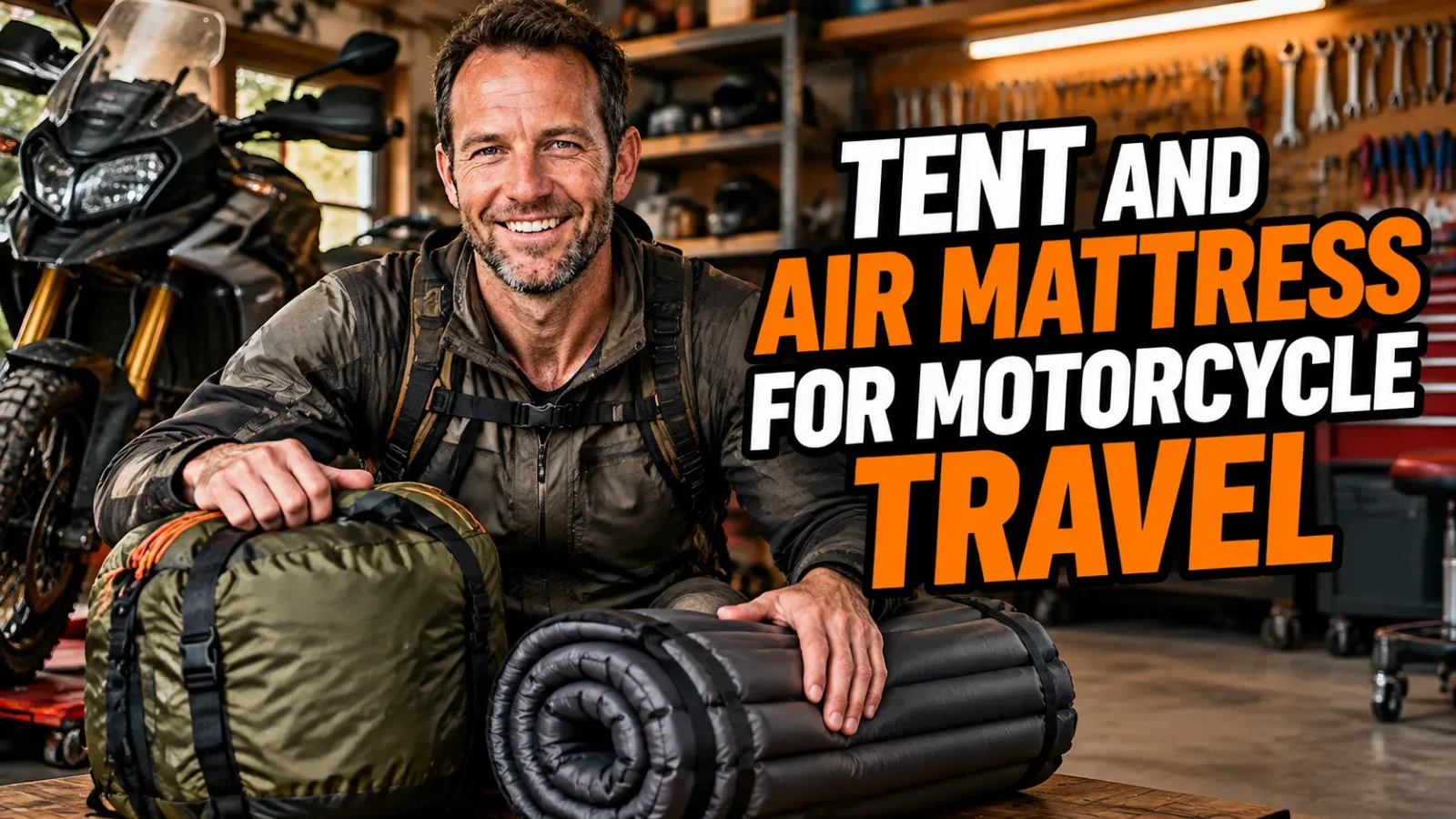
I’ve spent the last six years camping off the back of motorcycles — everything from a loaded KLR 650 on the Trans-America Trail to a naked SV650 with nothing but a tail bag. Along the way, I’ve destroyed cheap tents in Wyoming wind, woken up on a deflated pad in Colorado, and slowly figured out what actually works when your bedroom has to fit in a 40-liter dry bag.
That’s what this list is. Not spec-sheet copy-paste, but the tents and air mattresses I’ve owned, borrowed, or watched a riding buddy curse at 2 a.m. If you’re building a moto-camping kit, this is the shortlist I’d hand you over a gas station coffee.
One quick note before we dive in: your bike’s charging system and battery health matter more than you think on long camping trips, especially if you’re running heated gear or a compressor. If you’ve ever wondered how your electrical system really holds up, this guide to what are the different types of motorcycle batteries ultimate guide is worth a read before your next big ride.
- My overall pick is the Big Agnes Copper Spur HV UL2 for tents and the Therm-a-Rest NeoAir XLite NXT for pads — both pack tiny and survive real trips.
- Budget riders should look hard at the REI Co-op Passage 2 and Klymit Static V — huge value, still packs small.
- Packed size and weight matter more than floor area. A tent that won’t fit your dry bag is useless, no matter how nice it is.
- Always carry a patch kit for your pad and a spare stake or two. I’ve needed both more than once.
1. Big Agnes Copper Spur HV UL2 — My Overall Tent Pick
If I could only own one tent for the rest of my riding life, this would be it. The Copper Spur HV UL2 weighs around 3 pounds packed, and the stuff sack is short enough to slide into a 30L dry bag without a fight.
The “HV” stands for high-volume, meaning the walls are more vertical, so you get more usable headroom than the footprint suggests. I’ve sat up comfortably through a full day of rain in this tent in Oregon.
It’s a freestanding design with a hubbed pole system, so pitching it on hard-packed campsites or even a concrete slab at a KOA is no problem. The dual doors and vestibules mean you can keep your helmet and boots outside the sleeping area but still covered.
Price runs about $500 new, which is a lot. But mine has survived four seasons of abuse, and the fly has never leaked. For motorcycle travel where space is the enemy, this is the tent I recommend first.
2. MSR Hubba Hubba NX 2 — The Long-Distance Standard
The Hubba Hubba NX is the tent I see most often at motorcycle rallies, and there’s a reason. It weighs just under 4 pounds, packs to roughly 18 x 6 inches, and has been refined over more than a decade.
I borrowed one for a two-week trip through the Rockies and was impressed by how fast it pitches — under three minutes once you know the routine. That matters when you roll into camp at dusk and the mosquitoes are already circling.
The Xtreme Shield waterproof coating on the fly is genuinely tougher than standard polyurethane, which translates to fewer sticky, peeling coatings after a few seasons.
At around $450, it’s priced like the Copper Spur, but the Hubba Hubba has slightly more interior volume and a more forgiving floor shape. If you’re tall, this is the one I’d point you toward.
3. REI Co-op Passage 2 — Best Budget Tent
Not everyone wants to drop $500 on a tent they’ll use three weekends a year. The Passage 2 costs around $180, and honestly, it does 80 percent of what the premium tents do.
It’s heavier — about 5 pounds packed — and the packed length is closer to 20 inches, which is tighter in a small dry bag. But the two-door, two-vestibule layout is the same idea as the expensive stuff.
I’ve used a Passage 2 on several solo trips and it’s never let me down in moderate rain. The trade-off is bulk and weight, not function.
If you’re on a budget and riding a bike with decent luggage capacity, this is my pick. Spend the savings on a better air mattress, which is where comfort really lives.
4. NEMO Dragonfly 2P — Best for Windy, Exposed Campsites
The Dragonfly 2P is the tent I reach for when I know I’ll be camping somewhere exposed — prairie, desert, high alpine. Its pole structure is unusually stiff, and the fly extends low to the ground.
It weighs about 3 pounds 2 ounces packed and uses a single hubbed pole set that’s fast to deploy. NEMO’s “Divvy Cube” stuff sack is genuinely clever for bikepackers and moto riders because it splits the load.
I’ve had this tent up in 30 mph gusts in New Mexico and it barely flinched. The interior is a bit tighter than the Copper Spur, but the weather protection is better.
Around $430 new. If your trips skew toward open country rather than sheltered forest sites, this is the one I’d choose.
5. Kelty Late Start 2 — Best Cheap-and-Cheeful Option
The Late Start 2 is a legitimately good tent for under $150. It’s not ultralight — about 5.5 pounds — but it pitches fast, has a simple two-pole design, and the materials hold up better than the price suggests.
I keep one as a loaner for friends who want to try moto-camping without buying gear. It’s been to three rallies and is still going.
The packed size is the weak point: around 22 inches long. On a bike with hard panniers that’s fine, but on a sportbike with a tail bag it’s a squeeze.
If you’re testing the waters, this is the tent I’d tell you to buy before committing to premium gear.
6. Therm-a-Rest NeoAir XLite NXT — My Overall Pad Pick
The XLite NXT is the air mattress I recommend to almost every rider who asks. It weighs about 13 ounces in the regular size and packs down to roughly the size of a Nalgene bottle.
It has an R-value of 4.5, which is warm enough for three-season camping and even shoulder-season nights in the mountains. The WingLock valve inflates fast and deflates completely, which matters when you’re packing up in the cold.
The one downside is noise. The XLite crinkles. If you’re a light sleeper sharing a tent, bring earplugs — for you or your tentmate.
At around $200, it’s not cheap, but I’ve slept on mine for over 100 nights and it still holds air. Pair it with a repair kit and it’ll last years.
7. Klymit Static V — Best Budget Air Mattress
The Static V is the pad I hand to anyone who says “$200 for a sleeping pad is insane.” It costs around $70, weighs about 18 ounces, and packs to roughly 8 x 3 inches.
The V-chamber design keeps you from rolling off, which is a real problem with cheap horizontal-chamber pads. R-value is 1.3, so it’s a summer-only pad unless you add a foam layer underneath.
I’ve used a Static V on warm-weather trips for years and it’s never punctured. The valve is simple and reliable.
If you ride in summer and want to save money for tires, this is my pick.
8. Sea to Summit Ether Light XT Insulated — Best for Side Sleepers
I’m a side sleeper, and most ultralight pads bottom out under my hip. The Ether Light XT Insulated solved that for me with its 4-inch thickness.
It weighs about 1 pound 5 ounces and has an R-value of 3.2. The Air Sprung Cells create a much more even, mattress-like feel than the baffled pads.
Packed size is a bit bigger than the XLite — roughly 9 x 5 inches — but still very manageable in a dry bag.
Around $200. If you wake up with a sore shoulder on other pads, this is the one I’d tell you to try.
9. Big Agnes Rapide SL Insulated — Best All-Rounder Pad
The Rapide SL Insulated is my pick when I want a balance of warmth, comfort, and durability. It’s 3.5 inches thick, has an R-value of 4.2, and weighs about 1 pound 4 ounces.
The quilted top surface actually grips your sleeping bag, so you don’t slide around at night. That sounds minor until you’ve spent a night sliding off a slick pad.
It packs to about 9 x 4.5 inches and comes with a decent stuff sack and pump bag. The pump bag is genuinely useful — it saves your lungs at altitude.
Around $180. If I were buying one pad for everything from summer desert trips to fall mountain camping, this would be it.
10. Exped SynMat UL 7 — Best for Cold-Weather Riders
For late-season or high-altitude camping, the Exped SynMat UL 7 is what I reach for. It has an R-value of 4.9 and uses synthetic insulation welded inside the air chambers, so it doesn’t rely on reflective layers that can wear out.
It weighs about 1 pound 7 ounces and packs to roughly 9 x 4 inches. The flat valves and integrated pump system make inflation quick without huffing.
I’ve slept on this pad at 9,000 feet in October and stayed warm. That’s a real test.
Around $200. If you ride into cold country, this is the pad I’d trust.
What I’ve Learned About Packing Tents and Pads on a Bike
The single biggest mistake I see is riders buying gear based on campsite comfort and ignoring packed size. A 7-pound, 24-inch-long tent is miserable on a bike, no matter how nice it is once pitched.
My rule: everything sleeps in one 40L dry bag. Tent, pad, sleeping bag, pillow, stakes. If it doesn’t fit, it doesn’t come.
I also strap the dry bag across the pillion seat or on top of my panniers, never hanging off the tail. Weight that far back makes the front end feel vague, especially in crosswinds.
And I always carry a patch kit, a spare stake, and a small roll of Tenacious Tape. Small failures end trips faster than big ones.
Why Your Bike’s Health Matters as Much as Your Gear
Camping gear gets all the attention, but a neglected motorcycle will strand you long before your tent fails. On long trips with lots of dust and altitude changes, intake and lubrication systems take a beating.
If you ride in dusty conditions — and most good campsites are down dirt roads — it’s worth understanding how filtration affects performance. This piece on the best air cleaner for motorcycle setups breaks down the options clearly.
Air-cooled bikes especially need attention when you’re loaded down and climbing passes in summer heat. I’ve watched a buddy’s DR650 start pinging on a long grade because he was running the wrong oil. This guide to the best oil for air cooled motorcycle engines covers exactly that scenario.
And if you’ve ever wondered whether taping your filter is a real trick or an old wives’ tale, this explainer on do i need to tape my motorcycle air filter settles it.
For riders who like to tinker, swapping to a high-flow filter can be a genuine upgrade, and this guide to pod air filter motorcycle upgrades walks through the trade-offs.
Finally, if you ride an air-cooled bike in hot climates — which is exactly when moto-camping is most fun — heat management is real. This article on air cooled motorcycle engine overheating is worth reading before a summer trip through the desert Southwest.
Final Thoughts From the Road
After years of trial and error, my honest setup is a Big Agnes Copper Spur HV UL2 and a Therm-a-Rest NeoAir XLite NXT. That combo packs small, sleeps well, and has survived everything I’ve thrown at it.
But the “best” gear is the gear that fits your bike, your budget, and your style of travel. A $70 Klymit Static V and a $150 Kelty Late Start will get you out there just fine.
Buy the best you can afford, pack it small, and check your straps every time you stop for fuel. The rest is just miles and campfire coffee.
Frequently Asked Questions
What size tent is best for motorcycle camping?
For solo riders, a 1 or 2-person tent is ideal. A 2-person gives you room for gear without adding much weight. Look for a packed size under 20 inches so it fits in a 40L dry bag.
Are air mattresses or sleeping pads better for motorcycle travel?
Air mattresses pack smaller and are more comfortable, but they puncture easier. Self-inflating pads are tougher and more reliable on rough ground. I carry an air mattress with a repair kit and a foam sit pad as backup.
How do I strap a tent to my motorcycle?
Use a waterproof dry bag and two cam straps. Mount it across the pillion seat or on top of your panniers. Keep the heaviest items low and centered, and check the straps at every fuel stop.
What R-value do I need for a moto-camping air mattress?
For three-season riding, aim for an R-value of 3.0 or higher. If you camp in cold mountains or late fall, go with R-value 5 or above. R-value measures how well the pad resists heat loss to the ground.

Related Articles

7 Best 1-Person Tents for Motorcycle Adventures: Lightweight Shelters Tested for the Road
I've pitched these 7 one-person motorcycle tents across thousands of miles. From Big Agnes to MSR, here's the best 1…
Jake Miller
10 min read

9 Best Budget Tents for Motorcycle Touring That Actually Survive the Road
I've slept in cheap tents across 30,000+ touring miles. Here are 9 genuinely good budget tents for motorcycle touring, with…
Jake Miller
10 min read

7 Best 2-Person Tents for Motorcycle Camping: Packable Shelters I Actually Trust
I've pitched these 7 two-person tents on real moto trips. From Big Agnes to MSR, here's what actually fits in…
Jake Miller
10 min read