
6 Best Motorcycle Cleaning Solvents for Grime, Chains, and Brake Parts
 Jake Miller
10 min read
I’ve learned that the best cleaner for a motorcycle depends on what I’m trying to remove. Road grime on paint, greasy chain buildup, and brake dust call for different products, and a strong solvent in the wrong place can do more harm than good.
Disclosure: some links in this article are affiliate links. As an Amazon Associate I earn from qualifying purchases, and I may also earn a commission from RevZilla at no extra cost to you.
For routine washing, I reach for a motorcycle-safe wash rather than an aggressive workshop solvent. If I’m restoring a panel after cleaning, I also keep surface preparation in mind and compare my options for best spray paint for motorcycle.
- I use a dedicated motorcycle wash for most painted, plastic, and rubber surfaces.
- I choose a chain cleaner labeled for sealed motorcycle chains instead of a general-purpose solvent.
- I reserve brake-parts cleaner for suitable brake components and keep it away from paint, plastics, and seals.
- I test unfamiliar products on a hidden spot, follow the label, and never let cleaner dry on the bike.
How I choose the right cleaner for each job
I use “solvent” as a broad everyday term here, but the products below don’t all work the same way. Some are water-based detergents that lift dirt, while others use solvents to break down grease or residue. I match the product to the surface instead of assuming that a powerful cleaner is a better all-round choice.
Before applying anything, I let the engine and exhaust cool, read the product label, and check the motorcycle manufacturer’s care advice. I avoid spraying cleaner into electrical connectors, bearings, intake openings, or other areas where trapped liquid could cause trouble.
I also protect the brakes and tires during washing. If a cleaner gets onto a brake rotor or tire tread, I stop and clean it off using appropriate instructions, because contamination in either area can affect safe riding.
1. S100 Total Cleaner — Best for a thorough all-over wash
When my bike has a mix of road film, bug residue, and ordinary grime, S100 Total Cleaner is one of the first products I consider. It’s a motorcycle-specific cleaner sold as a spray-on wash, and its clingy formula is designed to give dirt time to loosen before I rinse it away.
I use S100 Total Cleaner on suitable exterior surfaces according to its label, rather than treating it like a universal workshop degreaser. I apply it to a cool motorcycle, give it the recommended dwell time, and rinse thoroughly before drying. On stubborn spots, I prefer a gentle wash mitt over hard scrubbing.
What I like about it
The main attraction for me is convenience: one motorcycle-focused cleaner can handle a lot of the everyday mess on an exterior wash. It’s a good choice when I want more cleaning power than plain water but don’t want to reach immediately for a harsh, highly concentrated solvent.
I still test it first if I’m unsure about a finish, especially on older, repainted, or delicate surfaces. I also keep it from drying in direct sun, since residue is harder to remove once a product has dried on the bike.
2. Motul E2 Moto Wash — Best for routine motorcycle washing
For regular wash days, I like having Motul E2 Moto Wash on hand. It’s a water-based motorcycle wash intended to loosen dirt and greasy road film, which makes it a more suitable starting point for general exterior cleaning than a can of brake cleaner or a heavy-duty engine solvent.
I spray or apply Motul E2 Moto Wash as directed, allow it to work for the specified time, and rinse well. I don’t assume that a product described as biodegradable or motorcycle-safe can be left on indefinitely; I still follow the label and avoid letting the wash dry on hot surfaces.
Where it fits in my routine
I reach for Motul E2 Moto Wash when the bike needs a normal clean after commuting or a dry-weather ride. For baked-on chain grease or a specific mechanical part, I switch to a product made for that task instead of repeatedly applying general wash to the same oily area.
Good washing tools matter, too. I use clean, soft materials and keep separate cloths for the wheels and bodywork; I’ve found it helpful to compare options for the best cloth for cleaning motorcycle before choosing what to use on delicate finishes.
3. Muc-Off Motorcycle Cleaner — Best for a convenient spray-and-rinse wash
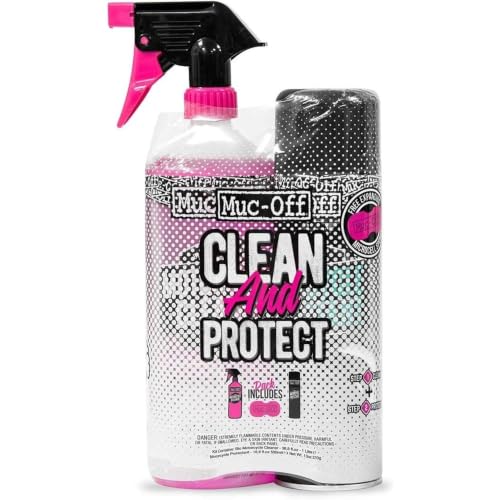
Muc-Off Motorcycle Cleaner is another dedicated wash I use for general grime. It’s widely known for its bright pink cleaner and spray-on format, and the manufacturer describes it as a biodegradable, alkaline cleaner intended for motorcycles. I find it useful when I want a straightforward product for a post-ride wash.
I apply Muc-Off Motorcycle Cleaner to a cool bike, let it work as directed, and rinse it off thoroughly. I pay particular attention to seams, fasteners, and crevices where cleaner or loosened dirt could remain, then dry the motorcycle rather than leaving water to collect.
My practical cautions
Even when a cleaner is designed for motorcycle use, I don’t treat every finish as identical. Custom paint, fresh paint, polished metal, and older coatings may react differently, so I test an inconspicuous area first and follow any restrictions on the bottle.
I also avoid confusing a cleaner’s general wash role with chain maintenance. Muc-Off Motorcycle Cleaner is not a replacement for the chain-specific products below, and after washing I inspect the chain and relubricate it if the motorcycle’s maintenance guidance calls for it.
4. Maxima Clean Up Chain Cleaner — Best for greasy chain buildup

When my chain has accumulated sticky lubricant and road grit, I choose a dedicated chain cleaner such as Maxima Clean Up Chain Cleaner. It’s an aerosol product made for cleaning motorcycle chains, and Maxima identifies it as suitable for O-ring chains. I check the current label to confirm the product is appropriate for my chain type before use.
I apply Maxima Clean Up Chain Cleaner carefully to the chain, rotate the wheel by hand only when the motorcycle is securely supported and switched off, and use a brush if the label allows it. I keep my fingers away from the sprockets and moving parts. After cleaning, I let the chain dry as directed and apply suitable chain lubricant.
Why I don’t use a random degreaser instead
Sealed chains have rubber rings that help retain lubricant. A cleaner that’s too aggressive, or not approved for that type of chain, may damage seals or strip lubricant where it needs to remain. That’s why I look for clear compatibility information instead of judging a product by how quickly it dissolves grime.
I also shield nearby paint, tire rubber, and brake components from overspray. For me, careful application is part of choosing a good chain cleaner: the right product still needs to stay on the part it was designed to clean.
5. Motul C1 Chain Clean — Best for a dedicated aerosol chain-cleaning step

Motul C1 Chain Clean is another motorcycle-specific option I consider when a chain needs a proper degreasing. It’s an aerosol cleaner formulated for motorcycle chains, including sealed chain types such as O-ring, X-ring, and Z-ring, according to Motul’s product information. I always confirm the instructions on the can I’m using.
I use Motul C1 Chain Clean as a targeted maintenance product, not as an all-over wash. I work in a ventilated area, protect nearby surfaces, and allow the chain to dry before relubricating it with a compatible motorcycle chain lubricant.
How I decide between chain cleaners
Both Motul C1 Chain Clean and Maxima Clean Up are sensible candidates for chain-specific cleaning. My choice often comes down to availability, the directions on the current package, and whether the product clearly lists compatibility with my chain. I don’t mix cleaners or use one product to rinse another off unless the manufacturer specifically recommends that approach.
If the chain is only lightly dusty, I may not need a full solvent-based clean every time. I inspect it, remove loose dirt using an appropriate method, and follow the motorcycle maker’s guidance on cleaning frequency and lubrication.
6. CRC Brakleen Non-Chlorinated Brake Parts Cleaner — Best for suitable metal brake parts
CRC Brakleen Non-Chlorinated Brake Parts Cleaner is a brake-parts cleaner, not a general motorcycle wash. I use a product like this only when the label permits it for the specific brake component and material I’m cleaning. Its purpose is to remove brake dust, grease, and residue from appropriate parts, not to clean painted fairings or a chain.
I work with strong ventilation, wear suitable eye protection, and keep the aerosol away from flames and hot surfaces. I avoid spraying it on paint, plastic, rubber, chain seals, and other materials unless the product label explicitly says they’re compatible. I also follow the label’s warnings about ventilation and exposure.
My non-negotiable brake-cleaner rule
I don’t spray brake cleaner over the whole wheel assembly just because the brakes are nearby. I apply it only where it’s appropriate, protect surrounding finishes, and let the component dry as directed before putting the motorcycle back into service.
If I’m unsure whether a part is compatible, I stop and check the manufacturer’s instructions or ask a qualified mechanic. A fast-evaporating cleaner can be useful in the right place, but it is not a shortcut around material compatibility.
How I avoid damaging paint and other finishes
I start with the least aggressive suitable cleaner and work up only if the dirt remains. For most exterior grime, that means a motorcycle wash, clean water, and a soft mitt rather than a concentrated solvent. I don’t use gasoline, paint thinner, or an unknown workshop chemical on the motorcycle’s bodywork.
If I’m preparing a tank or panel for refinishing, I separate washing from paint preparation. A normal wash removes surface dirt, but it doesn’t necessarily remove wax, silicone, or other contaminants that can interfere with paint. I follow the paint system’s instructions and research the best paint for motorcycle gas tank or the best spray paint for motorcycle tank before starting a project.
I pay extra attention to repaired or custom-painted areas, because their finish may not tolerate the same products as a factory coating. I check that a coating is fully cured before cleaning it and test any approved product on a hidden spot first. If I’m sealing a tank after paintwork, I also read about the best paint for motorcycle tank sealer and follow the coating manufacturer’s system instructions.
My quick product-matching guide
- For general exterior grime: I start with S100 Total Cleaner, Motul E2 Moto Wash, or Muc-Off Motorcycle Cleaner, following the label.
- For chain grease: I use Maxima Clean Up Chain Cleaner or Motul C1 Chain Clean, after checking chain compatibility.
- For appropriate brake parts: I consider CRC Brakleen Non-Chlorinated only when its label allows use on that component.
- For unknown, sensitive, or freshly painted finishes: I test a hidden area first or ask the finish manufacturer what it recommends.
I get the best results by choosing a cleaner for the specific job, applying it carefully, and rinsing or drying it exactly as directed. For a broader look at useful wash tools and supplies, I also compare the best cleaning kit for motorcycle before restocking my garage.
My overall rule is simple: I don’t reach for the strongest solvent by default. I use a motorcycle wash for ordinary dirt, a chain cleaner for the chain, and brake cleaner only for suitable brake parts. That approach keeps cleaning effective while helping me protect the finishes and components I want to keep riding.
Frequently Asked Questions
What is the safest cleaner for my motorcycle’s painted surfaces?
I start with a motorcycle wash such as Motul E2 Moto Wash, diluted and used according to its label. I test any new product on a hidden spot first.
Can I use brake cleaner on my motorcycle chain?
I don’t use brake cleaner on a chain. It can damage seals or remove lubricant; I choose a chain cleaner labeled as compatible with O-ring, X-ring, or Z-ring chains.
Is WD-40 a good motorcycle cleaning solvent?
I use the exact WD-40 product and follow its label. Standard WD-40 Multi-Use Product is not a substitute for a dedicated chain cleaner or brake cleaner.
How often should I clean my motorcycle?
I clean it when road film, mud, or oily buildup calls for it, rather than following a rigid schedule. I check and lubricate the chain as its manufacturer recommends.

Related Articles

6 Best Motorcycle Fork Paints for a Durable, Clean Finish
I compare six paints for motorcycle fork lowers, with practical notes on durability, finish, prep, cost, and the fork surfaces…
Jake Miller
12 min read

Remove Motorcycle Tank Badges Safely: A Rider’s Paint-Protecting Guide
Learn how I safely remove motorcycle tank emblems, loosen stubborn adhesive, protect paint, clean residue, and spot when pins or…
Jake Miller
11 min read

How I Remove Motorcycle Tank Stickers Without Damaging the Paint
Learn how I safely remove decals and sticky residue from a motorcycle tank without damaging paint, with tools, step-by-step tips,…
Jake Miller
11 min read