
Motorcycle Armor & Back Protectors: The Complete Guide to Riding Safer
 Jake Miller
13 min read
Jake Miller
13 min read
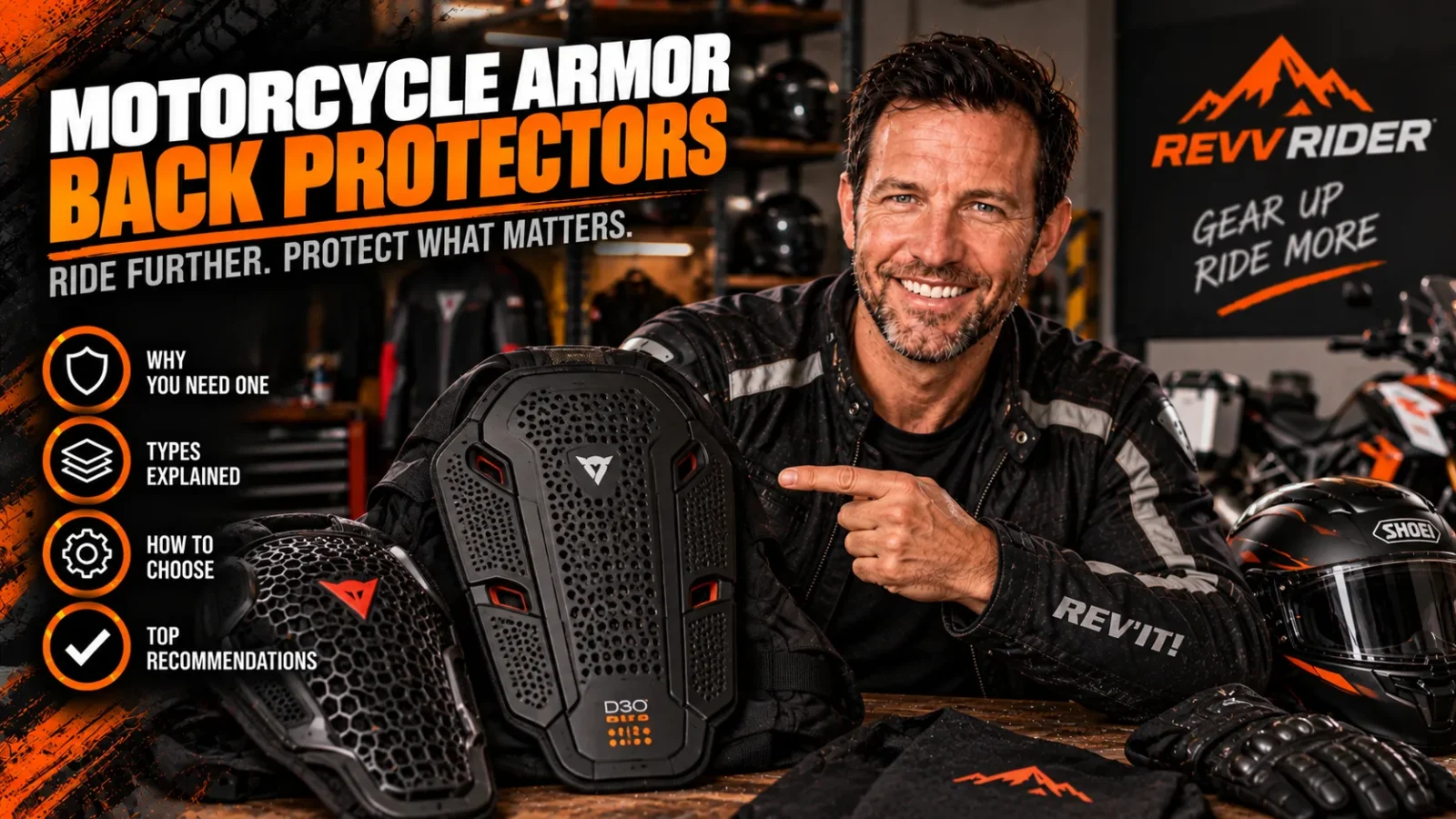
Ask any veteran rider what separates a “close call” from a trip to the emergency room, and the answer almost always involves proper protective gear.
Helmets get all the glory, but your spine, shoulders, elbows, hips, and torso deserve just as much attention.
That’s where motorcycle armor and back protectors come in—the unsung heroes of your riding kit that quietly absorb impact energy so your body doesn’t have to.
If you haven’t already, it’s worth starting with our Ultimate Guide to Motorcycle Jackets, since armor and jackets work as a system. A great jacket without proper armor is only doing half the job, and even the best back protector can’t help you if your outer layer doesn’t fit or perform correctly.
In this guide, we’ll break down everything you need to know about motorcycle armor and back protectors: how they work, what the safety ratings actually mean, how to choose the right type, and how to keep your protection performing at its best for years to come.
Why Motorcycle Armor and Back Protectors Matter So Much
When a motorcycle goes down, the body doesn’t experience a single soft landing—it’s a series of impacts, slides, and rotations, often against asphalt, gravel, curbs, or other vehicles. Armor exists to manage that energy.
Instead of your spine or shoulder absorbing the full force of a hit, quality armor spreads and dissipates that energy over a larger area and a longer time, dramatically reducing the risk of fractures, spinal trauma, and organ damage.
Back protectors specifically target one of the most vulnerable and least forgiving parts of your body: the spinal column. Unlike a broken arm or bruised hip, a serious spinal injury can mean permanent paralysis. That’s why experienced riders treat back protection as non-negotiable, not optional.
The Anatomy of an Impact
Understanding why armor is engineered the way it is helps explain why not all protection is created equal. During a crash, forces travel through the body in fractions of a second. Good armor is designed to:
- Absorb and disperse kinetic energy across a wider surface
- Slow down the rate of force transmitted to the body (measured in kN)
- Maintain flexibility for comfort and mobility during normal riding
- Stay securely positioned even during a slide or tumble
This is precisely why certified armor, tested under standardized conditions, consistently outperforms generic foam padding that simply happens to be sewn into a jacket.
Types of Motorcycle Armor You’ll Encounter
Not all armor looks or performs the same. As you shop for gear, you’ll typically run into a few core categories.
Soft Armor (Foam-Based)
This is the most common type found in budget and mid-range jackets. It’s lightweight, flexible, and comfortable, but quality varies enormously.
Some soft armor is CE-certified and genuinely protective; other versions are little more than comfort padding with no real impact rating.
This is one of the biggest reasons to understand motorcycle jacket safety ratings before assuming your jacket has you covered.
Hard Armor (Shell-Based)
Hard armor uses a rigid outer shell (often polycarbonate or reinforced plastic) paired with an energy-absorbing foam or gel core underneath. It tends to offer superior protection for high-impact areas like the back, shoulders, and elbows, though it’s bulkier and less flexible than soft armor.
D3O and Reactive Armor
This is where modern materials science gets exciting. D3O and similar reactive materials remain soft and pliable during normal movement but instantly stiffen upon impact, absorbing shock before returning to a flexible state.
It’s become the gold standard for riders who want maximum protection without sacrificing comfort on long rides.
Airbag Systems
Airbag technology has moved from race paddocks into everyday street gear. These systems detect a crash in progress and deploy an airbag around the torso and neck in milliseconds.
If you’re considering this next-level protection, our breakdown of the best airbag jacket for motorcycle riders is a great place to start.
Decoding CE Ratings: What the Numbers Actually Mean
If you’ve shopped for armor or a jacket recently, you’ve probably seen labels like “CE Level 1” or “CE Level 2” and wondered what they actually signify.
The short version: CE certification is a European safety standard that tests how much force armor transmits to the body during a standardized impact.
Level 1 vs. Level 2 Armor
Level 1 armor allows more force to pass through during an impact, while Level 2 armor is rated to transmit significantly less force under the same test conditions, making it the higher-protection option.
Both levels can be legally sold and worn, but if you’re touring, commuting daily, or riding aggressively, Level 2 is generally the smarter choice.
For a deeper technical breakdown, check out our dedicated articles on Understanding Safety Ratings: What is “CE” and the more detailed CE Rating Explained guide, which walks through the exact testing methodology used by labs across Europe.
Back Protector Classifications
Back protectors have their own separate CE standard (EN 1621-2), distinct from limb armor. This standard also has Level 1 and Level 2 classifications, and it’s worth noting that a back protector rating is not automatically the same as your jacket’s overall safety rating. Always verify the specific certification of the back protector itself, not just the garment it’s inserted into.
Choosing the Right Armor for Your Riding Style
Just like there’s no single “best” jacket for every rider, there’s no universal answer for armor either. Your ideal setup depends heavily on how, where, and how often you ride.
Commuters and Urban Riders
If you’re navigating stop-and-go traffic, comfort and flexibility often take priority alongside protection. Lightweight CE Level 1 or D3O-style armor paired with a breathable jacket tends to strike the right balance.
It’s worth reading our guide on choosing the right motorcycle jacket for your riding style to match your armor choice with the rest of your gear setup.
Touring Riders
Long hours in the saddle mean armor needs to stay comfortable across hundreds of miles without shifting or chafing. Touring riders often benefit from Level 2 back protectors combined with adjustable, well-ventilated jackets.
Our picks for the best motorcycle jacket for touring 2026 all feature armor systems built with this exact use case in mind.
Sport and Track Riders
Higher speeds mean higher-energy impacts, so this group should almost always prioritize CE Level 2 armor across shoulders, elbows, and back. Hard-shell armor is common here because it holds up better under repeated abrasion and high-force impacts.
Adventure and Dual-Sport Riders
ADV riders face a unique mix of highway speeds and off-road tumbles, so armor needs to handle both blunt impact and abrasion resistance.
If this sounds like your riding style, take a look at our recommendations for the best dual sport motorcycle jacket for the money, many of which include upgradeable armor pockets.
Leather, Textile, and How Armor Fits Into the Equation
The material of your jacket doesn’t just affect abrasion resistance—it also determines how armor sits against your body.
Leather jackets tend to hold armor firmly in place due to their structured fit, while textile jackets often rely more heavily on adjustable straps and stretch panels to keep protectors positioned correctly.
If you’re torn between the two, our comparison on Leather vs. Textile Jackets: Which is Right for You? covers exactly how each material interacts with internal armor systems.
Getting the Fit Right
Even the best-rated armor in the world is useless if it’s not positioned correctly. Back protectors that ride too high or too low, or shoulder armor that shifts during a fall, can fail to protect the areas they’re meant to cover.
Before your next ride, run through our motorcycle jacket fitting guide to make sure your armor stays exactly where it needs to be, even during a slide.
A quick fit test: Reach both arms forward as if gripping handlebars, then twist your torso side to side. Your back protector should stay centered on your spine without bunching or sliding toward one side. If it shifts noticeably, it’s time to adjust the internal straps or consider a different size.
Standalone Back Protectors vs. Integrated Jacket Armor
One of the most common questions new riders ask is whether they need a separate back protector or if the one built into their jacket is enough.
When Integrated Armor Works
Many mid-to-high-end jackets ship with CE-certified Level 1 or Level 2 back protectors already installed. If your jacket’s included armor is properly certified and fits snugly, it can absolutely provide solid protection without needing anything extra.
When a Standalone Protector Makes Sense
Budget jackets, vintage-style jackets, and fashion-forward designs sometimes include minimal or uncertified padding.
In these cases, a standalone back protector—worn as a base layer or vest underneath your jacket—can dramatically upgrade your protection level without needing to replace your entire jacket.
This is especially relevant for riders who love the look of classic styles; our list of the best brands for classic motorcycle jacket shoppers often lacks heavy-duty armor by design, so a separate protector fills that gap nicely.
Maintaining and Inspecting Your Armor
Armor isn’t a “set it and forget it” purchase. Like tires and brake pads, it degrades over time and use, and needs periodic attention.
Regular Inspection Checklist
- Check foam and shell armor for cracks, compression, or brittleness
- Ensure straps and Velcro closures still hold armor firmly in place
- Look for any gaps where armor has shifted away from its intended pocket
- Confirm CE labels and stitching are still intact and legible
Post-Crash Replacement
Any armor involved in a real impact should be replaced, even if it looks fine from the outside. Impact-absorbing foams and reactive materials are often single-use in terms of their maximum protective capacity—once compressed under crash forces, they may not perform the same way again. This is similar logic to why we recommend reviewing when to replace your jacket, since the shell and armor often need replacing together after a serious get-off.
Cleaning Without Compromising Protection
Armor and jackets both need regular cleaning, but harsh detergents or high heat can degrade foam and reactive materials over time. Removable armor should always be taken out before washing the jacket itself.
For textile jackets, our guide on how to wash your motorcycle jacket explains the safest cleaning methods, while leather owners should reference how to clean a leather jacket to avoid damaging both material and armor pockets.
Common Mistakes Riders Make With Armor
Assuming All Armor Is Equal
Not every piece of foam sewn into a jacket sleeve is created equal. Always look for an actual CE certification tag rather than assuming “padded” means “protected.”
Ignoring Back Protection Entirely
Shoulder and elbow armor gets a lot of attention, but plenty of riders skip back protectors altogether, especially casual or short-trip riders.
Given that spinal injuries are among the most severe outcomes of motorcycle accidents, this is one area where cutting corners simply isn’t worth the risk.
Buying Armor That Doesn’t Match Riding Conditions
A heavy hard-shell back protector built for track days might feel overkill and uncomfortable for a hot summer commute, while thin airflow-focused armor might not offer enough protection for high-speed touring.
If you frequently ride in extreme heat, pairing lighter armor with a breathable option like the best mesh motorcycle jackets for men can help you stay protected without overheating.
Forgetting Armor When Buying Jackets Online
When shopping through best online store for motorcycle jackets options, always check the product description for specific armor certifications rather than trusting generic marketing language like “impact resistant” or “protective padding,” which carry no standardized meaning on their own.
Special Considerations for Different Riders
New and Younger Riders
Beginners sometimes underestimate how much protection matters until it’s too late. If you’re just starting out, our guide to the best motorcycle jackets for beginners highlights options with reliable, certified armor already built in, taking the guesswork out of your first gear purchase.
Parents shopping for younger riders should also check our recommendations for the best motorcycle jacket for kids, which pay special attention to properly sized armor for smaller frames.
Riders With Specific Body Types
Armor placement can shift depending on body shape, which is why fit matters so much. Taller riders should check out the best motorcycle jacket for tall riders, while larger riders may find better armor coverage and positioning in options featured in our best motorcycle jacket for big guys roundup.
Riders in Extreme Climates
Hot-weather riders often worry that armor will make already-warm gear unbearable. Fortunately, modern perforated and mesh designs solve this problem well; see our guide to the best perforated jacket for motorcycle use for armor-friendly options that still breathe.
Cold-weather riders, on the other hand, should prioritize layering systems that don’t compress or displace armor, something we cover in our picks for the best motorcycle jacket for cool weather.
Bringing It All Together
Motorcycle armor and back protectors aren’t glamorous, but they’re arguably one of the most important investments you’ll make in your riding gear setup.
Whether you choose soft foam armor, hard-shell protection, cutting-edge reactive materials, or a full airbag system, the goal is always the same: giving your body the best possible chance if something goes wrong.
Take the time to understand CE ratings, check your fit regularly, inspect your gear for wear, and replace anything involved in a crash.
Pair that knowledge with a well-fitted, properly rated jacket, and you’ll be riding with the kind of protection that lets you focus on the road ahead instead of worrying about the “what ifs.” Your future self, spine intact, will thank you for it.
Frequently Asked Questions
Do I really need a back protector if my jacket already has armor?
Yes. Many jackets include only basic foam pads, not certified Level 2 protectors. A dedicated back protector, especially one checked against motorcycle jacket safety ratings, offers far superior impact absorption.
What’s the difference between CE Level 1 and Level 2 armor?
Level 1 armor transmits more force in an impact than Level 2. Level 2 armor is rated for higher-energy impacts, making it the safer choice for track days, touring, and high-speed riding, as explained in our CE Rating Explained guide.
Can I use armor from one jacket in a different jacket?
Often yes, as long as the pocket dimensions match and the armor is CE-rated. Always check your motorcycle jacket fitting guide to confirm the armor sits correctly over your shoulders, elbows, and spine.
How often should I replace my back protector?
Most manufacturers recommend replacing armor every 5 years, or immediately after a crash, since impact-absorbing foams can lose effectiveness. This mirrors the advice in our article on when to replace your jacket.

Related Articles

8 Best Motorcycle Jacket Materials (And the Real Jackets That Use Them Best)
I break down the best motorcycle riding materials for jackets—leather, textile, mesh, and laminate—with real jacket picks I've tested for…
Jake Miller
11 min read

9 Best Paints for Nylon Motorcycle Riding Jackets That Actually Hold Up on the Road
I tested 9 paints for nylon motorcycle jackets so you don't have to guess. Here's what actually sticks, flexes, and…
Jake Miller
12 min read

9 Best Female Motorcycle Jackets That Actually Fit Right in 2026
I've tested dozens of women's motorcycle jackets over the years. Here are my 9 favorites for fit, protection, and style—from…
Jake Miller
11 min read