
9 Best Motorcycle Jackets for Under $200 (Tested and Ranked by a Rider Who’s Worn Them All)
 Jake Miller
15 min read
I’ve torn the mesh on a $180 jacket sliding across a Missouri on-ramp, and I’ve sweated through a “waterproof” liner that gave up halfway through an Ozarks downpour. Cheap gear taught me more about what actually matters in a jacket than any spec sheet ever did.
Disclosure: some links in this article are affiliate links. As an Amazon Associate I earn from qualifying purchases, and I may also earn a commission from RevZilla at no extra cost to you.
TL;DR
- Best all-around waterproof pick: Bilt Blaze Waterproof Jacket — removable liner, CE armor, ~$140–$170
- Best value workhorse: Joe Rocket Atomic 5.0 — huge vents, spine pad included, ~$130–$160
- Best for hot climates: Tourmaster Intake Air 5.0 — mesh-dominant build, ~$120–$150
- Best three-season jacket: Cortech GX Sport Air 5.0 — dual liners, included back pad, ~$170–$200
- The catch most guides skip: most of these ship with CE Level 1 armor, not Level 2 — I break down what that actually means below, and which picks step up to Level 2.
- Budget an extra $40–$80 if you want a genuinely certified back protector instead of the foam pad most jackets ship with.
Why I Still Recommend Budget Jackets After 50,000+ Miles
I grew up wrenching on vintage cruisers in my dad’s garage, and for a long time I believed the old rule that you get what you pay for with riding gear.
Then I spent a summer commuting on a jacket I bought for less than a tank of gas plus a nice dinner, and it held up fine through two low-speed drops.
That didn’t mean every cheap jacket is safe — plenty aren’t — but it taught me that price and protection aren’t as tightly linked as the premium brands want you to believe.
This list isn’t a random pull from Amazon’s bestseller page. Every jacket here ships with CE-rated armor at the shoulders and elbows at minimum, which I treat as a hard floor, not a nice-to-have.
If you’re brand new to reading gear specs, my CE ratings guide breaks down exactly what those certifications mean and why “CE-style” armor (a phrase some cheap jackets use) is not the same thing as certified armor.
Before we get into the list, one honest note on pricing: gear prices move constantly with sales, seasonal drops, and retailer promotions. The ranges below reflect what these jackets typically sell for — always check current pricing before you buy, since a jacket that’s $190 today might be $150 next week during a clearance.
What “CE Level 1 vs. Level 2” Actually Means (and Why It Matters Here)
This is the part most budget jacket roundups skip entirely, and it’s the thing I wish someone had explained to me before my first gear purchase.
CE armor for limbs (shoulders and elbows) is tested under EN 1621-1 and comes in two grades:
- Level 1 allows an average transmitted impact force of up to 35 kN
- Level 2 cuts that to roughly 20 kN — nearly half the force reaching your body in a real impact
Level 1 is still a legitimate, tested safety standard, and it’s genuinely fine for commuting and everyday riding. It’s also the most common grade shipped in the $130–$200 range because Level 2 armor is thicker, heavier, and more expensive to produce.
Nothing wrong with a jacket that ships Level 1 — just know what you’re buying. I’ve flagged the armor level for every jacket below instead of just saying “CE-approved” and leaving it vague.
The Back Protector Trap Nobody Warns You About
Almost every jacket on this list — and almost every jacket in this price range, period — includes a “pocket for an optional back protector.”
Here’s what that sentence is hiding: the foam pad already sitting in that pocket when the jacket arrives is not CE certified. It’s a placeholder, not protection. I didn’t realize this myself until I pulled the pad out of my own jacket and checked for a CE tag — there wasn’t one.
If you want real back protection, budget an extra $40–$80 for a certified Level 2 insert from a brand like SAS-TEC, Forcefield, or D3O. It slides into the same pocket. My guide to motorcycle armor and back protectors covers exactly what to look for and how to check what you already have.
How I Evaluated These Jackets
I looked at five things for every jacket on this list, and I’ve been consistent about it rather than picking whichever feature made each brand look best:
- Certified armor — CE Level 1 minimum at shoulders and elbows, noted explicitly
- Material and construction — denier rating, panel placement, and how the shell holds up to abrasion
- Weather versatility — removable liners, fixed membranes, or mesh-only builds
- Fit and adjustability — waist, arm, and collar adjustment points, since a loose jacket rides up and exposes skin in a slide
- Real-world value — what you’re actually getting per dollar compared to jackets $100–$300 more expensive
Quick Comparison Table
| Jacket | Approx. Price | Armor Level | Weather | Best For |
|---|---|---|---|---|
| Bilt Blaze Waterproof | $140–$170 | CE Level 1 (shoulders/elbows) | Waterproof, 3-season | Commuters, touring riders |
| Joe Rocket Atomic 5.0 | $130–$160 | CE Level 1 + spine pad | Ventilated, warm-weather leaning | Value-focused riders |
| Alpinestars T-GP Plus R V3 Air | $160–$190 | CE Level 1 (Bio Armor) | Mesh, warm-weather only | Sport riders |
| Tourmaster Intake Air 5.0 | $120–$150 | CE Level 1 | Mesh, hot climates | Riders in warm states |
| Fly Racing Strata | $150–$180 | CE Level 1 + back pad | 3-layer, waterproof + thermal | All-rounders, ADV riders |
| Speed and Strength Rust & Redemption | $170–$200 | CE Level 1 | Waxed cotton, light water resistance | Cruiser/cafe riders |
| Sedici Alexi Waterproof | $160–$190 | CE Level 1 | Fixed waterproof membrane | Riders who commute in rain |
| Cortech GX Sport Air 5.0 | $170–$200 | CE Level 1 + back pad | Dual removable liners | Riders wanting one jacket, year-round |
| Bilt Storm Waterproof | $150–$180 | CE Level 1 | Fixed waterproof, heavier build | Foul-weather commuters |
1. Bilt Blaze Waterproof Jacket — Best All-Around Value
Approx. price: $140–$170 · CE Level 1 shoulders/elbows
This is the jacket I point beginner riders toward when they ask for one option that just works. The 600-denier polyester shell and fixed waterproof/breathable membrane mean you’re not gambling on the weather forecast before a ride.
The removable thermal liner stretches this across three seasons, and the CE-approved armor sits where it needs to. My only real gripe is sizing — it runs generous, so size down if you’re between measurements.
Pros:
- Genuinely keeps you dry in sustained rain, not just drizzle
- Removable liner adds real versatility across seasons
- High-visibility reflective panels for night riding
Cons:
- Sizing runs large — try before you buy if you can
- Ventilation is adequate, not great, in serious heat
- Back protector is the uncertified foam pad — plan to upgrade it
2. Joe Rocket Atomic 5.0 — Best Ventilated Value Pick
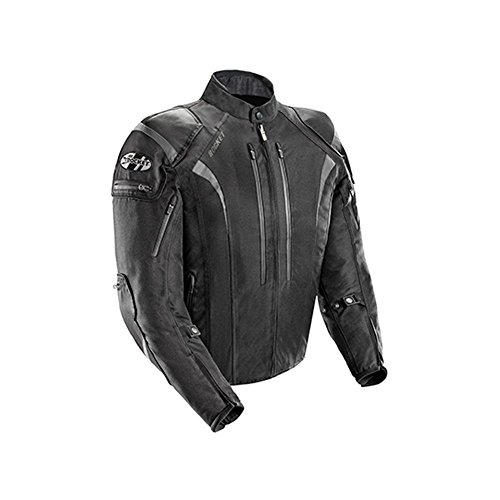
Approx. price: $130–$160 · CE Level 1 + removable spine pad
I’ve owned a version of this jacket, and the vents are the standout feature — large intake and exhaust panels that actually move air at highway speed instead of just looking like they should. Ballistic nylon construction holds up to abrasion better than the price suggests.
The included removable spine pad is a nice touch most budget jackets skip, even if it’s not a full certified back protector.
Pros:
- Best ventilation-to-price ratio on this list
- Includes a spine pad, not just an empty pocket
- Ballistic nylon resists abrasion well
Cons:
- Waterproof liner is functional, not exceptional
- Styling leans a bit dated next to newer designs
- Armor pockets could hold the pads more snugly
3. Alpinestars T-GP Plus R V3 Air Jacket — Best for Sport Riders

Approx. price: $160–$190 · CE Level 1 (Bio Armor)
This is the pick for riders in an aggressive, forward-leaning position who want a recognizable racing brand without the racing price tag. Alpinestars’ Bio Armor is lighter than most CE padding while still holding its certification, and the pre-curved sleeves genuinely reduce bunching when you’re tucked in on the bars.
Just know this is a warm-weather-only jacket — there’s no liner system here.
Pros:
- Excellent airflow through strategic mesh panels
- Bio Armor is lightweight without cutting corners on protection
- Pre-curved sleeves fit an aggressive riding position properly
Cons:
- Zero cold-weather or rain capability — you’ll need a second jacket
- Mesh construction trades some abrasion resistance for airflow
- Back protector sold separately
4. Tourmaster Intake Air 5.0 — Best for Hot Climates

Approx. price: $120–$150 · CE Level 1
If you ride somewhere that hits 95°F for months at a time, this is the jacket I’d point you toward first. It’s mesh-dominant with 600-denier reinforcement only where it counts, so it stays protective without turning into a sauna.
I wouldn’t recommend this as your only jacket unless you live somewhere that barely sees a real winter — it’s a dedicated hot-weather tool, not an all-rounder.
Pros:
- The coolest jacket on this list by a clear margin
- Reinforced high-impact zones despite the mesh-heavy build
- Genuinely lightweight, which matters on multi-hour rides
Cons:
- No cold or wet weather capability at all
- Mesh reduces overall abrasion resistance
- Not a year-round solution — budget for a second jacket eventually
5. Fly Racing Strata Jacket — Best for Adventure and Dual-Sport Riders

Approx. price: $150–$180 · CE Level 1 + removable back pad
Fly Racing built its name in off-road gear, and it shows in the Strata’s rugged construction. The three-layer system (removable waterproof liner, removable thermal liner, mesh-capable shell) makes this the most genuinely versatile jacket on this list for riders who don’t want three separate jackets in the closet.
The relaxed fit is deliberate — it’s built to layer, so don’t expect a streamlined silhouette.
Pros:
- True three-layer system covers rain, cold, and heat
- Includes a back pad rather than requiring a separate purchase
- Relaxed fit works well for adventure and dual-sport riding positions
Cons:
- Bulkier fit won’t appeal to riders wanting a slim look
- Waterproof liner performs fine but not at dedicated-rain-jacket level
- Fewer color options than some competitors
6. Speed and Strength Rust and Redemption — Best for Style-Conscious Cruiser Riders
Approx. price: $170–$200 · CE Level 1
This is the jacket I recommend to riders who don’t want to change out of their gear the second they park the bike. The waxed cotton shell has real character, and it holds up on cafe racers and cruisers particularly well.
Just know waxed cotton needs its own care routine — it’s not a wash-and-forget material like the polyester jackets on this list.
Pros:
- Distinctive look that works off the bike, not just on it
- Waxed cotton offers natural light water resistance
- Tailored fit flatters a range of body types
Cons:
- Requires periodic re-waxing to maintain water resistance
- Not built for heavy rain or extreme weather
- Ventilation is limited compared to mesh-forward options
7. Sedici Alexi Waterproof Jacket — Best Fixed Waterproof Build
Approx. price: $160–$190 · CE Level 1
Sedici (Cycle Gear’s in-house brand) punches above its price point here. The fixed waterproof/breathable membrane means you’re never caught without protection because you forgot to zip in a liner, and the dedicated waterproof electronics pocket is a genuinely thoughtful touch.
Pros:
- Fixed membrane means reliable rain protection every time you ride
- Build quality feels closer to jackets $100+ more expensive
- Waterproof pocket protects your phone without a separate dry bag
Cons:
- Fixed membrane breathes less than removable-liner alternatives in heat
- Slightly heavier than jackets with removable liner systems
- Best purchased in-store if you can — online sizing can be inconsistent
8. Cortech GX Sport Air 5.0 — Best True Three-Season Jacket

Approx. price: $170–$200 · CE Level 1 + included back pad
If I could only recommend one jacket from this entire list as a genuine year-round solution, it’s this one. Both a removable waterproof liner and a removable thermal liner mean this jacket adapts from summer to winter without needing a second garment.
The included back pad — not just a pocket — is a real value-add most competitors at this price skip.
Pros:
- Most versatile jacket on this list across all four seasons
- Includes a back pad instead of an empty pocket
- Media pocket with headphone routing is a nice modern touch
Cons:
- Managing two liners takes some getting used to
- Fit runs slightly loose with both liners removed
- Not the lightest option if you strip it down for summer
9. Bilt Storm Waterproof Jacket — Best for Foul-Weather Commuters
Approx. price: $150–$180 · CE Level 1
This is the jacket for riders who commute through genuinely bad weather and need something that won’t let them down. The storm flap over the main zipper and high collar create a real seal against wind-driven rain, and the fixed membrane means consistent performance every ride.
Pros:
- Handles sustained, heavy rain better than most jackets on this list
- Consistent protection thanks to the fixed membrane design
- Generous reflective elements for low-visibility commuting
Cons:
- Heavier build makes it less comfortable once temperatures climb
- Limited ventilation — not a summer jacket
- Styling is purely functional, not fashion-forward
Bonus Picks: Leather and Women’s-Specific Options
The nine jackets above are all textile or mesh because that’s where the strongest CE-armored value sits under $200. But two questions come up constantly in the comments, so I want to address them directly instead of pretending they don’t exist.
Want leather instead? Full-grain leather under $200 exists, but options with genuinely certified CE armor (not just a leather shell with foam padding) are limited at this exact price point. I go deep on this trade-off, including specific picks, in my leather vs. textile jackets guide — worth reading before you commit either way.
Riding as a woman and tired of unisex cuts fighting your shoulders and waist? Several brands on this list (Olympia and Bilt among them) make women’s-specific versions of similar jackets with better proportioned armor placement. My women’s faux leather jacket guide covers fit differences worth knowing before you buy.
Which Jacket Actually Fits Your Riding?
If you’re still deciding, match your riding pattern instead of chasing the “best” jacket in the abstract:
- Daily commuter in unpredictable weather → Bilt Blaze or Sedici Alexi
- Live somewhere hot, ride mostly in summer → Tourmaster Intake Air 5.0
- Want one jacket for the whole year → Cortech GX Sport Air 5.0 or Fly Racing Strata
- Aggressive sport riding position → Alpinestars T-GP Plus R V3 Air
- Cruiser or cafe racer, care about looking good off the bike → Speed and Strength Rust and Redemption
For a deeper breakdown by riding style beyond just these nine, my jacket-by-riding-style guide covers touring, sport, adventure, and cruiser setups in more detail.
Getting the Fit Right
None of the armor in these jackets works if the jacket doesn’t fit correctly. Sit in riding position — leaning forward, arms extended like you’re on the bars — before judging fit standing upright.
The armor should sit directly over your shoulder and elbow joints without shifting, sleeves should reach your wrist without a gap to your gloves, and the jacket should be long enough to overlap your pants when seated so your lower back stays covered. My full motorcycle jacket fitting guide walks through this with photos if you want the complete checklist.
Frequently Asked Questions
Can a $200 jacket really protect me as well as a $600 jacket?
For armor specifically, often yes — a lot of $150–$200 jackets ship the same CE Level 1 armor found in premium jackets. Where the price gap shows up is build quality over years of use, more advanced Level 2 armor as standard, better breathability engineering, and included back protectors instead of foam placeholders. For everyday commuting and casual riding, a well-chosen sub-$200 jacket is a legitimate, safe choice.
Do I really need CE-approved armor in my motorcycle jacket?
Yes. CE certification means the armor has been independently tested to absorb impact force, not just marketed as protective. Every jacket on this list includes CE-rated armor at minimum in the shoulders and elbows — the most common impact points in a fall. If a jacket only says “armor” without a CE rating listed, treat that as a red flag.
Can I use a summer mesh jacket in light rain?
Mesh handles a light drizzle for a few minutes, but it soaks through fast in any real rain. If your weather is unpredictable, choose a jacket with a waterproof liner (Bilt Blaze, Fly Racing Strata, Cortech GX Sport Air) or a fixed membrane (Sedici Alexi, Bilt Storm) instead. Getting soaked isn’t just uncomfortable — it can lead to dangerous cold and reduced concentration mid-ride.
How should a motorcycle jacket fit?
Snug but not restrictive in riding position, with armor sitting properly over your shoulders and elbows without shifting when you move your arms through full range of motion. Sleeves should cover your wrists with no gap to your gloves, and the jacket should overlap your pants when seated. See the fitting guide linked above for the full walkthrough.
Is the back protector pocket in these jackets actually safe?
Not by default. Most jackets in this price range ship with an uncertified foam pad in the back pocket, not a real CE-rated insert. If back protection matters to you — and it should — budget $40–$80 for a certified Level 2 insert that fits the same pocket.
How do I maintain my jacket to maximize its lifespan?
It depends on material. Textile jackets do fine with mild detergent and air drying — avoid fabric softener, which can compromise waterproof membranes. Waxed cotton needs periodic re-waxing. Always remove armor before washing, and never machine-wash a back protector unless the manufacturer specifically says it’s safe. My full jacket washing guide and when-to-replace guide cover the warning signs that it’s time for a new one.
Final Thoughts
Every jacket on this list will keep you safer than riding without one, full stop. My honest advice: don’t get so hung up on finding the single “best” option that you delay buying gear at all. Match the jacket to how and where you actually ride, verify the CE armor level before you buy, and plan to upgrade that back protector pocket separately.
If your budget has more room to work with, my jackets under $500 guide covers where the next price tier actually earns its premium. And once your jacket’s sorted, round out the rest of your kit with a budget-friendly helmet, a solid pair of beginner gloves, and boots built for riding, not just walking. For the full picture of how jackets fit into your overall setup, my ultimate motorcycle jacket guide is the pillar page worth bookmarking.
Ride safe, and check your armor before you check your Instagram.

Related Articles

7 Best Hoodies for Motorcycle Riding: Real Gear I Actually Wear on Two Wheels
I tested the best hoodies for motorcycle riding, from Kevlar-lined stealth options to armored commuter picks. Here's what actually protects…
Jake Miller
9 min read
9 Best Vests for Motorcycle Riding: Real-World Picks I Actually Wear
I've ridden thousands of miles in motorcycle vests. Here are 9 real, tested picks — from armored leather to hi-vis…
Jake Miller
12 min read
8 Best Heated Vests for Motorcycle Riding: Wired and Battery Picks for Cold Commutes
I've ridden through freezing winter commutes with eight heated vests. Here's which 12V wired and battery powered heated vests actually…
Jake Miller
11 min read