
9 Best Mesh Motorcycle Jackets for $50 (An Honest Look at What That Budget Actually Buys)
 Jake Miller
15 min read
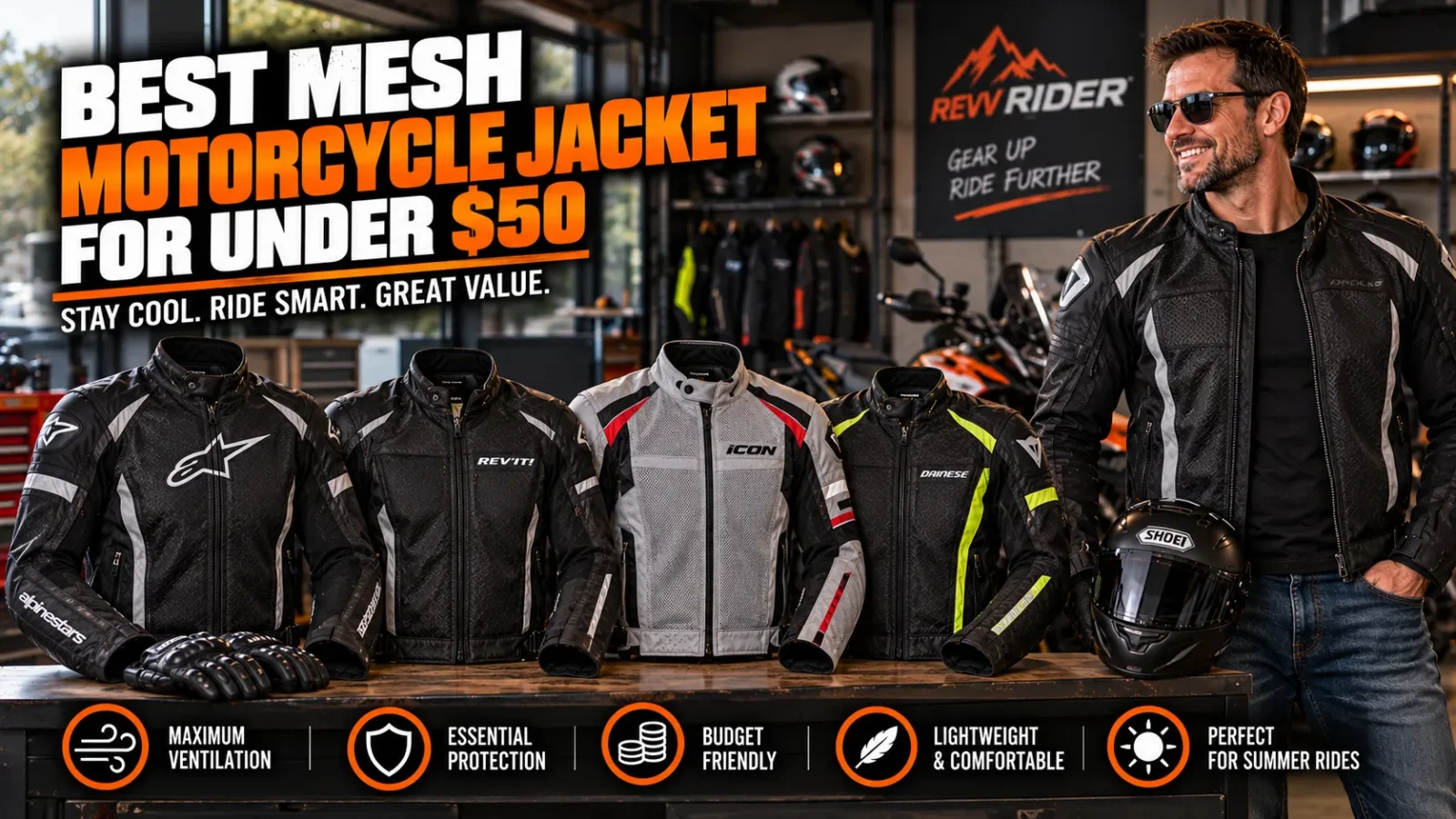
The first mesh jacket I ever bought cost less than a fill-up and a fast food run combined, and I wore it through an entire Midwest summer before I understood what I’d actually gotten for that price. Some of it held up. Some of it didn’t. That gap between marketing and reality is exactly what I want to close for you here.
Disclosure: some links in this article are affiliate links. As an Amazon Associate I earn from qualifying purchases, and I may also earn a commission from RevZilla at no extra cost to you.
TL;DR
- Best true CE-armored pick near $50: Xelement CF462 — removable armor, reflective piping, realistically found in the $50–$70 range
- Best if you can stretch slightly: Bilt Techno — CE armor plus stretch panels, typically $60–$90
- Best budget-friendly backup jacket: Bikers Gear Lightweight Mesh — foam padding only, but genuinely inexpensive, often under $50
- The honest truth: a handful of “under $50” jackets in every roundup online (including previous versions of this one) only hit that price during sales or as previous-season stock — I’ve flagged exactly which ones below instead of pretending otherwise
- CE-approved armor vs. foam padding is the real fork in the road at this price tier — I break down what you’re actually getting with each
- Budget nothing extra for a back protector at this price — none of these ship with a certified one, and that’s worth knowing before you buy
What $50 Actually Buys You in a Mesh Jacket
I’ve bought cheap gear because I had to, not because I wanted to review it later. When I was commuting on a budget that didn’t leave room for a $250 jacket, I learned the hard way that “under $50” and “actually $50 today, brand new, in your size” are two very different promises.
A lot of gear roundups blur that line. I’d rather tell you straight: some of the jackets on this list are consistently available near $50, and a couple of them typically need a sale or a previous-season discount to get there. I’ve marked each one so you’re not disappointed at checkout.
None of that means budget mesh jackets aren’t worth buying. It means you should know exactly what you’re getting. If you want a jacket with genuinely certified protection and you’re willing to stretch your budget slightly, my mesh jackets under $100 guide covers the next tier up, where CE Level 1 armor becomes the standard rather than the exception.
CE-Approved Armor vs. Foam Padding: The Fork in the Road at This Price
This is the single most important thing to understand before buying a jacket in the $50 range, and it’s the question I get asked most often.
CE-approved armor has been independently tested under EN 1621-1 to absorb and disperse impact force. It’s rated, certified, and it works the same way whether it’s in a $50 jacket or a $500 one.
Foam padding is just foam. It might offer some cushioning, but it hasn’t been tested against any impact standard, and manufacturers aren’t required to prove anything about how it performs in a crash.
At this price point, you’ll find both. Some jackets on this list genuinely include CE-approved armor — a real achievement at $50. Others use foam padding and market it in language that sounds similar but isn’t the same thing.
I’ve been explicit about which is which for every jacket below, because “padded” and “CE-approved” get used almost interchangeably in product listings, and they shouldn’t be. My CE ratings guide goes deeper on how these certifications actually work if you want the full picture.
How I Evaluated These Jackets
I looked at the same things I’d want to know before spending my own money:
- Armor type — CE-approved or foam, stated plainly rather than left vague
- Real-world price — whether $50 is a realistic everyday price or a sale-only price
- Ventilation — how much actual mesh coverage versus reinforced panel
- Build quality — stitching, zipper hardware, and how the jacket is likely to hold up over a season
- Practical extras — pockets, reflective elements, adjustability
Quick Comparison Table
| Jacket | Realistic Price | Armor | Best For |
|---|---|---|---|
| Xelement CF462 | $50–$70 | CE-approved, shoulders/elbows | Best true-armor pick near $50 |
| Milwaukee Leather Mesh | $45–$65 | Foam padding | Classic styling, on/off bike |
| Bikers Gear Lightweight Mesh | Under $50 | Foam padding | Backup jacket, packable |
| Mossi Excursion | $50–$70 | Foam padding (removable) | Riders who want adjustable coverage |
| Joe Rocket Phoenix 5.0 | $70–$100 (sale to hit $50) | CE-approved, shoulders/elbows | Brand reliability, if you catch a sale |
| ALPHA CYCLE GEAR Mesh | $55–$75 | CE-approved + removable back pad | Most complete armor package at this tier |
| Tourmaster Flex Series 3 | $80–$110 (sale to hit $50) | CE-approved, shoulders/elbows | Engineered ventilation, if discounted |
| NERVE Mesh Jacket | $60–$85 | CE-approved, shoulders/elbows | Tailored European fit |
| Bilt Techno | $60–$90 | CE-approved + foam back pad | Best all-rounder just above $50 |
1. Xelement CF462 Men’s Black Armored Mesh Motorcycle Jacket — Best True CE-Armor Pick Near $50
Realistic price: $50–$70 · CE-approved armor, shoulders and elbows
Buy it: Amazon
This is the jacket I point people toward first when they tell me their absolute ceiling is $50. It’s one of the few in this price range that consistently ships with genuinely CE-approved, removable armor rather than foam standing in for it. The polyester mesh moves plenty of air, and the reflective piping is a real safety feature, not just decoration.
Pros:
- Real CE-approved armor at a price where that’s rare
- Excellent airflow for hot-weather riding
- Reflective piping improves night visibility
- Adjustable straps help dial in the fit across body types
Cons:
- Sizing runs large — measure carefully before ordering
- No back protector included, just an empty pocket
- Zippers feel less robust than pricier alternatives
2. Milwaukee Leather Men’s Mesh Motorcycle Jacket — Best Classic Styling
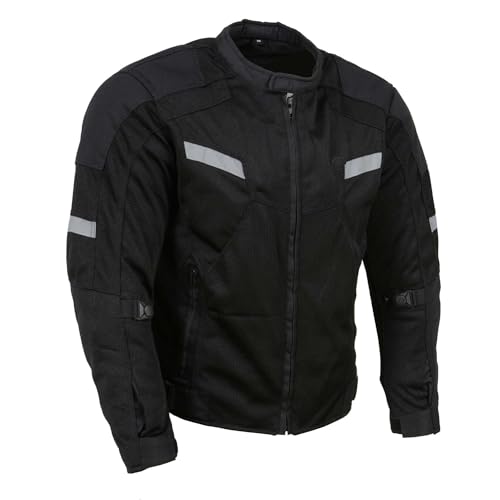
Realistic price: $45–$65 · Padding only, not CE-certified
Buy it: Amazon
I like this jacket for riders who want something that looks as good parked outside a diner as it does on the bike. The styling is classic, the reinforced stitching holds up, and the multiple pockets are genuinely useful.
Just go in knowing the shoulder and elbow padding hasn’t been through CE testing — it’ll cushion a minor bump, but don’t mistake it for certified protection.
Pros:
- Reinforced stitching in high-wear areas
- Classic look that works off the bike too
- Multiple pocket options for storage
- Reflective stripes front, back, and sleeves
Cons:
- Padding is not CE-certified — treat it as basic cushioning only
- Mesh is thinner than some alternatives on this list
- Limited color options
3. Bikers Gear Lightweight Mesh Motorcycle Jacket — Best Backup Jacket
Realistic price: consistently under $50 · Foam padding
This is the one I’d actually keep rolled up under a seat as a spare. It’s genuinely lightweight, packs down small, and one of the few jackets here I’ve seen reliably priced under $50 without needing a sale. It’s not your primary jacket if you ride daily — think of it as insurance for the ride you didn’t plan for.
Pros:
- One of the most consistently sub-$50 jackets on this list
- Extremely packable — a real advantage as a spare
- Better airflow than almost anything else here
- Includes back padding, which many budget jackets skip
Cons:
- Foam padding only, not CE-certified
- Thinner material won’t hold up to repeated abrasion
- Fewer adjustment points than pricier options
4. Mossi Excursion Mesh Jacket — Best for Customizable Fit
Realistic price: $50–$70 · Removable foam padding
Buy it: Amazon
Mossi’s been making budget gear for a long time, and the Excursion shows it — nothing flashy, just practical features riders actually use. The elastic side panels and multiple adjustment points make this one of the better-fitting jackets in this price range, even if the padding itself is foam rather than certified armor.
Pros:
- YKK zipper is more reliable than off-brand alternatives
- Removable padding lets you adjust protection level
- Elastic side panels improve comfort and range of motion
- Reinforced panels in high-wear zones
Cons:
- Padding is foam, not CE-certified armor
- Styling is purely functional
- Collar can feel stiff until broken in
5. Joe Rocket Phoenix 5.0 Mesh Jacket — Best If You Catch a Sale
Realistic price: typically $70–$100, occasionally down to $50 during clearance · CE-approved armor
I’m including this one with a clear caveat: Joe Rocket’s regular pricing usually sits above $50, and you’ll most likely need a sale or previous-season stock to land it at this budget. When you do, it’s worth grabbing — genuine CE-approved armor and ballistic nylon reinforcement from an established brand is a real step up.
Pros:
- Certified CE armor from a well-established brand
- Ballistic nylon reinforcement adds durability
- Compatible with Joe Rocket’s zip-in liners for cooler weather
- Strong brand reputation for customer service
Cons:
- Rarely hits $50 without a sale — don’t count on it
- Slightly heavier than pure mesh alternatives
- Back protector sold separately
6. ALPHA CYCLE GEAR Mesh Motorcycle Jacket — Most Complete Armor Package
Realistic price: $55–$75 · CE-approved armor plus removable back pad
Buy it: Amazon (not carried by RevZilla)
This is the jacket that surprised me most putting this list together. It includes a removable back protector rather than just a pocket for one, which is genuinely rare below $75. If your budget has a little flexibility above true $50, this is where I’d point it.
Pros:
- Includes a back protector, not just an empty pocket
- CE-approved shoulder and elbow armor
- Accordion stretch panels improve mobility noticeably
- Media pocket with headphone routing is a nice touch
Cons:
- Sizing can run inconsistent — check the size chart carefully
- Back protector pocket could close more securely
- Less brand history than established motorcycle gear makers
7. Tourmaster Flex Series 3 Mesh Jacket — Best Engineered Ventilation, If Discounted
Realistic price: typically $80–$110, occasionally down to $50 during clearance · CE-approved armor
Like the Joe Rocket pick above, I want to be upfront: this jacket’s regular price sits well above $50, and hitting this budget usually means catching clearance pricing. When it’s available at that price, the airflow engineering here is genuinely a step above simpler mesh designs.
Pros:
- Purpose-built intake and exhaust vents outperform basic mesh
- CE-approved armor included
- Integrated reflective material looks cleaner than add-on piping
- Ergonomic collar reduces wind buffeting
Cons:
- Regular price usually exceeds $50 — sale-dependent
- Back protector sold separately
- More complex construction means more potential failure points
8. NERVE Motorcycle Mesh Jacket — Best Tailored Fit
Realistic price: $60–$85 · CE-approved armor
NERVE brings a noticeably more tailored, European-influenced fit to this category. The pre-curved sleeves reduce arm fatigue on longer rides, and the woven-in reflective elements will outlast the reflective tape used on cheaper jackets. It runs slightly above true $50, but the fit quality shows.
Pros:
- Pre-curved sleeves reduce fatigue on longer rides
- Woven reflective elements won’t peel over time
- Connection zipper allows pairing with compatible pants
- More tailored, flattering cut than most budget options
Cons:
- European sizing may run differently than expected
- Tailored fit leaves less room for layering
- Availability can be inconsistent by region
9. Bilt Techno Mesh Jacket — Best All-Around Pick Just Above $50
Realistic price: $60–$90 · CE-approved armor plus upgradeable foam back pad
Buy it: Amazon (Bilt is Cycle Gear’s own house brand, so it’s never carried by RevZilla — Cycle Gear is a direct competitor)
If your budget has just a little room above strict $50, this is the jacket I’d steer you toward. Bilt is Cycle Gear’s house brand, which keeps the price down without cutting corners on the armor. Roughly 70% mesh coverage keeps it cool, and the stretch panels genuinely improve comfort over a long ride.
Pros:
- CE-approved shoulder and elbow armor
- Stretch panels noticeably improve comfort and mobility
- Retailer backing makes returns and exchanges easier
- Connection zipper adds versatility with compatible pants
Cons:
- Back pad is foam initially, though upgradeable
- Sits above true $50 in regular pricing
- Availability tied mostly to Cycle Gear stores and site
The Back Protector Reality at This Price
I want to be direct about something most budget gear guides gloss over: none of the jackets on this list ship with a certified back protector. A couple include a pocket ready for one, and one or two include foam padding as a placeholder, but nothing here gives you tested, CE-rated back protection out of the box.
If back protection matters to you — and for anything beyond short, slow rides, it should — you’re looking at a separate purchase in the $40–$80 range for a certified insert.
My armor and back protector guide covers exactly what to buy and how to check whether your jacket’s pocket will fit a standard insert.
Who Actually Needs a $50 Mesh Jacket
Be honest with yourself about what this jacket needs to do for you:
- New rider testing the waters → A true CE-armored pick like the Xelement CF462 makes sense while you figure out how often you’ll actually ride
- Backup jacket for unexpected heat → Bikers Gear Lightweight Mesh, kept rolled up as insurance
- Daily commuter on a tight budget → Stretch to the Bilt Techno or ALPHA CYCLE GEAR if you can — the extra $15–$25 buys real armor coverage
- Occasional summer rider → Milwaukee Leather or Mossi Excursion cover casual riding fine, just understand the padding limitations
If you’re a new rider building out your first kit, my beginner motorcycle jackets guide walks through the bigger picture beyond just mesh options.
Getting the Fit Right
A jacket only protects the areas it actually covers when you’re in riding position, not standing at attention in a mirror. Put the jacket on, sit like you’re gripping handlebars, and check that the armor sits directly over your shoulder and elbow joints without sliding.
Sleeves should reach your wrists with no gap to your gloves, and the jacket should overlap your pants when seated so your lower back stays covered. My motorcycle jacket fitting guide has the full walkthrough with photos.
Frequently Asked Questions
Can a $50 mesh motorcycle jacket really provide adequate protection?
It depends entirely on whether it has CE-approved armor or foam padding. A $50 jacket with genuine CE-approved armor at the shoulders and elbows — like the Xelement CF462 or ALPHA CYCLE GEAR — provides real, tested impact protection at those points. A jacket with foam padding only offers basic cushioning with no certification behind it. Either is better than riding with no gear at all, but they are not equivalent, and you should know which one you’re buying.
What’s the difference between CE-approved armor and foam padding?
CE-approved armor has been independently tested under EN 1621-1 to absorb and disperse impact energy, and it carries a certification tag to prove it. Foam padding provides some cushioning but has no testing or certification behind it — it’s essentially there for comfort, not proven crash protection. At the $50 price point, both show up regularly, so check specifically for the words “CE-approved” or “CE-rated” rather than assuming “padded” means the same thing.
Are any of these jackets actually available for $50, or is that just marketing?
A few genuinely are — the Bikers Gear Lightweight Mesh and Xelement CF462 both show up reliably near or under $50. Others, like the Joe Rocket Phoenix 5.0 and Tourmaster Flex Series 3, typically sell for more and only hit $50 during a sale or as discounted previous-season stock. I’ve flagged each jacket’s realistic pricing above so you’re not surprised at checkout.
How should a mesh motorcycle jacket fit?
Snug but not restrictive, with full range of motion in riding position. Sit as if you’re gripping handlebars when trying it on, not standing upright — the armor should stay in place over your shoulders and elbows as you move. Sleeves should cover your wrists fully, and the jacket should be long enough to overlap your pants when seated so your lower back isn’t exposed.
Can I wear a mesh motorcycle jacket in the rain?
Not really. Mesh jackets are built for airflow, and that same open construction lets rain straight through. If you ride somewhere with unpredictable weather, keep a lightweight rain shell in your storage to layer over the jacket, or consider a textile jacket with a removable waterproof liner instead — my jackets under $200 guide covers several with that feature.
How do I care for a budget mesh jacket to make it last?
Hand wash in cold water with mild detergent, and remove all armor and padding before washing — never machine wash or dry a mesh jacket. Air dry away from direct sunlight, inspect the mesh regularly for tears, and check that armor stays properly seated in its pockets. My jacket washing guide and when-to-replace guide cover the details and the warning signs that it’s time for a new one.
Final Thoughts
A $50 mesh jacket isn’t going to match what you’d get for $200, and pretending otherwise doesn’t do you any favors.
What it can do is get you riding with real coverage instead of none, as long as you know whether you’re buying certified armor or foam padding, and as long as you’re realistic about which of these prices you’ll actually see at checkout.
If your budget has any room to grow, even $15–$20 more opens up genuinely better armor coverage — worth keeping in mind before you commit.
Once your jacket’s sorted, round out the rest of your kit with a budget motorcycle helmet, a solid pair of beginner gloves, and boots built for riding, not just walking. For the complete picture of how jackets fit into your gear setup as your budget grows, my ultimate motorcycle jacket guide is worth bookmarking.
Ride safe, and know exactly what’s between you and the pavement before you need it.

Related Articles

7 Best Hoodies for Motorcycle Riding: Real Gear I Actually Wear on Two Wheels
I tested the best hoodies for motorcycle riding, from Kevlar-lined stealth options to armored commuter picks. Here's what actually protects…
Jake Miller
9 min read
9 Best Vests for Motorcycle Riding: Real-World Picks I Actually Wear
I've ridden thousands of miles in motorcycle vests. Here are 9 real, tested picks — from armored leather to hi-vis…
Jake Miller
12 min read
8 Best Heated Vests for Motorcycle Riding: Wired and Battery Picks for Cold Commutes
I've ridden through freezing winter commutes with eight heated vests. Here's which 12V wired and battery powered heated vests actually…
Jake Miller
11 min read