
6 Best Motorcycle Caliper Paints for a Durable, Heat-Resistant Finish
 Jake Miller
12 min read
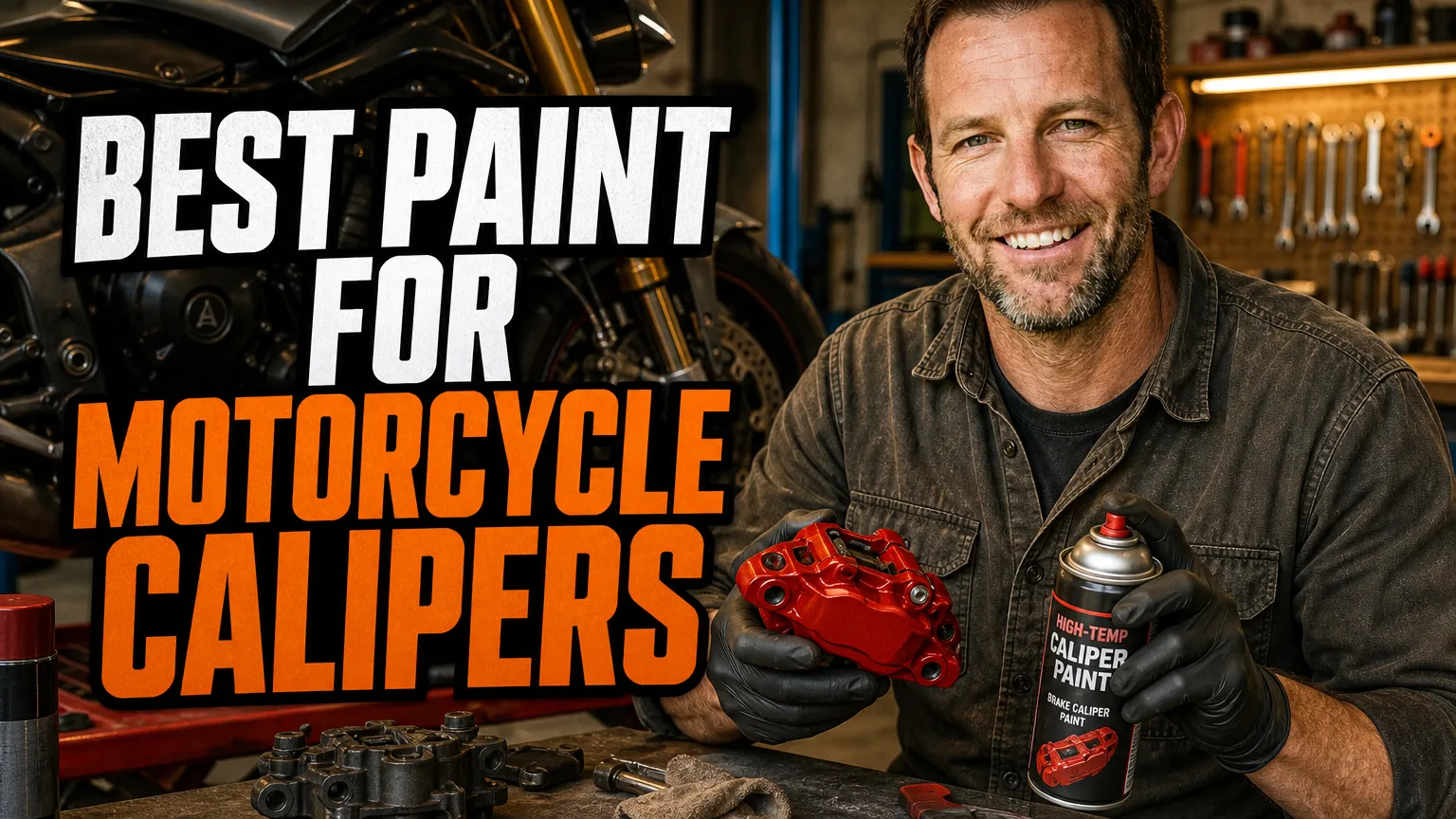
When I refresh the look of a motorcycle, painted calipers can add a sharp accent without changing the bike’s overall style. But calipers live in a demanding spot: they get hot, collect brake dust, and need careful masking and preparation. That’s why I choose a coating made for brake components rather than reaching for ordinary hardware-store paint.
Disclosure: some links in this article are affiliate links. As an Amazon Associate I earn from qualifying purchases, and I may also earn a commission from RevZilla at no extra cost to you.
In this guide, I compare six real products by application style, heat rating, finish, and value. If I’m painting other parts of a bike as well, I also check my options for best spray paint for motorcycle projects, since a product that works on bodywork or a frame isn’t automatically right for a brake caliper.
- I like G2 Brake Caliper Paint System for a brush-on, two-part finish.
- VHT and Dupli-Color are convenient aerosol choices when I want an even spray finish.
- I check the product label for its temperature rating, preparation steps, and cure schedule.
- I keep paint away from pads, rotors, seals, piston surfaces, and other brake-critical areas.
1. G2 Brake Caliper Paint System — My Brush-On Pick

When I want to avoid aerosol overspray, I look closely at the G2 Brake Caliper Paint System. It’s a two-part coating kit that I apply by brush, which gives me more control around caliper edges, casting details, and nearby components than a spray can typically does.
Why I’d choose it
G2 sells this as a caliper-specific epoxy paint system, with the paint and hardener mixed before application. The manufacturer advertises heat resistance up to 980°F, though I still treat that figure as a product rating rather than a promise about how any particular motorcycle will perform. The kit is generally priced higher than a single aerosol can, often around $40 to $60 depending on retailer and finish.
I’d pick G2 when I’m after a glossy, substantial-looking finish and have time to work carefully. Because the paint starts curing after mixing, I’d read the instructions first, prepare the caliper fully, and apply it in manageable sections. I would not mix more than I can use within the product’s stated working time.
What I’d keep in mind
A brush-on kit takes patience, and brush marks can show if I rush or overload the brush. I also make sure the caliper is clean and completely free of grease before coating; paint can’t compensate for poor preparation. I wouldn’t choose this kit if I wanted the quickest possible spray-and-go job.
2. VHT Caliper Paint — My Convenient Aerosol Choice
VHT Caliper Paint is one of the aerosol products I consider when I want a familiar, purpose-made caliper coating. It’s sold in several colors, and its spray format can make it easier to get an even finish over exposed surfaces—provided I remove or properly protect the caliper and control overspray.
Finish and heat rating
VHT lists its caliper paint for high-temperature use and advertises resistance up to 900°F intermittently. The exact color and can availability can vary by seller, but I usually see it priced in the neighborhood of $12 to $20. I’d verify the current instructions on the can because drying, handling, and final curing requirements matter as much as the headline temperature figure.
I like aerosol paint for broad, consistent coverage, especially on calipers with accessible outer faces. I use multiple light coats rather than trying to hide everything with one heavy pass. That approach helps me limit runs and buildup around stamped details or sharp edges.
Where it fits best
I’d choose VHT when I want a straightforward spray application and a product specifically marketed for calipers. Before spraying, I mask carefully and keep the can away from friction surfaces and rubber parts. I also follow the label’s cure process rather than assuming that “dry to the touch” means the coating is ready for riding.
3. Dupli-Color BCP100 Brake Caliper Paint — My Easy-to-Find Option
Dupli-Color BCP100 Brake Caliper Paint is a specific aerosol product I consider when I want a caliper finish from a widely recognized automotive paint brand. The BCP100 code refers to its red version; Dupli-Color offers other caliper paint colors under different product codes, so I check the shade and label before ordering.
What I like about BCP100
Dupli-Color describes its brake caliper paint as a ceramic-resin coating and lists heat resistance up to 500°F. That published rating is lower than the intermittent rating advertised by some alternatives, so I compare the full product directions instead of ranking paint by one number alone. A can commonly costs about $12 to $20, with local prices and availability varying.
For me, the main advantage is the familiar aerosol format and the opportunity to match a red accent to the rest of a bike. I’d apply several thin coats over properly prepared metal, allowing the recommended flash time between coats. The surface needs to be clean and dry before I begin.
My buying note
I’d consider Dupli-Color BCP100 for a practical, color-forward refresh, particularly if I can buy it locally and follow its instructions closely. If I expect especially hard use or want a two-part coating system, I’d compare it directly with G2 or Foliatec rather than assuming all caliper paints offer the same durability.
4. Foliatec Brake Caliper Lacquer Set — My Complete-Kit Contender
Foliatec Brake Caliper Lacquer Set is a caliper-specific coating kit that appeals to me when I want more than just a can of paint. Depending on the version, the set includes components such as lacquer, hardener, a brush, and cleaning materials, giving me a more organized starting point for a careful brush-on job.
How I’d use it
Foliatec lists heat resistance up to 300°C, or about 572°F, for its brake caliper lacquer. I check the package contents and exact instructions for the kit I’m buying, since sets and colors may differ by market. I usually see kits priced around $35 to $50, though shipping and regional availability can affect the total.
I like the kit approach because preparation supplies and application tools can be easy to overlook. A brush-on finish also lets me work with less airborne overspray than I’d get from an aerosol. I’d still mask everything carefully and avoid painting any surface where a pad, rotor, seal, or piston needs to move or make contact.
My trade-off
Foliatec Brake Caliper Lacquer Set calls for careful preparation and mixing, so I’d allow enough time to complete the process properly. I wouldn’t start the job if I had to rush the application or reassemble the brakes before the product’s recommended cure time. For me, this is a better fit for a planned weekend refresh than a quick cosmetic touch-up.
5. POR-15 High Temperature Caliper Paint — My Brush-On Alternative
POR-15 High Temperature Caliper Paint is another product I’d consider when I prefer controlled brush application. POR-15 is known for protective coatings, and this paint is specifically marketed for brake calipers rather than being a general-purpose color coating I’d have to adapt to the job.
What to expect
POR-15 lists this product for high-temperature caliper use, with a stated resistance of up to 500°F. Available colors and package sizes can vary, and I generally expect pricing around $25 to $35 depending on the retailer. I’d read the current product directions carefully, especially for surface preparation, application, and drying time.
Brush application is useful for me when I want to keep paint exactly where I intend it to go. It can also make it easier to avoid spraying toward a wheel, fork leg, or other nearby parts. I apply thin, even coats and keep a close eye on edges where paint might collect too heavily.
When I’d pick it
I’d choose POR-15 High Temperature Caliper Paint when I want a caliper-specific brush-on product from a coating-focused brand. It won’t be as fast to apply as an aerosol, and the final look depends on steady, careful work. I’d compare its instructions and finish options with G2 and Foliatec before deciding which kit best suits my project.
6. Rust-Oleum Caliper Paint — My Straightforward Aerosol Option
Rust-Oleum Caliper Paint is a purpose-marketed aerosol coating that I’d put on my shortlist when I want spray application and an easy-to-recognize brand. It’s sold in different colors, and the aerosol format is convenient for covering exposed caliper faces once I’ve removed or properly isolated the component.
Application and value
Rust-Oleum advertises its caliper paint as a heat-resistant coating for brake calipers. Product ratings and color availability can differ across listings, so I check the current can label instead of relying on an old retailer description. It commonly falls around $12 to $20 per can, which makes it a reasonably accessible option for a single-caliper-color project.
I’d use Rust-Oleum Caliper Paint with the same care I bring to any aerosol coating: light passes, sensible ventilation, and thorough masking. I wouldn’t spray in a confined garage without appropriate ventilation or ignore the safety directions. A tidy job starts with removing brake dust, grease, and loose coating rather than trying to cover contamination.
My take
I see Rust-Oleum Caliper Paint as a convenient choice when I want a spray can and can confirm that the specific product’s temperature rating and instructions fit my needs. I wouldn’t treat it as interchangeable with every Rust-Oleum high-heat product; I’d buy the caliper-labeled coating specifically.
How I Choose the Right Finish for My Motorcycle
I match the paint to the application
When I want the most control and less overspray, I lean toward a brush-on product such as G2 Brake Caliper Paint System, Foliatec Brake Caliper Lacquer Set, or POR-15 High Temperature Caliper Paint. If I want a quicker coating over larger exposed surfaces, I consider an aerosol like VHT Caliper Paint, Dupli-Color BCP100, or Rust-Oleum Caliper Paint.
I also think about the final appearance. Aerosols can produce an even finish over accessible surfaces, while brush-on kits let me keep the coating more localized. Neither format fixes poor prep, and I don’t choose a product based on color alone.
I treat temperature ratings as one factor
Paint makers may publish different temperature figures, and some specify intermittent heat while others describe a product’s heat resistance more generally. I don’t assume that a higher number automatically means a better result on my bike. I check whether the paint is intended for brake calipers, then follow the manufacturer’s application and curing requirements.
I also avoid using paint intended for a motorcycle tank or frame on brake components simply because it has a durable-looking finish. For those separate projects, I’d compare recommendations for the best paint for motorcycle gas tank or the best spray paint for motorcycle tank. Tank coatings face a different set of conditions than caliper coatings.
How I Prepare Calipers Before Painting
I protect the braking system first
My first priority is keeping paint off the rotor, brake pads, piston surfaces, rubber seals, and any area where components need to move or seal. I don’t paint a caliper while it’s mounted and hope that careful spraying will protect everything. For a proper job, I remove the caliper and follow the motorcycle service manual; if the work involves brake disassembly or bleeding, I get help from a qualified mechanic when needed.
I don’t hang a caliper by its brake hose, and I don’t let a hydraulic line twist or carry the component’s weight. I keep removed hardware organized and avoid disturbing the brake system beyond what I can confidently reassemble. Paint should never interfere with brake operation.
I clean, mask, and cure with care
I remove dirt, brake dust, grease, and loose paint using methods compatible with the caliper and the coating instructions. Then I let the surface dry completely and mask every area that must remain unpainted. I apply thin coats and respect the stated recoat and cure times.
I don’t use a household oven to cure caliper paint. If a product requires a specific curing process, I follow its label and use an appropriate, safe method. Before riding, I make sure the calipers are correctly reinstalled, the brakes operate normally, and the coating has cured for the time the manufacturer specifies.
My Final Picks
For brush-on control, I’d start with G2 Brake Caliper Paint System. For a convenient aerosol, I’d compare VHT Caliper Paint with Dupli-Color BCP100 Brake Caliper Paint, checking their current label instructions and temperature ratings before I buy.
If I want a kit with application supplies, I’d consider Foliatec Brake Caliper Lacquer Set. I’d also keep POR-15 High Temperature Caliper Paint and Rust-Oleum Caliper Paint in mind when their application style and current product details fit my project. My best choice is the one I can prepare and apply correctly—not simply the one with the boldest color or biggest heat number.
Finally, I keep caliper paint separate from coatings for other motorcycle parts. A fuel tank may call for a different product and, in some cases, a best paint for motorcycle tank sealer solution. A frame and plastic bodywork also have different surface requirements, so I’d check options for the best paint for motorcycle frame and the best spray paint for motorcycle plastics before tackling those jobs.
Frequently Asked Questions
What is the best paint for motorcycle calipers?
I’d choose G2 Brake Caliper Paint System for a brush-on, two-part finish, or VHT Caliper Paint for convenient aerosol application.
Can I paint motorcycle calipers without removing them?
I don’t recommend it. Removing the caliper gives me better access and helps prevent overspray on brake pads, rotors, seals, and other critical parts.
Do I need high-temperature paint for motorcycle calipers?
Yes. I look for paint specifically intended for brake calipers or high-heat automotive components, then follow its label for preparation and curing.
Can I use ordinary spray paint on brake calipers?
I avoid ordinary spray paint because it may not tolerate caliper heat, brake dust, and cleaning chemicals as well as a purpose-made caliper coating.

Related Articles

6 Best Motorcycle Fork Paints for a Durable, Clean Finish
I compare six paints for motorcycle fork lowers, with practical notes on durability, finish, prep, cost, and the fork surfaces…
Jake Miller
12 min read

Remove Motorcycle Tank Badges Safely: A Rider’s Paint-Protecting Guide
Learn how I safely remove motorcycle tank emblems, loosen stubborn adhesive, protect paint, clean residue, and spot when pins or…
Jake Miller
11 min read

How I Remove Motorcycle Tank Stickers Without Damaging the Paint
Learn how I safely remove decals and sticky residue from a motorcycle tank without damaging paint, with tools, step-by-step tips,…
Jake Miller
11 min read