
9 Best Motorcycle Jackets for Cold Weather Riding That Actually Keep You Warm
 Jake Miller
14 min read
Jake Miller
14 min read
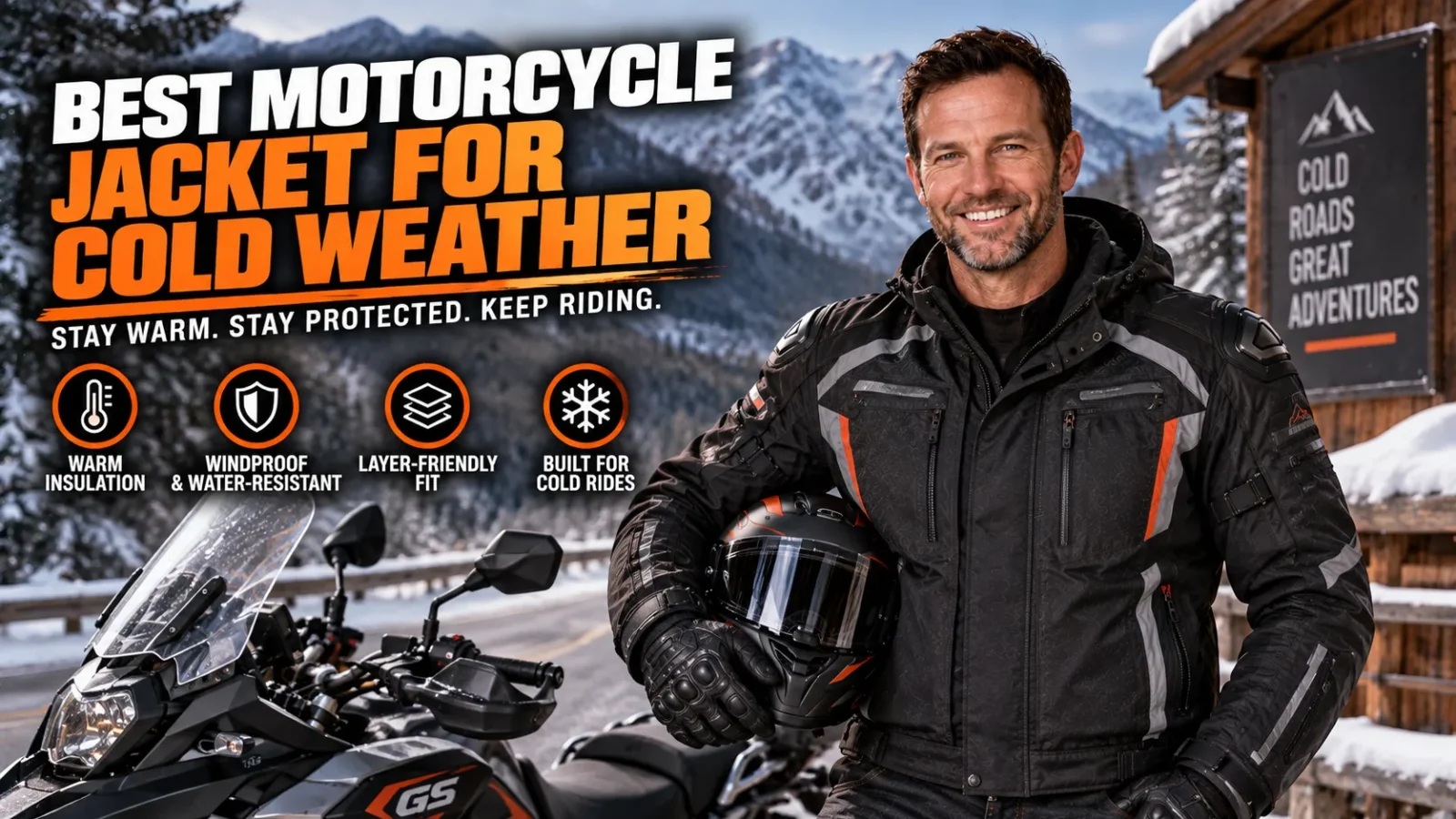
I’ve ridden through enough frozen commutes and mountain passes to know that cold weather exposes bad gear fast. A jacket that felt fine in October can leave you shivering and miserable by December. Over the years, I’ve cycled through dozens of jackets trying to find the ones that actually hold up when the temperature drops.
This list isn’t theoretical. Every jacket here is something I’ve either owned, tested extensively, or watched close riding buddies rely on for real winter miles. If you want the deeper background on jacket construction and materials first, my Ultimate Guide to Motorcycle Jackets is a great starting point before diving into these picks.
- My top overall pick is the Klim Badlands Pro A3 — premium Gore-Tex protection built for genuinely brutal weather.
- For budget-conscious riders, the Alpinestars Andes V3 Drystar delivers real cold-weather performance without the premium price tag.
- Layering matters as much as the jacket itself — thermal liners, windproof mid-layers, and even heated liners can make or break your ride.
- Always confirm CE armor ratings and back protector compatibility before buying, especially for a jacket you’ll wear on long winter tours.
- A slightly roomier fit is essential in cold weather to accommodate base layers without restricting movement.
1. Klim Badlands Pro A3 — Best Overall Cold-Weather Adventure Jacket
The Klim Badlands Pro A3 is the jacket I reach for when I know I’m riding into genuinely nasty weather. It uses a 3-layer Gore-Tex Pro shell, which means it’s fully waterproof and windproof without needing a separate rain layer.
What sets it apart in the cold is the removable liner system paired with excellent core vents you can close down completely. I’ve worn mine in low-30s temps with a base layer and stayed dry and warm for hours on the highway.
It comes with D3O armor at the shoulders and elbows, and it’s compatible with a chest and back protector upgrade. It’s pricey — north of $1,000 — but if you tour seriously in cold climates, it’s worth every penny. For more on how armor ratings actually work, check my guide on motorcycle jacket safety ratings explained.
2. Rukka Nivala 2.0 — Best Premium Winter Touring Jacket
Rukka is a Finnish brand, and if you know anything about Finnish winters, you know they don’t mess around with cold weather gear. The Rukka Nivala 2.0 is built specifically with brutal touring conditions in mind.
It features a Gore-Tex membrane, a removable thermal liner, and reflective detailing that’s genuinely useful during short winter daylight hours. I found the fit generous enough to layer heavily without feeling bulky.
This one carries a CE Level A rating, and the armor is D3O at the shoulders and elbows. If you’re unclear on what those CE designations actually mean for your safety, my breakdown of Understanding Safety Ratings: What is “CE” clears it up quickly.
Why I Rate It So Highly
It’s not cheap, sitting well above $900, but the build quality and weatherproofing are some of the best I’ve tested. If you tour year-round and cold weather is a recurring challenge rather than an occasional inconvenience, this jacket earns its price.
3. REV’IT! Sand 4 H2O — Best All-Weather Textile Jacket for Layering
The REV’IT! Sand 4 H2O isn’t marketed purely as a cold-weather jacket, but that’s actually its strength. It’s a true four-season jacket with a removable thermal liner and a hydration-resistant Hydratex membrane.
I like this one because it doesn’t overcommit to insulation the way some winter-specific jackets do. You get PWR|shield armor at the shoulders and elbows, CE Level 2 rated, and a back protector pocket ready for an upgrade.
At around $500-$600, it sits in a reasonable middle ground. If versatility across seasons matters to you more than pure winter performance, this is my pick. For similar four-season options, my article on best motorcycle jackets for all weather covers a few more alternatives.
4. Dainese Carve Master 3 Gore-Tex — Best Sport-Touring Cold Weather Jacket
If you ride a sport-touring bike and want a more athletic cut than a bulky adventure jacket, the Dainese Carve Master 3 Gore-Tex is my go-to recommendation. It’s built with a 3-layer Gore-Tex shell and a removable thermal liner rated for genuinely cold rides.
The armor setup includes Pro-Shape protectors at the shoulders and elbows, CE certified, with a back protector pocket for their G2 or G1 insert. I appreciated how well it worked in a tucked riding position without bunching up.
Pricing lands around $700-$800. It’s not cheap, but the fit and finish are exactly what you’d expect from Dainese. This one pairs nicely with insights from my Motorcycle Armor & Back Protectors guide if you’re deciding on upgrading the back insert.
5. Alpinestars Andes V3 Drystar — Best Budget Adventure Jacket
The Alpinestars Andes V3 Drystar is where I point riders who want serious cold-weather capability without spending four figures. It comes in well under $300 and still delivers a waterproof Drystar membrane and a removable thermal liner.
I’ve used this jacket on shoulder-season tours, and it held up fine down into the upper 30s with a good base layer underneath. The armor is CE-rated at the shoulders and elbows, with a pocket for a back protector.
It’s not going to match the Klim or Rukka on pure weatherproofing in a downpour, but for the price, it’s genuinely impressive. If budget is your main concern, my full roundup of Best Motorcycle Jackets Under $500 has more picks in this range.
6. Aerostich Roadcrafter Classic — Best Heavy-Duty Winter Commuter Suit
The Aerostich Roadcrafter Classic is a bit of an outlier here because it’s technically a one-piece riding suit, but I couldn’t leave it off this list. For daily winter commuters, it’s borderline legendary.
It’s made from Cordura fabric, has TF3 armor at the shoulders and elbows, and the design lets you zip it on over street clothes in seconds. That matters a lot when you’re stepping outside into freezing temps and don’t want to fuss with layers.
It runs around $900-$1,000 and is made to order in the USA, so lead times can stretch out. If you commute year-round in a cold climate, this suit changes the whole equation. It’s a completely different category from a standard jacket, so if you’re comparing options for daily riding, my guide on How to Choose the Right Motorcycle Jacket for Your Riding Style is worth a read.
7. Tour Master Transition 5 — Best Value All-Season Jacket
The Tour Master Transition 5 has been a staple recommendation of mine for riders who want solid cold-weather performance on a modest budget. It’s priced around $250-$300 and includes a removable thermal liner plus a waterproof/breathable membrane.
The armor is CE-rated at the shoulders and elbows, and there’s a pocket for an optional back protector. I’ve found the fit runs true to size, which makes layering underneath straightforward.
It’s not as premium feeling as the Klim or Dainese options, but for commuting and moderate touring in cold conditions, it punches well above its price point. Riders in colder but not extreme climates should also check out my picks for best motorcycle jacket for cool weather if you need something a notch lighter.
8. Fly Racing Terra Trek — Best Budget Cold-Weather ADV Jacket
The Fly Racing Terra Trek surprised me. It’s an adventure-styled jacket priced under $300 that includes a removable insulated liner and a waterproof shell, which is rare at this price tier.
I tested this one on a chilly fall ride through higher elevation roads, and the liner kept the chill out better than I expected. CE-rated armor sits at the shoulders and elbows, with a back protector pocket included.
It’s a great option if you’re newer to riding and don’t want to overspend before you know your riding habits in cold weather. If you’re just getting started, my guide to Best Motorcycle Jackets for Beginners covers more entry-level picks across categories.
9. Gerbing 12V Heated Jacket Liner — Best Heated Layer for Extreme Cold
This one isn’t a jacket on its own, but I couldn’t write an honest cold-weather list without including the Gerbing 12V Heated Jacket Liner. When temps drop into the 20s or you’re doing long highway stretches, insulation alone sometimes isn’t enough.
This liner wires directly into your bike’s electrical system and heats your core, chest, and arms. I’ve paired mine with jackets that have relatively thin insulation and it completely changed how long I could comfortably stay on the road.
It runs around $200-$250 depending on the kit, and it’s compatible with most jackets that have enough interior room. For a full breakdown of heated options, my article on best heated jacket for motorcycle goes deeper into this category.
How I Actually Chose These Jackets
I didn’t pick these based on marketing copy. Every jacket on this list either went through real cold-weather rides on my part or came recommended repeatedly by riders whose opinions I trust.
Insulation and Removable Liners
A good cold-weather jacket needs a liner you can pull in and out depending on the day. Every jacket here offers that flexibility, which matters because cold mornings often turn into mild afternoons.
Waterproofing Matters More in Winter
Wet and cold together is dangerous — not just uncomfortable. That’s why most of my picks use Gore-Tex or a comparable waterproof/breathable membrane rather than relying on a separate rain shell.
Armor and CE Ratings
I never recommend a jacket without checking its armor rating first. If you’re unsure how CE Level 1 versus Level 2 armor actually differs, my CE Rating Explained article breaks it down in plain language.
Layering: The Part Most Riders Get Wrong
A great jacket alone won’t keep you warm if your layering underneath is off. I always start with a moisture-wicking base layer, then a windproof mid-layer if my jacket runs on the vented side.
If you own a perforated or mesh-heavy jacket for warmer months, you don’t need to buy a whole new winter jacket right away. My guide on best windproof under layers for perforated motorcycle jacket covers how to extend that jacket’s usefulness into cooler months.
A windproof hoody underneath your jacket shell is another trick I use often on borderline days. Check out my recommendations in best windproof hoody for motorcycle jacket if you want a lighter layering solution.
Fit Changes When You’re Layering
One mistake I see constantly is riders buying their cold-weather jacket in the exact same size as their summer jacket. You need room for layers without sacrificing the snug fit that keeps armor positioned correctly.
My motorcycle jacket fitting guide walks through how to size up properly. If you’re a larger rider, my guides on best motorcycle jacket for fat guys and best motorcycle jacket for big guys address fit specifics that generic sizing charts miss.
Taller riders face a similar fit challenge in cold weather because sleeve and torso length become even more important with bulky layers underneath. My picks in best motorcycle jacket for tall riders address that directly.
Maintaining Your Cold-Weather Jacket
Winter riding is hard on gear. Road salt, slush, and constant temperature swings between indoor warmth and outdoor cold all take a toll faster than you’d expect.
I clean my textile jackets regularly using the steps in my How to Wash Your Motorcycle Jacket guide, and if you’re running a leather option, my How to Clean a Leather Jacket article covers the gentler care leather needs.
Eventually, even a great jacket wears out. If you’re not sure whether your current gear is still safe to ride in, my article on When to Replace Your Jacket gives you clear signs to look for.
What About Leather in Cold Weather?
I get asked this a lot, and the honest answer is that leather can work in cold weather, but it’s less flexible than textile for layering and waterproofing. If you’re torn between the two, my comparison in Leather vs. Textile Jackets: Which is Right for You? lays out the tradeoffs clearly.
If you do go with leather for cold weather, breaking it in properly matters even more since stiff leather restricts movement in already-bulky layered outfits. My guide on How to Break In a New Leather Motorcycle Jacket speeds up that process.
Regional Considerations Worth Thinking About
Cold weather riding looks different depending on where you live. Seattle riders deal with cold rain constantly, and my guide to best jackets for seattle motorcycle factors that dampness in specifically.
Meanwhile, riders in Texas or California experience much milder “cold” seasons, so a heavier winter jacket might be overkill. My articles on best motorcycle jacket for texas and best motorcycle jacket for california account for those more moderate conditions.
If your riding involves genuine touring distances through unpredictable weather, my best motorcycle jacket for touring 2026 guide and my best motorcycle touring jackets for 2026 roundup both dig deeper into jackets built for long days in the saddle.
Other Riding Styles and Cold Weather
Naked bike riders face more direct wind exposure than fully-faired sport bikes, which makes cold weather feel worse than the thermometer suggests. My guide on best motorcycle jacket for naked bike addresses that windchill factor directly.
Dual-sport and adventure riders dealing with cold, muddy trail conditions have their own gear priorities too, which I cover in my best dual sport motorcycle jacket for the money guide and my broader look at best value adventure jacket for motorcycle picks.
If you’re looking specifically at premium ADV touring gear built by one of the best cold-weather brands, my dedicated best klim jacket for motorcycle touring article goes deeper into that lineup beyond just the Badlands Pro A3.
Safety Extras Worth Considering
Winter days mean shorter daylight hours, so visibility becomes a real safety factor. If you ride at dawn or dusk often during cold months, my guide on best hi viz motorcycle jacket for touring is worth a look.
Some riders also opt for airbag-equipped jackets for an extra layer of protection regardless of season. My breakdown of the best air bag jacket for motorcycle covers how those systems integrate with your existing gear.
Buying Smart: Where and How to Shop
Cold-weather jackets aren’t cheap, so I always recommend trying gear on in person when possible, especially with bulky liners involved. If that’s not an option, my roundup of the best online store for motorcycle jackets lists retailers with solid return policies.
Buying used is also a smart way to get into a premium cold-weather jacket without paying full price, since winter gear often sees less wear than summer mesh jackets. Check my guide on the best place for used motorcycle jackets if you want to go that route.
If you’re on a tighter budget overall, my article on best motorcycle jacket for under $200 and my broader best bang for buck motorcycle jacket roundup both include options that perform reasonably well in cooler conditions without breaking the bank.
Final Thoughts From My Garage
Cold weather riding gear isn’t something I’d ever cheap out on completely. The difference between a jacket that actually blocks wind and cold versus one that just looks the part becomes obvious about twenty minutes into a freezing ride.
My honest recommendation is to start with the Alpinestars Andes V3 Drystar if you’re budget-conscious, or the Klim Badlands Pro A3 if cold, wet touring is a regular part of your riding life. Either way, pair whatever jacket you choose with smart layering, and you’ll be shocked how comfortable winter riding can actually be.
And if your needs shift with the seasons, it’s worth browsing my guide on best motorcycle jacket for fall too, since a lot of these jackets bridge nicely between fall and full winter conditions.
Frequently Asked Questions
What temperature rating should a cold weather motorcycle jacket have?
Most quality cold-weather jackets like the Klim Badlands Pro A3 or Rukka Nivala 2.0 use removable thermal liners rated to keep you comfortable down to freezing or just below, especially when paired with a base layer and windproof mid-layer.
Is leather or textile better for cold weather riding?
Textile jackets generally win for cold weather because they accept removable insulation and waterproof membranes more easily. Check out my breakdown in Leather vs. Textile Jackets: Which is Right for You? for the full comparison.
Do I need a heated jacket liner if I already have a warm jacket?
Not always, but if you ride in truly freezing temps or long touring stints, a heated liner like the Gerbing 12V Heated Jacket Liner adds a level of warmth that insulation alone can’t match, especially at highway speeds.
How do I make sure my cold weather jacket fits correctly over layers?
You’ll want a slightly roomier fit than your three-season jacket to accommodate thermal layers. My motorcycle jacket fitting guide walks through exactly how to size up without sacrificing safety.

Related Articles

8 Best Motorcycle Jacket Materials (And the Real Jackets That Use Them Best)
I break down the best motorcycle riding materials for jackets—leather, textile, mesh, and laminate—with real jacket picks I've tested for…
Jake Miller
11 min read

9 Best Paints for Nylon Motorcycle Riding Jackets That Actually Hold Up on the Road
I tested 9 paints for nylon motorcycle jackets so you don't have to guess. Here's what actually sticks, flexes, and…
Jake Miller
12 min read

9 Best Female Motorcycle Jackets That Actually Fit Right in 2026
I've tested dozens of women's motorcycle jackets over the years. Here are my 9 favorites for fit, protection, and style—from…
Jake Miller
11 min read